- Products
- Air Compressors & Air Tools
- Climate Control
- Compaction Equipment
- Concrete Cutting Tools & Equipment
- Concrete and Masonry
- Demolition & Excavation
- Electrical & Mechanical
- Fasteners and Anchoring Adhesives
- Floor Protection
- Generators and Welders
- Hand Tools
- Heaters
- Janitorial and Office Supplies
- Jobsite Protection
- Ladders & Storage
- Lighting & Lighting Accessories
- Man Lifts
- Material Handling Equipment
- Power Tools
- Pressure Washers & Pumps
- Safety Gear
- Safety Products
- Saws
- Surface Preparation
- SEASONAL PRODUCTS
- Rentals
- Air Compressor and Air Tool Rentals
- Climate Control Rental
- Compaction Rentals
- Concrete Equipment Rentals
- Demolition & Excavation Equipment Rentals
- Concrete Floor Grinder Rentals
- General Construction Equipment Rentals
- Generator Rentals and Welder Rentals
- Heater Rentals
- Light Tower Rentals
- Man Lift Rentals in Massachusetts and Rhode Island
- Material Handling Equipment Rentals
- Pressure Washer & Pump Rentals
- Saw Rentals in New England
- SEASONAL PRODUCTS
- Products
- Air Compressors & Air Tools
- Climate Control
- Compaction Equipment
- Concrete Cutting Tools & Equipment
- Demolition & Excavation
- Electrical & Mechanical
- Floor Protection
- Generators and Welders
- Construction Heaters
- Construction Ladders, Staging, & Storage
- Construction Lighting
- Man Lifts
- Material Handling Equipment
- Industrial Janitorial and Office Supplies
- Pressure Washers & Pumps
- Construction Safety Products
- Construction Safety Gear
- Surface Preparation
- Building Protection
- Diesel Accessories
- Zero Emissions
- Rentals
- Air Compressor and Air Tool Rentals
- Climate Control Rental
- Compaction Rentals
- Concrete Equipment Rental
- Demolition & Excavation Equipment Rental
- General Construction Equipment Rental
- Generator Rentals and Welder Rentals
- Construction Heaters Rental
- Light Tower Rentals
- Man Lift Rentals
- Material Handling Equipment Rental
- Pressure Washer & Pump Rentals
- Saw Rentals in New England
- Concrete Floor Grinder Rentals
- Zero Emissions Rentals
- Repairs & Used
- Parts
- Blog
- Services
- Resources
- About Us
- Contact Us
Sales & Rental of Construction | Industrial Equipment & Supplies


How to Choose an Industrial Ventilation Fan in 2026?
Choosing an Industrial Ventilation Fan in 2026 starts with the air, not the catalogue. What must the system remove: heat, moisture, dust, fumes, or ordinary stale air? A workshop with welding stations has different needs from a greenhouse or warehouse. Measure the room, identify the contaminant, and estimate the required airflow before comparing models. Guesswork can lead to noisy equipment, weak extraction, or wasted energy.
The right fan depends on more than its advertised capacity. Check airflow at the system’s actual static pressure, since ducts, bends, filters, and grilles add resistance. Review fan type, motor efficiency, sound levels, materials, maintenance access, and controls. A corrosion-resistant housing may matter in a damp process area; a compact axial fan may suit a short, open air path. Details matter.
In 2026, variable-speed controls and connected monitoring may help match ventilation to changing demand, but they are not automatic upgrades. Their value depends on the process, operating schedule, and available maintenance skills. Compare manufacturer performance data, confirm installation conditions, and ask a qualified ventilation professional to review safety-critical applications. Local requirements can vary, too.
There is no universal best fan. That is the honest part. This guide explains how to define the duty, assess operating costs, compare specifications, and avoid common selection mistakes. Some project details will remain uncertain until the system is measured in the field.
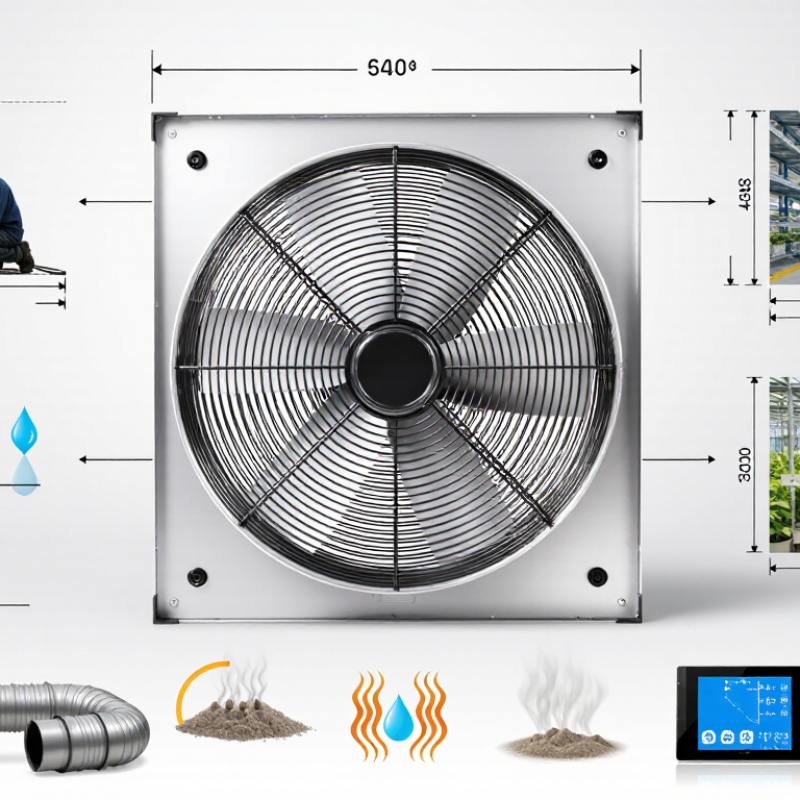
Table of Contents [Hide]
Define the Ventilation Needs of the Industrial Space
Before choosing an industrial ventilation fan in 2026, define what the space must remove. List dust, welding fume, solvent vapor, heat, moisture, and process odors. Measure where each contaminant starts, how often it appears, and who works nearby. Measure the source. A general air-change target cannot replace source capture.
The ACGIH Industrial Ventilation Manual, 31st edition, identifies capture velocity as a key design variable. Its guidance commonly places low-energy contaminant sources near 50–100 feet per minute. Moderate releases may require 100–200 feet per minute, while high-energy processes can need 200–500 feet per minute.
These values are starting points, not automatic specifications. Enclosures, hood distance, cross-drafts, and worker movement can change the result.
Check exposure limits before calculating fan airflow. OSHA permissible exposure limits and NIOSH recommended exposure limits provide useful benchmarks for hazardous substances. ASHRAE Standard 62.1-2022 supports ventilation planning for occupied spaces, but it does not replace process-exhaust design.
A practical assessment should record room volume, contaminant load, temperature, humidity, and replacement-air paths. Poorly planned makeup air can pull fumes across an operator’s breathing zone. That omission is costly.
I have also seen clean-looking layouts fail because doors, conveyors, or ceiling fans disturbed the hood’s airflow. Recheck the design under real operating conditions, including startup, cleaning, and peak production.

© Copyright - Pro Tool & Supply - Site by SVM E-Marketing Solutions - Sitemap
- Privacy policy