- Products
- Air Compressors & Air Tools
- Climate Control
- Compaction Equipment
- Concrete Cutting Tools & Equipment
- Concrete and Masonry
- Demolition & Excavation
- Electrical & Mechanical
- Fasteners and Anchoring Adhesives
- Floor Protection
- Generators and Welders
- Hand Tools
- Heaters
- Janitorial and Office Supplies
- Jobsite Protection
- Ladders & Storage
- Lighting & Lighting Accessories
- Man Lifts
- Material Handling Equipment
- Power Tools
- Pressure Washers & Pumps
- Safety Gear
- Safety Products
- Saws
- Surface Preparation
- SEASONAL PRODUCTS
- Rentals
- Air Compressor and Air Tool Rentals
- Climate Control Rental
- Compaction Rentals
- Concrete Equipment Rentals
- Demolition & Excavation Equipment Rentals
- Concrete Floor Grinder Rentals
- General Construction Equipment Rentals
- Generator Rentals and Welder Rentals
- Heater Rentals
- Light Tower Rentals
- Man Lift Rentals in Massachusetts and Rhode Island
- Material Handling Equipment Rentals
- Pressure Washer & Pump Rentals
- Saw Rentals in New England
- SEASONAL PRODUCTS
- Products
- Air Compressors & Air Tools
- Climate Control
- Compaction Equipment
- Concrete Cutting Tools & Equipment
- Demolition & Excavation
- Electrical & Mechanical
- Floor Protection
- Generators and Welders
- Construction Heaters
- Construction Ladders, Staging, & Storage
- Construction Lighting
- Man Lifts
- Material Handling Equipment
- Industrial Janitorial and Office Supplies
- Pressure Washers & Pumps
- Construction Safety Products
- Construction Safety Gear
- Surface Preparation
- Building Protection
- Diesel Accessories
- Zero Emissions
- Rentals
- Air Compressor and Air Tool Rentals
- Climate Control Rental
- Compaction Rentals
- Concrete Equipment Rental
- Demolition & Excavation Equipment Rental
- General Construction Equipment Rental
- Generator Rentals and Welder Rentals
- Construction Heaters Rental
- Light Tower Rentals
- Man Lift Rentals
- Material Handling Equipment Rental
- Pressure Washer & Pump Rentals
- Saw Rentals in New England
- Concrete Floor Grinder Rentals
- Zero Emissions Rentals
- Repairs & Used
- Parts
- Blog
- Services
- Resources
- About Us
- Contact Us
Sales & Rental of Construction | Industrial Equipment & Supplies


How to Choose Aluminum Profile for Pergola in 2026?
Choosing Aluminum Profile For Pergola in 2026 requires more than comparing catalog prices. The right section must match the roof span, wind exposure, snow load, drainage design, and intended use. A slim profile may look elegant beside a patio, yet it can deflect noticeably across a four-meter opening. That movement can loosen fasteners and disturb roof panels. Measure the site carefully. Record beam lengths, column spacing, local weather conditions, and nearby coastal exposure. Small errors matter.
Experienced installers usually begin with alloy and temper, not appearance. Common architectural choices include 6063 aluminum, while 6061 may suit parts needing higher strength. The final decision depends on engineering calculations, connection design, and supplier data. Check wall thickness, section modulus, allowable deflection, and tested load capacity. Ask for mill certificates, coating specifications, and installation tolerances. Powder coating should be suitable for exterior use, especially where salt, humidity, or intense sunlight is present. A beautiful finish cannot repair an undersized beam. Neither can a low price.
This guide explains how to compare profiles, accessories, and manufacturers for 2026 pergola projects. It considers thermal expansion, concealed gutters, adjustable louvers, corrosion control, and future maintenance. Reliable suppliers should provide drawings, material grades, load tables, warranty terms, and traceable quality records. Independent structural review is wise for large or exposed structures. Still, product brochures are not perfect. They may omit connection limits or assume ideal installation. Read the details, question the assumptions, and adapt the selection to the actual site. A careful choice feels solid before the first cut.
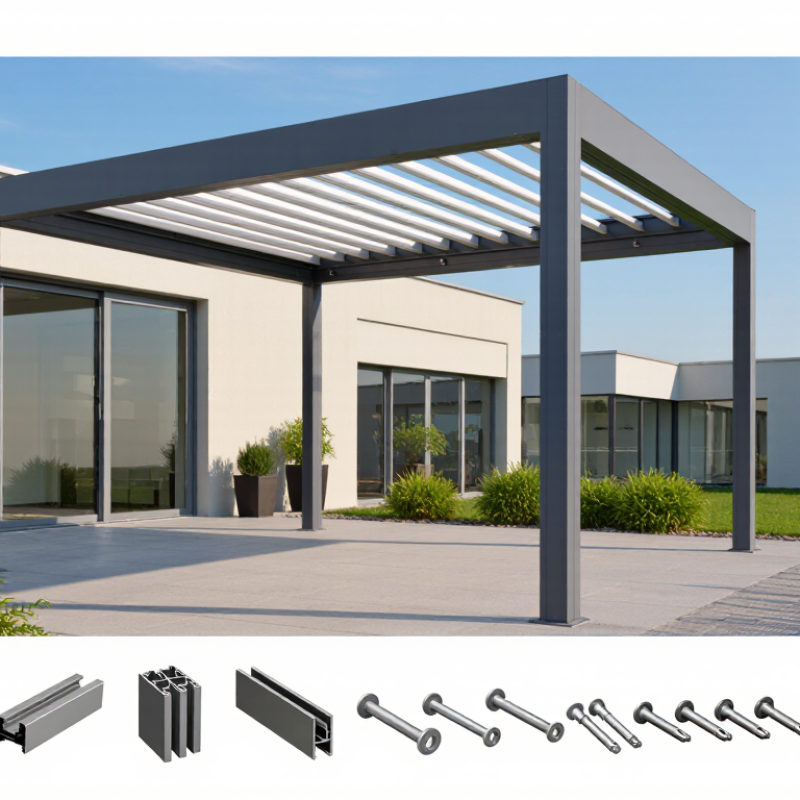
Table of Contents [Hide]
What an Aluminum Pergola Profile Is and Why It Matters
An Aluminum Pergola Profile is the shaped extrusion that forms beams, posts, rafters, and connecting rails.
It is not merely a decorative cover. The profile controls strength, drainage, appearance, and installation speed. A hollow section may look substantial, yet thin walls can flex under wind or carry less load. Dimensions matter.
Begin with the site conditions. Measure the span, roof type, local wind exposure, and expected rainwater flow. For larger openings, choose deeper beams or add internal reinforcement. Common architectural alloys, such as 6063-T5 or 6063-T6, offer good extrusion quality and corrosion resistance. However, alloy names alone do not prove performance. Ask for wall thickness, mechanical data, load calculations, and inspection records. Reliable suppliers should provide these details clearly.
Finish quality also matters. A powder-coated surface should cover corners evenly, without pinholes or exposed edges. Drainage channels need a real outlet, not just a hidden cavity. Leave room for thermal movement, because aluminum expands in strong sunlight. Small errors become visible around joints.
I have seen clean-looking frames fail because installers ignored water paths and fastener spacing. That is an uncomfortable lesson. Check it twice.
A profile can be technically strong but poorly suited to the project. Select the section after reviewing engineering data, connection details, and the installer’s actual skill.

© Copyright - Pro Tool & Supply - Site by SVM E-Marketing Solutions - Sitemap
- Privacy policy