- Products
- Air Compressors & Air Tools
- Climate Control
- Compaction Equipment
- Concrete Cutting Tools & Equipment
- Concrete and Masonry
- Demolition & Excavation
- Electrical & Mechanical
- Fasteners and Anchoring Adhesives
- Floor Protection
- Generators and Welders
- Hand Tools
- Heaters
- Janitorial and Office Supplies
- Jobsite Protection
- Ladders & Storage
- Lighting & Lighting Accessories
- Man Lifts
- Material Handling Equipment
- Power Tools
- Pressure Washers & Pumps
- Safety Gear
- Safety Products
- Saws
- Surface Preparation
- SEASONAL PRODUCTS
- Rentals
- Air Compressor and Air Tool Rentals
- Climate Control Rental
- Compaction Rentals
- Concrete Equipment Rentals
- Demolition & Excavation Equipment Rentals
- Concrete Floor Grinder Rentals
- General Construction Equipment Rentals
- Generator Rentals and Welder Rentals
- Heater Rentals
- Light Tower Rentals
- Man Lift Rentals in Massachusetts and Rhode Island
- Material Handling Equipment Rentals
- Pressure Washer & Pump Rentals
- Saw Rentals in New England
- SEASONAL PRODUCTS
- Products
- Air Compressors & Air Tools
- Climate Control
- Compaction Equipment
- Concrete Cutting Tools & Equipment
- Demolition & Excavation
- Electrical & Mechanical
- Floor Protection
- Generators and Welders
- Construction Heaters
- Construction Ladders, Staging, & Storage
- Construction Lighting
- Man Lifts
- Material Handling Equipment
- Industrial Janitorial and Office Supplies
- Pressure Washers & Pumps
- Construction Safety Products
- Construction Safety Gear
- Surface Preparation
- Building Protection
- Diesel Accessories
- Zero Emissions
- Rentals
- Air Compressor and Air Tool Rentals
- Climate Control Rental
- Compaction Rentals
- Concrete Equipment Rental
- Demolition & Excavation Equipment Rental
- General Construction Equipment Rental
- Generator Rentals and Welder Rentals
- Construction Heaters Rental
- Light Tower Rentals
- Man Lift Rentals
- Material Handling Equipment Rental
- Pressure Washer & Pump Rentals
- Saw Rentals in New England
- Concrete Floor Grinder Rentals
- Zero Emissions Rentals
- Repairs & Used
- Parts
- Blog
- Services
- Resources
- About Us
- Contact Us
Sales & Rental of Construction | Industrial Equipment & Supplies


How to Choose a Cereal Bar Machine for Your Business?
Choosing a Cereal Bar Machine is a production decision, not simply a price comparison. The right equipment must match your recipe, output target, bar dimensions, and packaging line. A soft oat bar behaves differently from a dense nut-and-seed bar. That difference affects mixing force, forming pressure, cooling time, and cutting accuracy.
Market evidence supports careful planning. Grand View Research’s 2024 cereal bars market analysis expects steady mid-single-digit growth through 2030. This signals opportunity, but growth alone does not justify buying the largest machine. PMMI’s 2024 packaging industry research also emphasizes labor availability, equipment flexibility, automation, and faster changeovers. These issues appear on the factory floor. Operators may handle sticky syrup, adjust roller gaps, or clean narrow product channels during a busy shift. Small design details matter.
Start with measurable production facts. Record your target kilograms per hour, bar length, thickness, moisture level, and recipe temperature. Then compare forming systems, heating control, conveyor width, cutting precision, sanitation access, and spare-parts support. Ask suppliers for verified test results using your actual mixture. Brochures can look impressive. Your recipe may disagree.
Food safety should remain central. Review hygienic design, stainless-steel contact surfaces, cleanability, guarding, electrical standards, and documented quality procedures. Consider total ownership cost, including energy, maintenance, downtime, labor, and rejected bars. A low purchase price can become expensive after repeated adjustments. However, an advanced machine may also be excessive for a small workshop. That is the uncomfortable part. The best choice is rarely the most powerful option; it is the one that performs reliably within your real operating conditions.
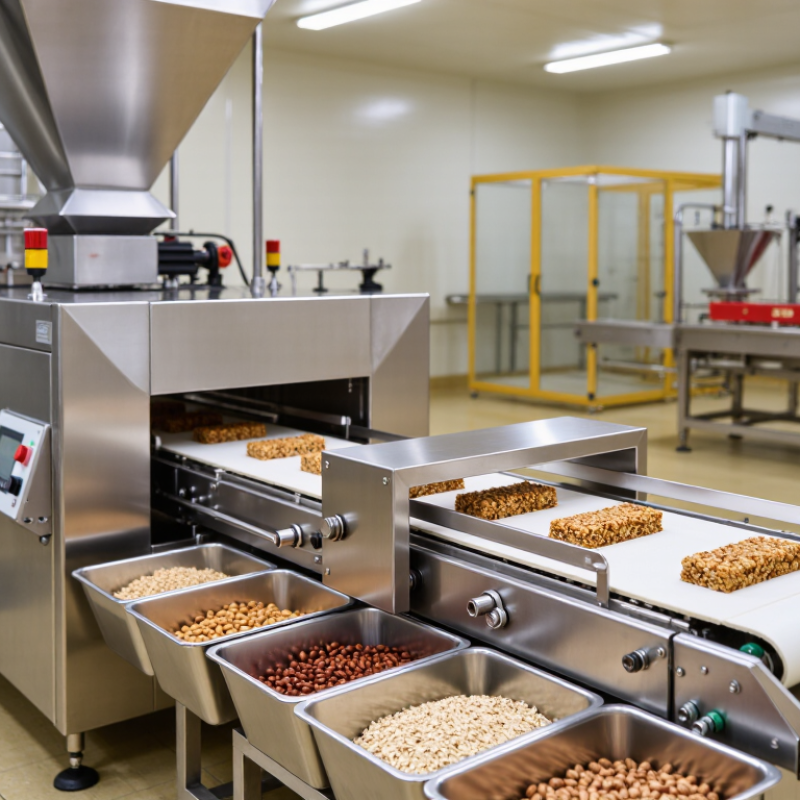
Table of Contents [Hide]
Understand Your Cereal Bar Production Requirements
Choosing a cereal bar machine starts with understanding your production requirements. Estimate daily output, peak-hour demand, and the bar size you plan to sell. A small bakery may need 300 bars per hour, while a larger facility may require several thousand. Record the recipe carefully. Syrup thickness, grain size, nuts, dried fruit, and moisture levels can affect forming pressure and cutting accuracy.
Your machine should match the texture of your product. Soft bars may need gentle compression, while firm bars require stronger pressing and controlled heating. Check the feeding system, cutter dimensions, cooling space, and conveyor speed. Easy access for cleaning matters too. Operators lose time when sticky residue builds around rollers and guides. I once underestimated changeover time; the production plan looked efficient, but cleaning took nearly twice as long.
Tips:
Run a realistic test batch before purchasing. Use your actual ingredients, not a substitute mixture. Measure bar weight, thickness, breakage, and production speed. Ask for maintenance records, training details, and spare-part availability. Confirm that temperature controls remain stable during continuous operation. Leave room for future growth, but avoid paying for capacity you cannot use. A machine that works well in a demonstration may behave differently during a full shift. Review the results with operators, because their practical feedback often reveals problems that specifications miss.

© Copyright - Pro Tool & Supply - Site by SVM E-Marketing Solutions - Sitemap
- Privacy policy