Sales & Rental of Construction | Industrial Equipment & Supplies

How to Choose a 2 Cylinder Diesel Generator?

Choosing a 2 Cylinder Diesel Generator starts with the work it must do, not the largest number on a sales sheet. A small workshop, farm pump, or backup system may have very different load patterns. List the equipment you plan to run, including motors that draw extra power when starting. Then compare the total demand with the generator’s continuous rating, not only its peak rating.

Details matter. Check voltage, frequency, phase, fuel consumption, cooling design, and the recommended service intervals. Ask how the unit performs in your local climate and at your site’s elevation. A generator that looks suitable on paper may struggle with a heavy starting load or long daily operating hours. The answer depends on the actual equipment and duty cycle. No shortcuts here.

This guide explains how to compare engine output, alternator capacity, controls, noise, and maintenance access. It also considers practical ownership details, such as filter availability and the space needed for safe ventilation. Review the manufacturer’s specifications, and confirm unclear ratings with a qualified supplier before purchasing. A neat specification sheet can still mislead; ratings may use different test conditions. It is worth checking twice. Think about future loads, too, but avoid paying for capacity you are unlikely to use. The best choice is not automatically the biggest or cheapest model. It is the generator whose documented performance fits your needs, with enough margin for real operating conditions.
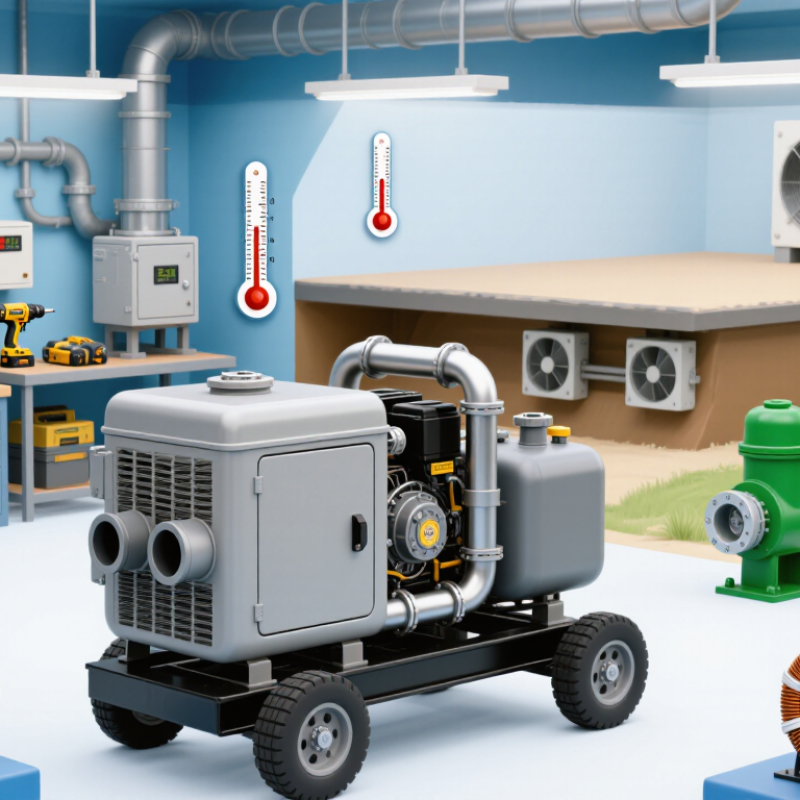
How to Choose a 2 Cylinder Diesel Generator?

Calculate Running and Starting Loads in kW and kVA

Choosing a two-cylinder diesel generator starts with the loads, not the cylinder count. List every appliance or machine that may run at the same time. Add their running watts, then divide by 1,000 to get running kW. Check equipment nameplates, since real demand can differ from a rough estimate. A small pump might run quietly at 1.2 kW but need much more power briefly when switched on.

Starting loads matter. Motors, compressors, and pumps can draw several times their normal current during startup. Use the manufacturer’s starting data where available, and compare both kW and kVA with the generator’s ratings. To convert, use kVA = kW ÷ power factor. For example, a 2 kW load at a power factor of 0.8 requires 2.5 kVA while running. Also check whether the generator can handle the largest starting surge while other equipment remains on. A worksheet helps, but it is still an estimate; I would verify uncertain loads before choosing a set.

Tips: Record running kW, starting kVA, and power factor for each load. Avoid starting several motors together. Leave practical capacity for future equipment, but base the allowance on actual use rather than guesswork.

Match Engine Speed to 50 Hz (1500 rpm) or 60 Hz (1800 rpm)

When choosing a two-cylinder diesel generator, treat frequency and engine speed as a matched pair. With a common four-pole alternator, 1,500 rpm produces 50 Hz, while 1,800 rpm produces 60 Hz. The cylinder count does not determine this speed; the alternator pole count and engine governor do. Check the generator nameplate and manual, rather than relying on a seller’s shorthand.

Look beyond the no-load reading. A technician can check frequency with a meter while the set carries a representative load, such as heaters or pumps. If speed falls too far, frequency may drift and affect motors, clocks, or other sensitive equipment. A brief dip when a motor starts can be normal, but persistent fluctuation deserves attention.

Keep it steady.

Match the set to the frequency required by your equipment and local supply, then verify the rated voltage as well. A 60 Hz unit is not automatically suitable for 50 Hz service simply because its speed can be adjusted; alternator output and cooling may also depend on the specified operating point. This detail is easy to miss. I would rather check the actual rating than assume a small adjustment will solve everything.

Check Output Quality Against ISO 8528 G1–G4 Performance Classes

How to Choose a 2 Cylinder Diesel Generator?

Check output quality against ISO 8528 G1–G4 performance classes, not just the generator’s rated kilowatts. These classes describe how a generating set responds to changes in load, including voltage and frequency behavior. G1 suits less demanding loads. G2 is common for general applications, while G3 is intended for equipment needing tighter performance. G4 covers special requirements agreed between the user and supplier. The right class depends on the equipment being powered.

A two-cylinder engine may run a small workshop or remote pump well, but sudden load changes can challenge its output. A motor starting under load, for example, may briefly pull voltage down. Ask for test data showing steady-state performance and recovery after load steps. Check that the test conditions resemble your setup, including load size and power factor. Small details matter. A class label alone does not prove the set will perform well in every installation.

Before choosing, list the loads that start together and those with sensitive controls. Compare their needs with the applicable ISO 8528 class and the generator’s documented results. If possible, request a load-bank test and record voltage and frequency as loads are added. G4 is not automatically the best choice; it may exceed what your equipment needs. Specifications can also leave room for interpretation, so confirm the required limits in writing.

Compare Prime and Standby Ratings, Fuel Use, and Derating Data

How to Choose a 2 Cylinder Diesel Generator?

A 2-cylinder diesel generator can serve a small workshop, pump, or backup system, but its rating needs careful reading. Prime power is intended for variable loads over extended operating periods. Standby power is for emergency use and usually allows less operating time. Do not treat the two figures as interchangeable. Check the rating plate and manual for limits.

Compare fuel use at the same output, not just at full load. A generator running a few lights may consume less than one powering a compressor, but very light loading can also be inefficient. Estimate daily run hours and include startup surges from motors. Then check derating data: high temperatures and elevation can reduce available output. Leave a practical margin; calculations can miss a real-world load.

Tips: Ask for fuel-consumption figures at several load levels, plus the altitude and temperature assumptions behind the rating. Confirm usable tank capacity, not only total tank size. Small details matter. If the data sheet is unclear, pause and verify it before sizing the unit. A neat spreadsheet is useful, but it is not a substitute for checking actual equipment loads.

Verify Voltage, Phase, Cooling, and Emissions for Site Conditions

Match the generator’s voltage and frequency to the equipment it will actually run. Read motor nameplates, not just the site’s main supply label. A small voltage mismatch can cause poor starting, overheating, or nuisance trips. Check the generator’s rated output and starting capacity against the largest motor or pump. Small mismatch. Big trouble.

Phase matters too. Single-phase tools may work from a three-phase set, but their loads need careful distribution across phases. An uneven load can reduce usable capacity and affect voltage stability. Confirm whether the site needs single-phase or three-phase power, then ask a qualified electrician to review the load schedule. This step is easy to overlook when equipment arrives in stages.

Cooling and emissions depend on the actual installation. An enclosed generator in a hot, dusty corner needs clear airflow and room for radiator discharge; otherwise, temperatures may climb under sustained load. Check the specified ambient temperature and cooling arrangement against the site, including ventilation openings and service access. Also verify that the unit’s emissions documentation fits the site’s requirements. Conditions vary, and assumptions age badly. Keep the model’s technical documents available for review before delivery.

How to Choose a 2 Cylinder Diesel Generator? - Verify Voltage, Phase, Cooling, and Emissions for Site Conditions

Selection Factor Options or Typical Values What to Verify for Your Site
Electrical load and rating Generator ratings are stated in kW and/or kVA. The available output depends on the specific engine, alternator, and operating conditions; cylinder count alone does not determine capacity. List running loads and starting loads, especially motors, pumps, and compressors. Check both kW and kVA requirements, power factor, and whether the rating is standby, prime, or continuous.
Voltage Common systems include 120/240 V single-phase in North America, 230 V single-phase in many 50 Hz regions, and 400/230 V three-phase in many 50 Hz installations. Match the generator’s rated voltage to the equipment and site distribution system. Confirm available voltage connections and whether reconfiguration is permitted by the manufacturer.
Phase Single-phase and three-phase models are available. Phase describes the alternator’s electrical output, not the number of engine cylinders. Use the phase required by the largest loads. Check whether single-phase loads will be balanced appropriately on a three-phase set and whether the site requires a neutral conductor.
Frequency and speed Generator sets are commonly designed for 50 Hz or 60 Hz operation. Engine speed and alternator design must match the required frequency. Confirm the frequency used by site equipment and the utility system. Do not assume a set can switch between 50 Hz and 60 Hz without checking its rated configuration.
Cooling system Two-cylinder diesel sets may use air cooling or liquid cooling, depending on engine and generator design. For air-cooled units, provide unobstructed airflow and keep cooling inlets and outlets clear. For liquid-cooled units, check coolant service requirements, radiator airflow, and freeze protection where needed.
Ambient temperature and altitude High ambient temperatures and high elevations can reduce engine or generator output; the amount depends on the specific model and installation. Compare the site’s expected temperature and elevation with the manufacturer’s derating data. Include ventilation, radiator conditions, and enclosure heat when confirming usable capacity.
Emissions requirements Applicable diesel-engine emissions rules vary by country, region, engine power category, model year, and stationary or mobile use. Check local permitting and regulatory requirements before purchase. Request the engine’s emissions certification or compliance documentation for the exact model and intended use.
Exhaust and ventilation Diesel exhaust must be safely discharged outdoors. Enclosures and indoor installations require suitable ventilation and exhaust arrangements. Plan exhaust routing, hot-surface clearances, ventilation openings, and safe separation from doors, windows, and air intakes. Follow local codes and the installation manual.
Fuel and runtime Fuel consumption varies with load, engine design, and operating conditions. Tank capacity alone does not establish runtime. Request fuel-consumption figures at relevant load levels and calculate runtime using usable tank capacity. Check fuel storage, refilling access, and applicable spill-control rules.
Noise and installation Sound levels depend on the engine, enclosure, load, and measurement distance. A sound-level figure is meaningful only with its test conditions stated. Compare documented sound-pressure levels at the same distance and operating condition. Check site noise limits, mounting surface, weather protection, and service access.
Controls and protection Control panels may provide starting, shutdown, and electrical monitoring functions; features vary by model. Confirm the required protections and alarms, such as low oil pressure, high coolant temperature where applicable, overload, and over/under-voltage. Check transfer-switch and remote-start compatibility if needed.
Service and documentation Service intervals and maintenance tasks are specific to the engine and generator set. Review the operator and installation manuals, service schedule, parts availability, and warranty conditions. Verify that the set can be maintained at the site.

Note: Treat typical voltage examples as reference points, not a substitute for checking the generator nameplate, site wiring, equipment requirements, and local regulations.

© Copyright - Pro Tool & Supply - Site by SVM E-Marketing Solutions - Sitemap - Privacy policy
