- Products
- Air Compressors & Air Tools
- Climate Control
- Compaction Equipment
- Concrete Cutting Tools & Equipment
- Concrete and Masonry
- Demolition & Excavation
- Electrical & Mechanical
- Fasteners and Anchoring Adhesives
- Floor Protection
- Generators and Welders
- Hand Tools
- Heaters
- Janitorial and Office Supplies
- Jobsite Protection
- Ladders & Storage
- Lighting & Lighting Accessories
- Man Lifts
- Material Handling Equipment
- Power Tools
- Pressure Washers & Pumps
- Safety Gear
- Safety Products
- Saws
- Surface Preparation
- SEASONAL PRODUCTS
- Rentals
- Air Compressor and Air Tool Rentals
- Climate Control Rental
- Compaction Rentals
- Concrete Equipment Rentals
- Demolition & Excavation Equipment Rentals
- Concrete Floor Grinder Rentals
- General Construction Equipment Rentals
- Generator Rentals and Welder Rentals
- Heater Rentals
- Light Tower Rentals
- Man Lift Rentals in Massachusetts and Rhode Island
- Material Handling Equipment Rentals
- Pressure Washer & Pump Rentals
- Saw Rentals in New England
- SEASONAL PRODUCTS
- Products
- Air Compressors & Air Tools
- Climate Control
- Compaction Equipment
- Concrete Cutting Tools & Equipment
- Demolition & Excavation
- Electrical & Mechanical
- Floor Protection
- Generators and Welders
- Construction Heaters
- Construction Ladders, Staging, & Storage
- Construction Lighting
- Man Lifts
- Material Handling Equipment
- Industrial Janitorial and Office Supplies
- Pressure Washers & Pumps
- Construction Safety Products
- Construction Safety Gear
- Surface Preparation
- Building Protection
- Diesel Accessories
- Zero Emissions
- Rentals
- Air Compressor and Air Tool Rentals
- Climate Control Rental
- Compaction Rentals
- Concrete Equipment Rental
- Demolition & Excavation Equipment Rental
- General Construction Equipment Rental
- Generator Rentals and Welder Rentals
- Construction Heaters Rental
- Light Tower Rentals
- Man Lift Rentals
- Material Handling Equipment Rental
- Pressure Washer & Pump Rentals
- Saw Rentals in New England
- Concrete Floor Grinder Rentals
- Zero Emissions Rentals
- Repairs & Used
- Parts
- Blog
- Services
- Resources
- About Us
- Contact Us
Sales & Rental of Construction | Industrial Equipment & Supplies


What Is a 3D Sock Knitting Machine and How Does It Work?
A 3D Sock Knitting Machine makes a sock in a largely continuous process, shaping its tube, heel, and toe through programmed stitches. Rather than knitting a flat piece for later sewing, it forms the garment directly on the machine. The result can be a sock with fewer seams and a closer, more consistent fit. But “3D” does not mean every machine uses the same method.
Textile technology scholar David J. Spencer has written extensively about knitting technology. The line below is an editorial paraphrase of the engineering principle, not a verified verbatim quotation: “A knitted fabric takes its shape from the loops the machine forms.” That idea is useful here. Needles rise and fall, yarn feeders supply thread, and programmed controls guide stitch formation row by row. Small changes matter. A yarn tension setting or needle choice can affect stretch, texture, and fit.
This guide explains what a 3d Sock Knitting Machine is and how its main parts work together. It follows the process from yarn feeding to the finished sock, with practical details about machine controls and construction. It also notes a limitation: automation can improve repeatability, but it cannot make every yarn or design behave perfectly. A trial run still matters. A slightly uneven heel or loose toe can reveal what needs adjustment before production begins.
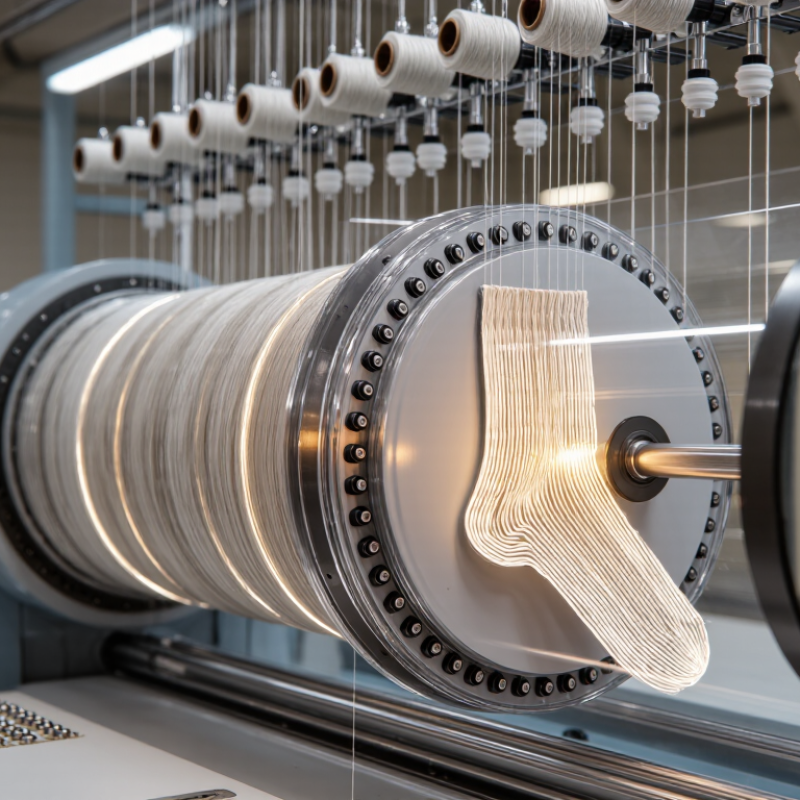
Table of Contents [Hide]
What Defines a 3D Sock Knitting Machine? Seamless, Shaped Fabric
A 3D sock knitting machine creates a sock in a shaped form rather than producing flat fabric for later sewing. Its cylinder carries many fine needles, which form loops around the sock’s circumference. Needle selection and yarn feed are coordinated as the machine runs.
The shape develops through changes in stitch formation. Around the leg and foot, the machine knits a tube; near the heel, it can vary needle activity to create a pocket that follows the foot. The toe is shaped by reducing or adjusting stitches, then closed according to the machine and production setup. The result is fabric designed to fit in three dimensions. No flat panels. Fewer bulky seams.
“Seamless” needs a little care. It usually describes the knitted body, not necessarily every finishing detail. Some socks still require a toe-closing step, and construction varies by equipment and design. This distinction matters when checking comfort or production claims. A smooth interior can reduce rubbing, but fit also depends on yarn, stitch density, and sizing. Even a well-shaped sock can feel wrong if those details are off. That is the part worth testing on an actual foot. These machines offer precise shaping, though they do not remove every design trade-off.

© Copyright - Pro Tool & Supply - Site by SVM E-Marketing Solutions - Sitemap
- Privacy policy