- Products
- Air Compressors & Air Tools
- Climate Control
- Compaction Equipment
- Concrete Cutting Tools & Equipment
- Concrete and Masonry
- Demolition & Excavation
- Electrical & Mechanical
- Fasteners and Anchoring Adhesives
- Floor Protection
- Generators and Welders
- Hand Tools
- Heaters
- Janitorial and Office Supplies
- Jobsite Protection
- Ladders & Storage
- Lighting & Lighting Accessories
- Man Lifts
- Material Handling Equipment
- Power Tools
- Pressure Washers & Pumps
- Safety Gear
- Safety Products
- Saws
- Surface Preparation
- SEASONAL PRODUCTS
- Rentals
- Air Compressor and Air Tool Rentals
- Climate Control Rental
- Compaction Rentals
- Concrete Equipment Rentals
- Demolition & Excavation Equipment Rentals
- Concrete Floor Grinder Rentals
- General Construction Equipment Rentals
- Generator Rentals and Welder Rentals
- Heater Rentals
- Light Tower Rentals
- Man Lift Rentals in Massachusetts and Rhode Island
- Material Handling Equipment Rentals
- Pressure Washer & Pump Rentals
- Saw Rentals in New England
- SEASONAL PRODUCTS
- Products
- Air Compressors & Air Tools
- Climate Control
- Compaction Equipment
- Concrete Cutting Tools & Equipment
- Demolition & Excavation
- Electrical & Mechanical
- Floor Protection
- Generators and Welders
- Construction Heaters
- Construction Ladders, Staging, & Storage
- Construction Lighting
- Man Lifts
- Material Handling Equipment
- Industrial Janitorial and Office Supplies
- Pressure Washers & Pumps
- Construction Safety Products
- Construction Safety Gear
- Surface Preparation
- Building Protection
- Diesel Accessories
- Zero Emissions
- Rentals
- Air Compressor and Air Tool Rentals
- Climate Control Rental
- Compaction Rentals
- Concrete Equipment Rental
- Demolition & Excavation Equipment Rental
- General Construction Equipment Rental
- Generator Rentals and Welder Rentals
- Construction Heaters Rental
- Light Tower Rentals
- Man Lift Rentals
- Material Handling Equipment Rental
- Pressure Washer & Pump Rentals
- Saw Rentals in New England
- Concrete Floor Grinder Rentals
- Zero Emissions Rentals
- Repairs & Used
- Parts
- Blog
- Services
- Resources
- About Us
- Contact Us
Sales & Rental of Construction | Industrial Equipment & Supplies


What Are Firefighting Drones and How Do They Work?
Firefighting Drones are unmanned aircraft designed to support crews during dangerous fireground operations. They combine flight controllers, satellite positioning, cameras, thermal sensors, and approved communications links. From above, an operator can inspect a roof, trace a fire’s edge, or locate heat through smoke. Live video can reach an incident command team through radio, cellular, or other authorized networks. Some heavy-lift models carry water, foam, or specialized payloads, but capacity and flight time remain limited. Small systems usually provide intelligence rather than suppression. The difference is important.
NFPA’s Fire Loss in the United States During 2023 estimated 1,388,500 fires and 3,670 civilian fire deaths. It also reported approximately $23.3 billion in direct property damage. These figures show why faster aerial awareness can influence evacuation decisions and crew placement. NFPA 2400 provides a professional framework for public-safety UAS selection, operations, maintenance, and training. NIST research and field testing also emphasize dependable communications, sensor performance, and human decision-making. A thermal image is useful, not infallible. Hot metal, steam, and reflective surfaces can confuse interpretation. Wind can ground a drone. Battery limits can interrupt surveillance at the worst moment. This is where operational experience matters: crews must verify drone intelligence against building conditions, weather, hose lines, and direct observations. The following guide explains how Firefighting Drones fly, sense, communicate, and assist. It also examines their limits, because impressive footage is not the same as reliable operational evidence.
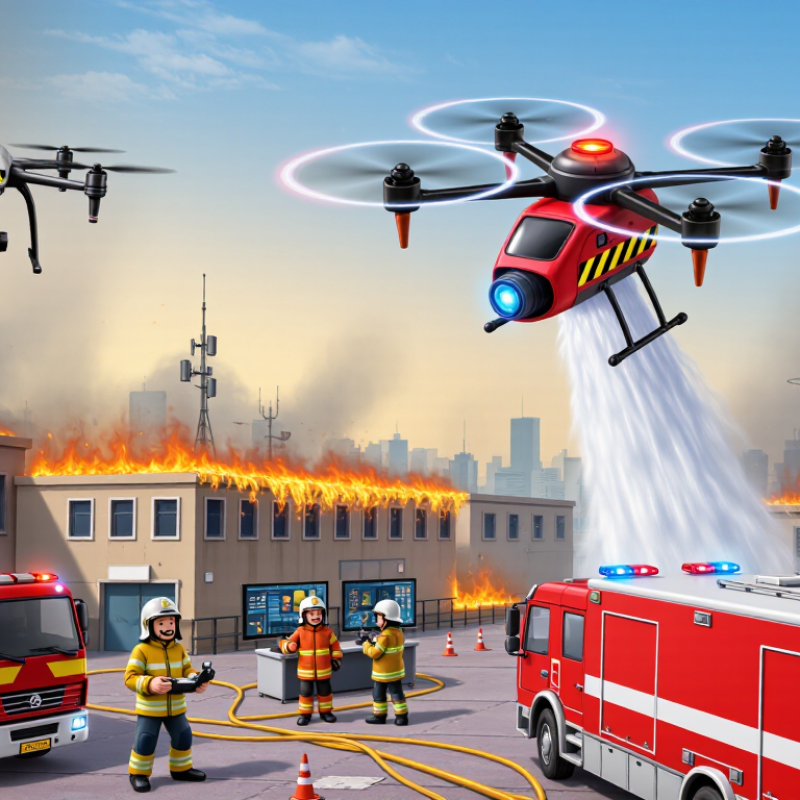
Table of Contents [Hide]
What Firefighting Drones Are and Why They Are Used
Firefighting drones are remotely operated aircraft designed to support emergency crews from above. They commonly carry thermal cameras, zoom lenses, gas sensors, and bright lights. Some models can also transport limited fire-suppressing materials. A trained operator controls the drone while software stabilizes its flight and records live images.
A live map can matter. From a safe distance, the drone can scan a burning roof, warehouse, forest edge, or collapsed structure. Thermal imaging helps reveal hot spots hidden beneath smoke or damaged surfaces. Crews may use this information to choose safer entry points and direct water more accurately. The drone also helps monitor changing wind, flames, and hazardous areas without placing another person inside.
Their value is clearest when visibility and access are poor. However, they are not perfect tools. Thick smoke, rain, strong wind, and reflective metal can distort readings. Batteries limit flight time, especially when cameras, lights, and sensors operate together. Operators need practical training, not only a remote controller. Field teams may also misread a bright thermal image as active fire when it is heated equipment. That limitation deserves attention. Drones can reduce unnecessary exposure, but they cannot replace experienced firefighters, ground inspections, or reliable communication.

© Copyright - Pro Tool & Supply - Site by SVM E-Marketing Solutions - Sitemap
- Privacy policy