- Products
- Air Compressors & Air Tools
- Climate Control
- Compaction Equipment
- Concrete Cutting Tools & Equipment
- Concrete and Masonry
- Demolition & Excavation
- Electrical & Mechanical
- Fasteners and Anchoring Adhesives
- Floor Protection
- Generators and Welders
- Hand Tools
- Heaters
- Janitorial and Office Supplies
- Jobsite Protection
- Ladders & Storage
- Lighting & Lighting Accessories
- Man Lifts
- Material Handling Equipment
- Power Tools
- Pressure Washers & Pumps
- Safety Gear
- Safety Products
- Saws
- Surface Preparation
- SEASONAL PRODUCTS
- Rentals
- Air Compressor and Air Tool Rentals
- Climate Control Rental
- Compaction Rentals
- Concrete Equipment Rentals
- Demolition & Excavation Equipment Rentals
- Concrete Floor Grinder Rentals
- General Construction Equipment Rentals
- Generator Rentals and Welder Rentals
- Heater Rentals
- Light Tower Rentals
- Man Lift Rentals in Massachusetts and Rhode Island
- Material Handling Equipment Rentals
- Pressure Washer & Pump Rentals
- Saw Rentals in New England
- SEASONAL PRODUCTS
- Products
- Air Compressors & Air Tools
- Climate Control
- Compaction Equipment
- Concrete Cutting Tools & Equipment
- Demolition & Excavation
- Electrical & Mechanical
- Floor Protection
- Generators and Welders
- Construction Heaters
- Construction Ladders, Staging, & Storage
- Construction Lighting
- Man Lifts
- Material Handling Equipment
- Industrial Janitorial and Office Supplies
- Pressure Washers & Pumps
- Construction Safety Products
- Construction Safety Gear
- Surface Preparation
- Building Protection
- Diesel Accessories
- Zero Emissions
- Rentals
- Air Compressor and Air Tool Rentals
- Climate Control Rental
- Compaction Rentals
- Concrete Equipment Rental
- Demolition & Excavation Equipment Rental
- General Construction Equipment Rental
- Generator Rentals and Welder Rentals
- Construction Heaters Rental
- Light Tower Rentals
- Man Lift Rentals
- Material Handling Equipment Rental
- Pressure Washer & Pump Rentals
- Saw Rentals in New England
- Concrete Floor Grinder Rentals
- Zero Emissions Rentals
- Repairs & Used
- Parts
- Blog
- Services
- Resources
- About Us
- Contact Us
Sales & Rental of Construction | Industrial Equipment & Supplies


How to Find a Heavy Wall Seamless Pipe SCH80 Factory?
Choosing a Heavy wall seamless pipe SCH80 factory takes more than comparing prices. A thick pipe may look sound on a warehouse rack, yet its records and dimensions tell a fuller story. Buyers should confirm the required outside diameter, schedule, steel grade, length, and end finish before requesting a quotation. Details matter.
Quality-management expert Joseph M. Juran’s principle, “Quality is fitness for use,” offers a useful test for factory selection. For pipe procurement, that means checking whether the mill can supply the specified grade, consistent wall thickness, and traceable inspection records—not merely an attractive certificate. Ask how each pipe is identified by heat number. Compare markings on the pipe with its material test report. Confirm which inspections and tests apply to your order, and request supporting records rather than relying on broad promises. Paper is not proof.
A capable supplier should explain its production route, inspection controls, packing method, and delivery schedule in plain terms. If the application requires a particular standard, verify that the factory can meet it and document compliance. A video call or independent inspection can help clarify what a sales brochure leaves out. Still, no checklist catches every problem. Some buyers focus too heavily on price; others assume a polished website guarantees reliable production. This guide sets out practical questions for assessing factory capability, checking product evidence, and spotting gaps before placing an order. The aim is not to find the loudest claim. It is to find a supplier whose answers match the pipe you need.
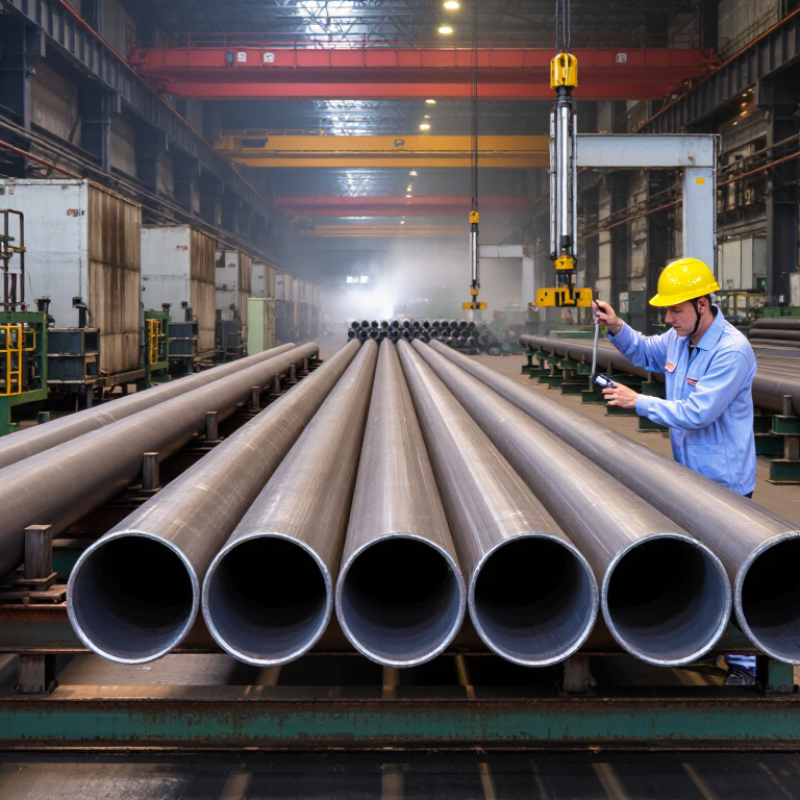
Table of Contents [Hide]
Define Heavy-Wall SCH 80 Pipe by ASME B36.10M Dimensions
When a supplier describes a pipe as “heavy-wall SCH 80,” treat that phrase as a starting point, not a complete specification. ASME B36.10M lists dimensions for welded and seamless wrought steel pipe by nominal pipe size and schedule. For SCH 80, the table gives the specified outside diameter and nominal wall thickness for each size. The inside diameter is derived from those dimensions, so it changes with pipe size.
“Heavy-wall” is a relative description, not a separate dimension in the standard. SCH 80 is thicker than SCH 40 at many sizes, but the actual wall thickness is not one fixed value.
Check the exact NPS entry in the applicable ASME B36.10M edition. A practical check: compare the purchase specification with the table.
When assessing a factory, request its size-specific dimensional records and confirm how wall thickness is inspected. A caliper can check outside diameter; suitable ultrasonic measurement can assess wall thickness without cutting the pipe.
Ask for material grade and test documentation separately, since the dimensional standard does not establish either. The label alone is not enough.
I would also clarify allowable tolerances and inspection points in writing; that detail is easy to miss, and it can matter at installation.

© Copyright - Pro Tool & Supply - Site by SVM E-Marketing Solutions - Sitemap
- Privacy policy