- Products
- Air Compressors & Air Tools
- Climate Control
- Compaction Equipment
- Concrete Cutting Tools & Equipment
- Concrete and Masonry
- Demolition & Excavation
- Electrical & Mechanical
- Fasteners and Anchoring Adhesives
- Floor Protection
- Generators and Welders
- Hand Tools
- Heaters
- Janitorial and Office Supplies
- Jobsite Protection
- Ladders & Storage
- Lighting & Lighting Accessories
- Man Lifts
- Material Handling Equipment
- Power Tools
- Pressure Washers & Pumps
- Safety Gear
- Safety Products
- Saws
- Surface Preparation
- SEASONAL PRODUCTS
- Rentals
- Air Compressor and Air Tool Rentals
- Climate Control Rental
- Compaction Rentals
- Concrete Equipment Rentals
- Demolition & Excavation Equipment Rentals
- Concrete Floor Grinder Rentals
- General Construction Equipment Rentals
- Generator Rentals and Welder Rentals
- Heater Rentals
- Light Tower Rentals
- Man Lift Rentals in Massachusetts and Rhode Island
- Material Handling Equipment Rentals
- Pressure Washer & Pump Rentals
- Saw Rentals in New England
- SEASONAL PRODUCTS
- Products
- Air Compressors & Air Tools
- Climate Control
- Compaction Equipment
- Concrete Cutting Tools & Equipment
- Demolition & Excavation
- Electrical & Mechanical
- Floor Protection
- Generators and Welders
- Construction Heaters
- Construction Ladders, Staging, & Storage
- Construction Lighting
- Man Lifts
- Material Handling Equipment
- Industrial Janitorial and Office Supplies
- Pressure Washers & Pumps
- Construction Safety Products
- Construction Safety Gear
- Surface Preparation
- Building Protection
- Diesel Accessories
- Zero Emissions
- Rentals
- Air Compressor and Air Tool Rentals
- Climate Control Rental
- Compaction Rentals
- Concrete Equipment Rental
- Demolition & Excavation Equipment Rental
- General Construction Equipment Rental
- Generator Rentals and Welder Rentals
- Construction Heaters Rental
- Light Tower Rentals
- Man Lift Rentals
- Material Handling Equipment Rental
- Pressure Washer & Pump Rentals
- Saw Rentals in New England
- Concrete Floor Grinder Rentals
- Zero Emissions Rentals
- Repairs & Used
- Parts
- Blog
- Services
- Resources
- About Us
- Contact Us
Sales & Rental of Construction | Industrial Equipment & Supplies


10 Essential Tips for Choosing the Right Construction Tools for Your Projects?
Choosing the right construction tools is crucial for any project. Renowned construction expert Mark Harrison once said, "The right tools make all the difference." This holds true for both beginners and seasoned professionals alike. Selecting suitable construction tools can directly impact efficiency, safety, and the quality of work.
When considering construction tools, it’s essential to assess your project requirements. Will you need heavy-duty equipment or more precision tools? Often, the wrong choice can lead to delays and increased costs. It’s not uncommon for workers to feel overwhelmed by options. This requires careful thought and understanding of each tool's purpose and function. Not all tools are created equal, and quality matters more than quantity.
While many prioritize price, the best construction tools are an investment in safety and effectiveness. Regularly, builders overspend on tools they may seldom use. Balancing quality and necessity can be difficult. Reflection on past projects can guide future tool selections. Taking time to research and learn can enhance overall project success. The right construction tools are not just aids; they are foundational to achieving your vision.

Table of Contents
[Hide]
Understanding Your Project Requirements for Tool Selection
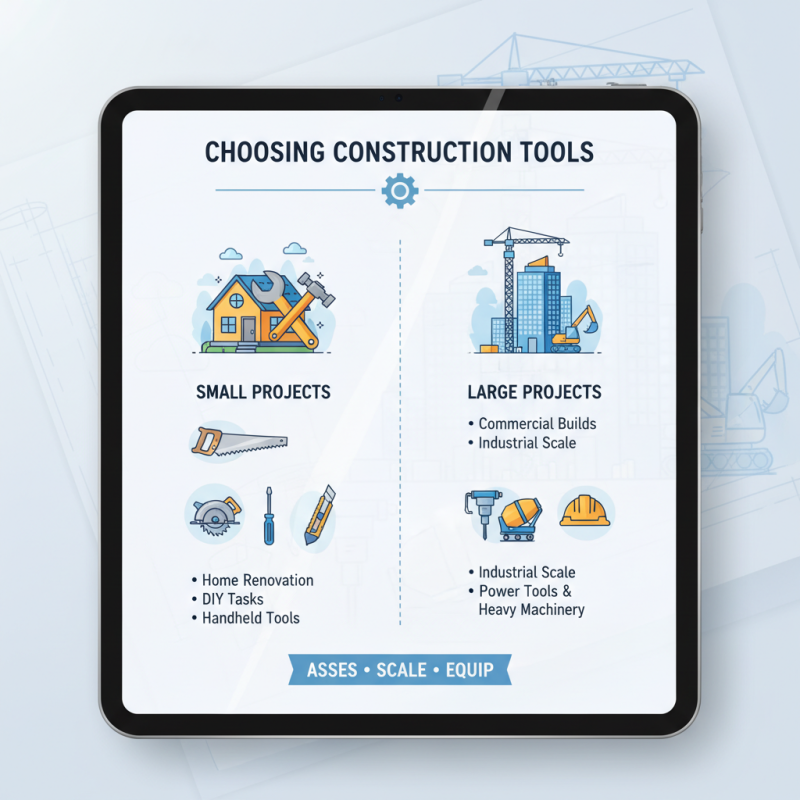
When choosing construction tools, understanding your project requirements is vital. Each project has unique needs that dictate the type of tools you will require. Assess the scale of your project. Are you working on a small home renovation or a large commercial build? The size often determines both the tools and the technique you will use. For small tasks, handheld tools may suffice, while larger projects might necessitate power tools or heavy machinery.
Consider the materials involved in your project. Different materials demand different tools. For instance, cutting concrete requires specific saws and blades while woodworking involves entirely different equipment. Evaluate whether you have experience with the tools you are considering. It can be risky to use an unfamiliar tool without adequate knowledge. Inevitably, you may find yourself in situations where the correct tool is not available. This can hinder progress and lead to frustration. Reflect on your previous experiences to guide your selections. What worked well last time? What did not? Understanding these elements will ensure you select tools that best fit your needs.

Related Posts
-
Top 5 Essential Contractor Tools for 2025: Boost Your Efficiency Today!
-

2025 Guide: How to Choose the Best Electric Heaters for Your Home
-
10 Essential Contractor Tools Every Professional Needs for Success
-
Unlocking the Power of All Tools for Everyday Productivity and Creativity
-

Top 10 New Tools Revolutionizing Digital Marketing in 2024: Enhance Your Strategy with Data-Driven Insights
-

Top 10 New Tools Transforming Digital Workflows You Need to Know About

© Copyright - Pro Tool & Supply - Site by SVM E-Marketing Solutions - Sitemap
- Privacy policy