- Products
- Air Compressors & Air Tools
- Climate Control
- Compaction Equipment
- Concrete Cutting Tools & Equipment
- Concrete and Masonry
- Demolition & Excavation
- Electrical & Mechanical
- Fasteners and Anchoring Adhesives
- Floor Protection
- Generators and Welders
- Hand Tools
- Heaters
- Janitorial and Office Supplies
- Jobsite Protection
- Ladders & Storage
- Lighting & Lighting Accessories
- Man Lifts
- Material Handling Equipment
- Power Tools
- Pressure Washers & Pumps
- Safety Gear
- Safety Products
- Saws
- Surface Preparation
- SEASONAL PRODUCTS
- Rentals
- Air Compressor and Air Tool Rentals
- Climate Control Rental
- Compaction Rentals
- Concrete Equipment Rentals
- Demolition & Excavation Equipment Rentals
- Concrete Floor Grinder Rentals
- General Construction Equipment Rentals
- Generator Rentals and Welder Rentals
- Heater Rentals
- Light Tower Rentals
- Man Lift Rentals in Massachusetts and Rhode Island
- Material Handling Equipment Rentals
- Pressure Washer & Pump Rentals
- Saw Rentals in New England
- SEASONAL PRODUCTS
- Products
- Air Compressors & Air Tools
- Climate Control
- Compaction Equipment
- Concrete Cutting Tools & Equipment
- Demolition & Excavation
- Electrical & Mechanical
- Floor Protection
- Generators and Welders
- Construction Heaters
- Construction Ladders, Staging, & Storage
- Construction Lighting
- Man Lifts
- Material Handling Equipment
- Industrial Janitorial and Office Supplies
- Pressure Washers & Pumps
- Construction Safety Products
- Construction Safety Gear
- Surface Preparation
- Building Protection
- Diesel Accessories
- Zero Emissions
- Rentals
- Air Compressor and Air Tool Rentals
- Climate Control Rental
- Compaction Rentals
- Concrete Equipment Rental
- Demolition & Excavation Equipment Rental
- General Construction Equipment Rental
- Generator Rentals and Welder Rentals
- Construction Heaters Rental
- Light Tower Rentals
- Man Lift Rentals
- Material Handling Equipment Rental
- Pressure Washer & Pump Rentals
- Saw Rentals in New England
- Concrete Floor Grinder Rentals
- Zero Emissions Rentals
- Repairs & Used
- Parts
- Blog
- Services
- Resources
- About Us
- Contact Us
Sales & Rental of Construction | Industrial Equipment & Supplies


10 Tips for Buying Rain Umbrellas Worldwide
Rain Umbrellas are no longer simple rainy-day accessories. They are compact tools for mobility, comfort, and personal protection. A strong choice must survive wind, crowded streets, sudden showers, and repeated folding.
Fortune Business Insights valued the global umbrella market at approximately USD 6.24 billion in 2023. Its report projects continued growth through 2032, supported by urban living, changing weather patterns, and improved product design. Research and Markets also identifies portability, durability, and online retail access as important purchasing factors. These findings suggest that shoppers need more than attractive colors. They need evidence about frame strength, canopy coverage, handle comfort, and repair support.
Greig Brebner, founder of BLUNT Umbrellas, has said, “We wanted to reinvent the umbrella.” That idea remains useful when comparing Rain Umbrellas worldwide. A wind-resistant frame may matter more than a fashionable print. A compact model may fit a train commute, yet provide poor coverage during sideways rain. Small trade-offs become obvious with wet shoes and a broken canopy.
This guide presents ten practical buying tips for different climates and travel habits. It considers materials, construction, size, opening systems, sustainability, and after-sales service. Product labels can still be vague. Marketing claims should be questioned. Even experienced buyers sometimes choose the wrong umbrella for their weather. A careful decision begins with local rainfall, typical wind, and daily carrying needs.
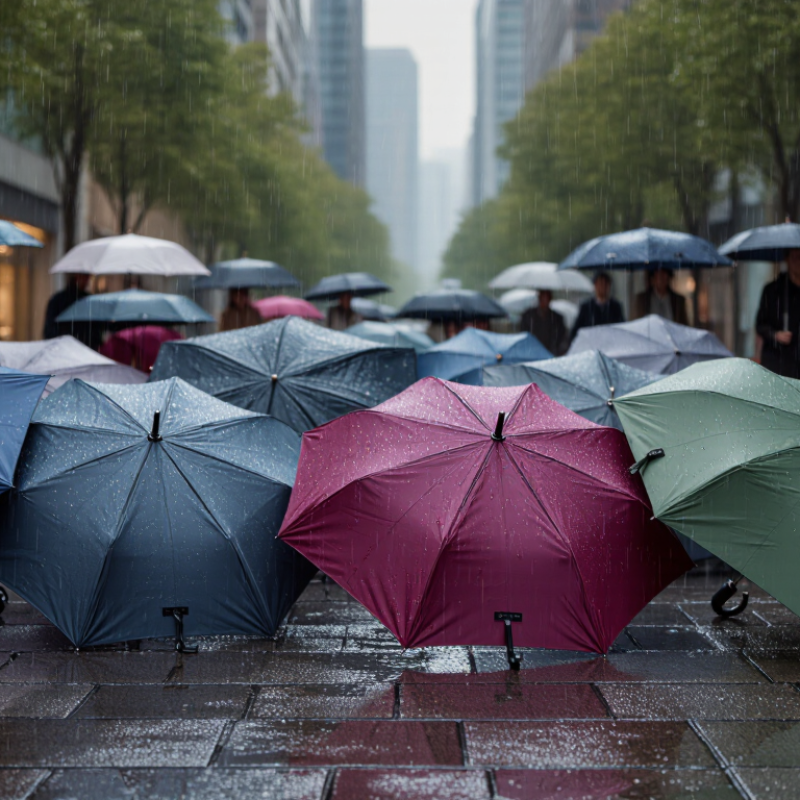
Table of Contents [Hide]
Understanding Rain Umbrella Types and Their Intended Uses
10 Tips for Buying Rain Umbrellas Worldwide
Understanding Rain Umbrella Types and Their Intended Uses
A compact folding umbrella suits commuters, travelers, and anyone carrying a small bag. Choose one with a reinforced frame and a canopy that opens smoothly. Full-size umbrellas provide better coverage for two people, but they need more storage space. They can also become awkward on crowded sidewalks. A bubble umbrella protects the head and shoulders well, especially during sideways rain. Its curved canopy may block some wind, though visibility can feel limited.
Golf-style umbrellas have wide canopies and sturdy shafts. They work well on open paths, sports fields, and rural roads. They are usually too large for public transport. Vented umbrellas release trapped air through small openings. This design can reduce pressure during strong gusts, but it cannot prevent every inversion. Automatic models are convenient when one hand holds a phone or bag. Manual models often offer simpler mechanisms and easier long-term repairs.
I test an umbrella by opening it several times before buying. The ribs should align evenly, and the handle should feel secure when wet. A waterproof canopy should shed water rather than absorb it. I also check the closing strap and the stitching around the edges. My own mistake was choosing a very light model for a windy coastal trip. It was easy to carry, but its narrow frame struggled. A heavier, vented umbrella would have served better. After use, let any umbrella dry fully before closing it.
10 Tips for Buying Rain Umbrellas Worldwide - Understanding Rain Umbrella Types and Their Intended Uses
| Tip | Umbrella Type | Best Intended Use | Useful Features | Limitations | What to Check Before Buying |
|---|---|---|---|---|---|
| 1 | Compact Folding Umbrella | Daily commuting, travel, and carrying in a handbag or backpack | Lightweight, collapsible, and easy to store | Usually provides less coverage and may be less stable in strong wind | Closed length, packed weight, canopy diameter, and locking mechanism |
| 2 | Automatic Open-and-Close Umbrella | People who need quick one-handed operation while entering vehicles or buildings | Button-operated opening and closing; convenient in crowded areas | Mechanisms can add weight and may require careful handling | Button quality, smooth operation, finger clearance, and warranty terms |
| 3 | Full-Length Straight Umbrella | Regular walking in rainy areas where durability and coverage are priorities | Longer shaft, larger handle, and generally simpler construction | Takes more storage space and is less convenient for air travel | Open canopy diameter, shaft rigidity, handle comfort, and storage length |
| 4 | Wind-Resistant Umbrella | Coastal regions, exposed streets, and locations with frequent gusts | Flexible ribs, reinforced joints, vented canopy, and secure frame construction | May be heavier and no umbrella is guaranteed to withstand every wind condition | Rib material, vent design, frame flexibility, and independently tested wind claims |
| 5 | Large Golf-Style Umbrella | Two people, outdoor activities, sports spectators, and extended exposure | Wide canopy and strong coverage for multiple users | Bulky, heavier, and difficult to use in dense pedestrian traffic | Canopy span, number of ribs, total weight, handle grip, and carry sleeve |
| 6 | Bubble or Dome Umbrella | Urban walking, windy rain, and situations requiring extra head and shoulder protection | Deep canopy helps shield the face and sides of the body | Can restrict peripheral visibility and may feel less breathable | Clear-panel visibility, ventilation, canopy depth, and frame strength |
| 7 | Transparent Umbrella | Crowded sidewalks, sightseeing, and walking while maintaining a broad view | Improves forward visibility compared with opaque fabric | Plastic panels can crease, discolor, or become less flexible over time | Panel clarity, crease resistance, UV exposure guidance, and ventilation openings |
| 8 | UV-Resistant Rain-and-Sun Umbrella | Tropical or subtropical climates with alternating rain and strong sunlight | Water-repellent outer fabric with a coating designed to reduce ultraviolet exposure | UV performance can decline with wear, washing, and prolonged sunlight | Published UV protection information, fabric care instructions, and coating durability |
| 9 | Kids' Umbrella | Children who can safely manage an umbrella under adult supervision | Shorter length, lighter weight, rounded tips, and child-sized handle | Smaller canopy offers limited protection and requires age-appropriate supervision | Safety tips, pinch protection, opening force, weight, and recommended user age |
| 10 | Travel Umbrella with Protective Sleeve | Air travel, business trips, and changing weather during sightseeing | Compact storage, quick drying, and reduced risk of wet items inside luggage | Small travel models may sacrifice canopy size or heavy-weather stability | Packed dimensions, total weight, sleeve absorbency, drying time, and luggage compatibility |
General buying note: Choose canopy coverage, frame strength, packed size, and operating style according to local rainfall, wind conditions, transportation habits, and storage needs. Water-repellent fabric helps rain run off, but no umbrella is completely waterproof or suitable for every weather condition.

© Copyright - Pro Tool & Supply - Site by SVM E-Marketing Solutions - Sitemap
- Privacy policy