- Products
- Air Compressors & Air Tools
- Climate Control
- Compaction Equipment
- Concrete Cutting Tools & Equipment
- Concrete and Masonry
- Demolition & Excavation
- Electrical & Mechanical
- Fasteners and Anchoring Adhesives
- Floor Protection
- Generators and Welders
- Hand Tools
- Heaters
- Janitorial and Office Supplies
- Jobsite Protection
- Ladders & Storage
- Lighting & Lighting Accessories
- Man Lifts
- Material Handling Equipment
- Power Tools
- Pressure Washers & Pumps
- Safety Gear
- Safety Products
- Saws
- Surface Preparation
- SEASONAL PRODUCTS
- Rentals
- Air Compressor and Air Tool Rentals
- Climate Control Rental
- Compaction Rentals
- Concrete Equipment Rentals
- Demolition & Excavation Equipment Rentals
- Concrete Floor Grinder Rentals
- General Construction Equipment Rentals
- Generator Rentals and Welder Rentals
- Heater Rentals
- Light Tower Rentals
- Man Lift Rentals in Massachusetts and Rhode Island
- Material Handling Equipment Rentals
- Pressure Washer & Pump Rentals
- Saw Rentals in New England
- SEASONAL PRODUCTS
- Products
- Air Compressors & Air Tools
- Climate Control
- Compaction Equipment
- Concrete Cutting Tools & Equipment
- Demolition & Excavation
- Electrical & Mechanical
- Floor Protection
- Generators and Welders
- Construction Heaters
- Construction Ladders, Staging, & Storage
- Construction Lighting
- Man Lifts
- Material Handling Equipment
- Industrial Janitorial and Office Supplies
- Pressure Washers & Pumps
- Construction Safety Products
- Construction Safety Gear
- Surface Preparation
- Building Protection
- Diesel Accessories
- Zero Emissions
- Rentals
- Air Compressor and Air Tool Rentals
- Climate Control Rental
- Compaction Rentals
- Concrete Equipment Rental
- Demolition & Excavation Equipment Rental
- General Construction Equipment Rental
- Generator Rentals and Welder Rentals
- Construction Heaters Rental
- Light Tower Rentals
- Man Lift Rentals
- Material Handling Equipment Rental
- Pressure Washer & Pump Rentals
- Saw Rentals in New England
- Concrete Floor Grinder Rentals
- Zero Emissions Rentals
- Repairs & Used
- Parts
- Blog
- Services
- Resources
- About Us
- Contact Us
Sales & Rental of Construction | Industrial Equipment & Supplies


What Is a Die Cutting Machine and How Does It Work?
A Die Cutting Machine shapes materials with a prepared die, controlled pressure, and carefully measured movement. It can cut paper, cardboard, foam, fabric, leather, thin plastics, and selected industrial films. The process looks simple, but accuracy depends on several connected parts. The die contains sharp blades arranged in a specific pattern. A sheet moves beneath it, and the machine presses downward or rolls across the surface. The blades then cut, crease, emboss, or perforate the material. Some machines use flatbed pressure, while rotary models operate continuously through rotating cylinders.
In practical production, operators adjust pressure, feed alignment, speed, and material thickness. A poorly aligned sheet may produce uneven edges or incomplete cuts. Small errors matter. You can often see them at the corners. Experienced users inspect the first samples before continuing a large run. They check dimensions, fold lines, waste removal, and surface damage. Manufacturer instructions remain essential because machine limits vary by model. Proper guarding, blade handling, and routine maintenance also protect operators and preserve cutting quality. No machine is flawless. Even a well-calibrated system may need testing when materials change. Humidity, density, adhesive layers, and recycled fibers can affect the result. This guide explains the main components, operating steps, machine types, and practical considerations behind die cutting. It also examines where the process can fail, because understanding limitations often improves reliability more than trusting impressive specifications.
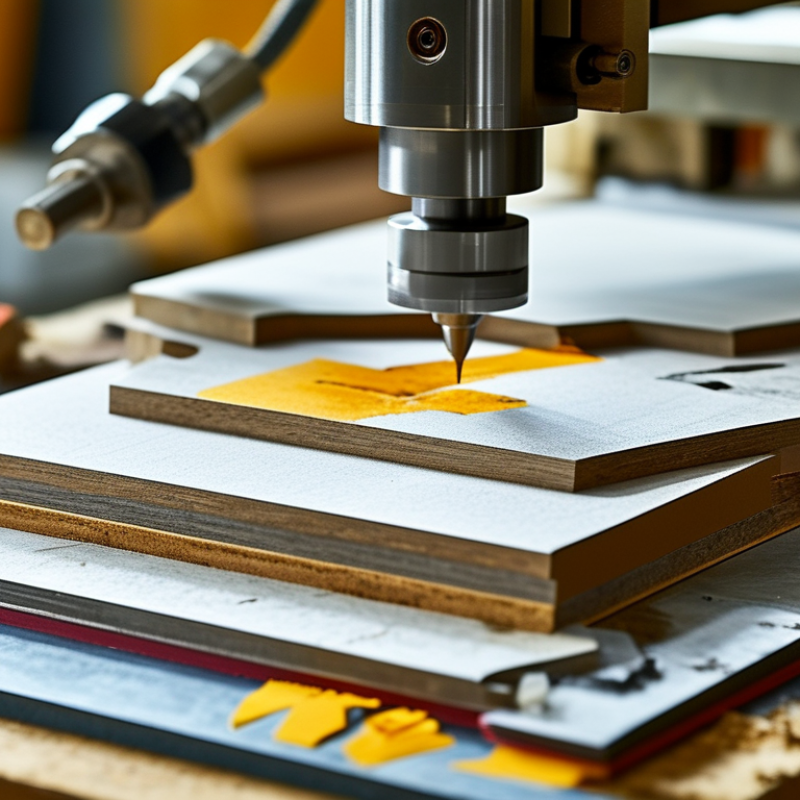
Table of Contents [Hide]
What Is a Die Cutting Machine?
What Is a Die Cutting Machine and How Does It Work?
A die cutting machine is industrial equipment that cuts, creases, or perforates sheet materials into repeatable shapes. It uses a shaped tool called a die, usually made from hardened steel rule. The die presses through paperboard, labels, foam, film, leather, or similar materials. In simple terms, it works like a highly controlled cookie cutter.
Flatbed machines move sheets beneath a descending die, while rotary machines feed material between a cylindrical die and an impression cylinder. Operators first load the material, align the tooling, adjust pressure, and test several pieces. The machine then repeats the cutting cycle at production speed. Small errors in registration can spoil an entire batch. That is why setup matters as much as machine capacity.
The global packaging market exceeded 1 trillion dollars in 2023, according to Smithers’ The Future of Global Packaging to 2028. This scale supports continued demand for accurate converting equipment. A die cutting machine can create window openings, folding lines, tabs, and complex outlines in one operation. It also reduces manual trimming, though it does not remove waste completely. Material grain, blade wear, pressure changes, and dust can affect results. A practical inspection should check cut edges, crease depth, dimensions, and leftover scrap. Precision is achievable, but it is never automatic.
What Is a Die Cutting Machine and How Does It Work?
| Data Dimension | Typical Data | How It Relates to Die Cutting |
|---|---|---|
| Definition | A machine that cuts, creases, embosses, or perforates material with a shaped die | It applies controlled pressure to transfer the die’s pattern to a sheet, web, or individual workpiece. |
| Primary Cutting Principle | Shearing and compression | The cutting rule penetrates the material against a supporting surface, separating the required shape from the surrounding waste. |
| Main Machine Types | Flatbed, rotary, and digital die cutting machines | Flatbed systems use a reciprocating platen, rotary systems use cylindrical dies, and digital systems use computer-controlled blades or tools. |
| Flatbed Operation | Intermittent press stroke | A flat die moves toward a platen, applies pressure, retracts, and allows the material to advance before the next cycle. |
| Rotary Operation | Continuous web processing | A cylindrical die rotates against an anvil or backing cylinder, making rotary systems suitable for high-volume roll-fed production. |
| Digital Operation | Computer-controlled tool movement | A digital cutter follows programmed paths and generally does not require a physical cutting die, making it useful for prototypes and short runs. |
| Common Materials | Paper, paperboard, corrugated board, labels, films, foams, rubber, felt, leather, and thin plastics | The suitable material depends on thickness, hardness, flexibility, surface finish, and the required cutting force. |
| Typical Converting Processes | Through-cutting, kiss-cutting, creasing, perforating, and embossing | One setup may combine several operations to create packaging blanks, labels, inserts, gaskets, or decorative components. |
| Through-Cutting | Cuts through the full material thickness | This process produces separate pieces or blanks from a sheet, roll, or laminated structure. |
| Kiss-Cutting | Cuts the top layer while leaving the liner intact | It is commonly used for pressure-sensitive labels, decals, stickers, and adhesive-backed components. |
| Creasing | Forms a controlled fold line without fully separating the sheet | Creasing improves folding accuracy and reduces cracking in paperboard packaging and printed products. |
| Perforating | Creates a line of small, spaced cuts | The resulting line allows the material to be torn or separated in a controlled manner. |
| Embossing | Raises or depresses a selected area of the material | Embossing adds texture, tactile detail, or visual emphasis without necessarily cutting through the material. |
| Basic Workflow | Design preparation → die production or tool setup → material feeding → registration → pressing or cutting → waste removal → inspection | Accurate alignment and consistent pressure are essential for maintaining dimensional accuracy throughout the run. |
| Die Construction | A shaped cutting rule mounted in a base; creasing and perforating rules may be added | The rule layout defines the final contour, fold lines, perforations, and other converting features. |
| Material Feeding | Sheet-fed or roll-fed | Sheet-fed machines process individual sheets, while roll-fed machines continuously unwind and advance material from a roll. |
| Registration Accuracy | Depends on the machine, material stability, die quality, and sensor or guide system | Registration controls the position of the cut relative to printed graphics, pre-cut features, or laminated layers. |
| Production Volume | Digital: prototypes and short runs; flatbed: short to medium runs; rotary: medium to high-volume runs | The best machine type depends on setup time, repeatability, tooling cost, speed, and order quantity. |
| Advantages | Repeatable shapes, fast processing, integrated finishing, and efficient material conversion | Using a dedicated die can produce consistent parts more quickly than manually cutting each piece. |
| Limitations | Tooling cost, setup requirements, die wear, and material-specific constraints | Complex designs or frequent design changes may increase tooling expense and setup time. |
| Quality-Control Checks | Cut completeness, dimensions, crease depth, edge quality, registration, and waste removal | Regular inspection helps identify dull rules, incorrect pressure, material movement, and misalignment. |
| Safety Considerations | Guards, interlocks, emergency stops, lockout procedures, and operator training | Cutting presses contain moving parts and sharp tooling, so safe operating procedures are required during setup, production, and maintenance. |
Note: Actual machine speed, cutting force, working area, and achievable tolerances vary according to machine design, tooling, material properties, and job requirements.

© Copyright - Pro Tool & Supply - Site by SVM E-Marketing Solutions - Sitemap
- Privacy policy