- Products
- Air Compressors & Air Tools
- Climate Control
- Compaction Equipment
- Concrete Cutting Tools & Equipment
- Concrete and Masonry
- Demolition & Excavation
- Electrical & Mechanical
- Fasteners and Anchoring Adhesives
- Floor Protection
- Generators and Welders
- Hand Tools
- Heaters
- Janitorial and Office Supplies
- Jobsite Protection
- Ladders & Storage
- Lighting & Lighting Accessories
- Man Lifts
- Material Handling Equipment
- Power Tools
- Pressure Washers & Pumps
- Safety Gear
- Safety Products
- Saws
- Surface Preparation
- SEASONAL PRODUCTS
- Rentals
- Air Compressor and Air Tool Rentals
- Climate Control Rental
- Compaction Rentals
- Concrete Equipment Rentals
- Demolition & Excavation Equipment Rentals
- Concrete Floor Grinder Rentals
- General Construction Equipment Rentals
- Generator Rentals and Welder Rentals
- Heater Rentals
- Light Tower Rentals
- Man Lift Rentals in Massachusetts and Rhode Island
- Material Handling Equipment Rentals
- Pressure Washer & Pump Rentals
- Saw Rentals in New England
- SEASONAL PRODUCTS
- Products
- Air Compressors & Air Tools
- Climate Control
- Compaction Equipment
- Concrete Cutting Tools & Equipment
- Demolition & Excavation
- Electrical & Mechanical
- Floor Protection
- Generators and Welders
- Construction Heaters
- Construction Ladders, Staging, & Storage
- Construction Lighting
- Man Lifts
- Material Handling Equipment
- Industrial Janitorial and Office Supplies
- Pressure Washers & Pumps
- Construction Safety Products
- Construction Safety Gear
- Surface Preparation
- Building Protection
- Diesel Accessories
- Zero Emissions
- Rentals
- Air Compressor and Air Tool Rentals
- Climate Control Rental
- Compaction Rentals
- Concrete Equipment Rental
- Demolition & Excavation Equipment Rental
- General Construction Equipment Rental
- Generator Rentals and Welder Rentals
- Construction Heaters Rental
- Light Tower Rentals
- Man Lift Rentals
- Material Handling Equipment Rental
- Pressure Washer & Pump Rentals
- Saw Rentals in New England
- Concrete Floor Grinder Rentals
- Zero Emissions Rentals
- Repairs & Used
- Parts
- Blog
- Services
- Resources
- About Us
- Contact Us
Sales & Rental of Construction | Industrial Equipment & Supplies


Top Concrete Finishing Tools You Need in 2026 for Perfect Results
The concrete finishing tools market is evolving rapidly. According to recent reports, the global market for these tools is projected to grow by 5.4% annually by 2026. This growth is driven by increasing construction activities and the need for high-quality finishes in various applications. Professionals in the construction industry are always seeking innovative solutions to enhance their work.
Many contractors face challenges when selecting the right tools. Inadequate finishing can lead to costly repairs and project delays. With the right concrete finishing tools, however, quality and efficiency can significantly improve. It's essential to identify tools that suit specific projects, as quality varies widely across available options.
While the tools of today are advanced, they are not flawless. There are always aspects to reflect upon. Users might select tools based solely on popularity, overlooking their unique needs. Thus, understanding these tools becomes crucial for achieving perfect results. In 2026, a thorough knowledge of concrete finishing tools will be more important than ever.
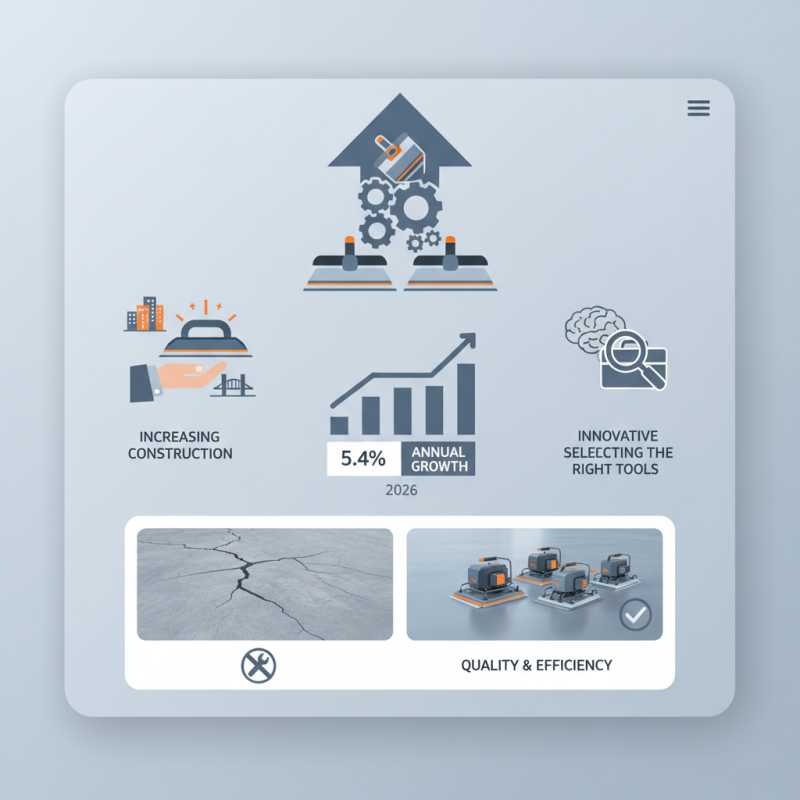
Table of Contents
[Hide]
Essential Concrete Finishing Tools to Invest in by 2026
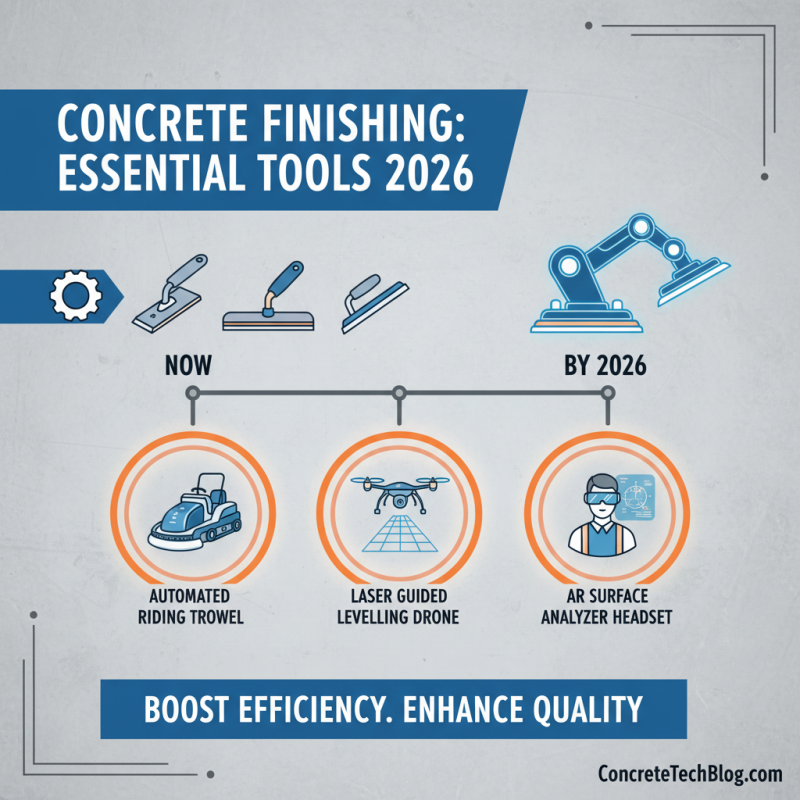
When it comes to concrete finishing, having the right tools is essential for quality results. By 2026, certain tools will be indispensable for any concrete project. Investing in these tools will not only enhance your efficiency but also improve the overall finish of your work.
One critical tool is a power trowel. This device speeds up the finishing process significantly. It helps achieve a smooth surface quickly. However, if not used properly, it can leave swirl marks. Always practice on a small slab before working on a larger area.
Another must-have is a durable concrete float. This tool helps level the surface and remove any imperfections. A perfect float can seem elusive. You might find yourself needing to reapply finishes due to mistakes. Make sure to use the right technique.
Using a sealer sprayer is also vital. It protects your finish from the elements. But be careful with application; over-spraying can create uneven areas. Take your time and ensure even coverage. By focusing on your technique, you can avoid common pitfalls and achieve a perfect finish.
Related Posts
-
Best Concrete Finishing Tools You Need for a Perfect Smooth Finish
-

Why You Need Professional Tools for Effective Content Creation and Management
-

Top 10 New Tools Transforming Digital Workflows You Need to Know About
-
Exploring the Evolution of Shop Tools from Handheld Gadgets to Smart Technology
-

Top Machine Tools for Precision Engineering You Need to Know About
-
Unlocking the Power of All Tools for Everyday Productivity and Creativity
© Copyright - Pro Tool & Supply - Site by SVM E-Marketing Solutions - Sitemap
- Privacy policy