- Products
- Air Compressors & Air Tools
- Climate Control
- Compaction Equipment
- Concrete Cutting Tools & Equipment
- Concrete and Masonry
- Demolition & Excavation
- Electrical & Mechanical
- Fasteners and Anchoring Adhesives
- Floor Protection
- Generators and Welders
- Hand Tools
- Heaters
- Janitorial and Office Supplies
- Jobsite Protection
- Ladders & Storage
- Lighting & Lighting Accessories
- Man Lifts
- Material Handling Equipment
- Power Tools
- Pressure Washers & Pumps
- Safety Gear
- Safety Products
- Saws
- Surface Preparation
- SEASONAL PRODUCTS
- Rentals
- Air Compressor and Air Tool Rentals
- Climate Control Rental
- Compaction Rentals
- Concrete Equipment Rentals
- Demolition & Excavation Equipment Rentals
- Concrete Floor Grinder Rentals
- General Construction Equipment Rentals
- Generator Rentals and Welder Rentals
- Heater Rentals
- Light Tower Rentals
- Man Lift Rentals in Massachusetts and Rhode Island
- Material Handling Equipment Rentals
- Pressure Washer & Pump Rentals
- Saw Rentals in New England
- SEASONAL PRODUCTS
- Products
- Air Compressors & Air Tools
- Climate Control
- Compaction Equipment
- Concrete Cutting Tools & Equipment
- Demolition & Excavation
- Electrical & Mechanical
- Floor Protection
- Generators and Welders
- Construction Heaters
- Construction Ladders, Staging, & Storage
- Construction Lighting
- Man Lifts
- Material Handling Equipment
- Industrial Janitorial and Office Supplies
- Pressure Washers & Pumps
- Construction Safety Products
- Construction Safety Gear
- Surface Preparation
- Building Protection
- Diesel Accessories
- Zero Emissions
- Rentals
- Air Compressor and Air Tool Rentals
- Climate Control Rental
- Compaction Rentals
- Concrete Equipment Rental
- Demolition & Excavation Equipment Rental
- General Construction Equipment Rental
- Generator Rentals and Welder Rentals
- Construction Heaters Rental
- Light Tower Rentals
- Man Lift Rentals
- Material Handling Equipment Rental
- Pressure Washer & Pump Rentals
- Saw Rentals in New England
- Concrete Floor Grinder Rentals
- Zero Emissions Rentals
- Repairs & Used
- Parts
- Blog
- Services
- Resources
- About Us
- Contact Us
Sales & Rental of Construction | Industrial Equipment & Supplies

How to Choose Ultrapure Water Equipment for Global Buyers?
Choosing Ultrapure Water Equipment for global operations is rarely a simple price comparison. Water quality targets, production volume, installation conditions, and service access can change the right decision completely. A system designed for a university laboratory may fail in a pharmaceutical facility. It may also waste energy in a small electronics plant.
Start with the water application. Laboratory analysis may require consistent resistivity, low total organic carbon, and reliable microbial control. Pharmaceutical production may demand documented validation, hygienic design, and traceable monitoring. Semiconductor processes often need extremely low contamination levels. Small details matter, including feed-water temperature, pressure, seasonal quality changes, and drainage capacity.
In practice, experienced buyers inspect more than polished specifications. They ask how pretreatment is maintained, how filters are replaced, and how alarms are tested. They check whether technicians are available near the installation site. They review commissioning records, calibration procedures, and performance data from comparable projects. Recognized technical standards and applicable regional requirements should guide the evaluation, but they should not replace site-specific testing.
There is no universal best system. That assumption can become expensive. A lower purchase price may hide higher consumable costs, difficult sanitation, or long service delays. Conversely, an oversized system can create unnecessary capital and operating expenses. Buyers should compare total ownership cost, water recovery, uptime, operator training, and future expansion. A careful decision combines supplier evidence with independent verification. Some specifications may still need clarification. That is acceptable. Reliable procurement begins by identifying what is known, what is uncertain, and what must be tested before commitment.
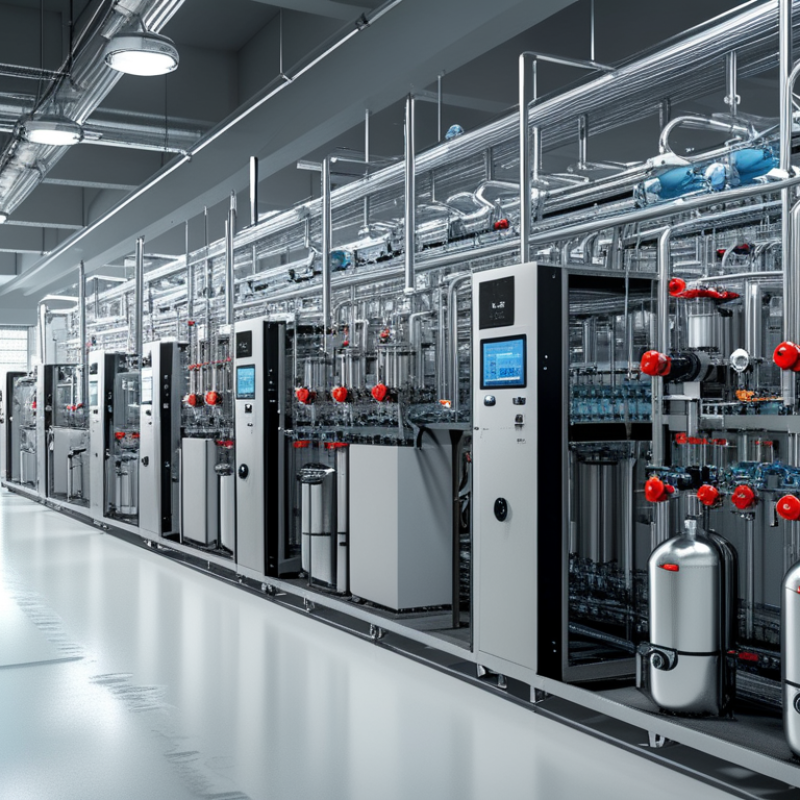
Table of Contents [Hide]
Understanding Ultrapure Water and Its Main Applications
How to Choose Ultrapure Water Equipment for Global Buyers?
Ultrapure water is treated to remove ions, organic compounds, particles, microorganisms, and dissolved gases. Its resistivity can reach 18.2 megohm-centimeters at 25°C. Total organic carbon and microbial levels also matter. Resistivity alone is not enough.
Laboratories use ultrapure water for HPLC, mass spectrometry, molecular biology, and sensitive reagent preparation. A single particle can distort a chromatography result. Trace ions may interfere with elemental analysis. In pharmaceutical production, purified water supports cleaning, formulation, and process control. Electronics manufacturing requires extremely clean water for wafer rinsing. Small contaminants can affect surface performance.
Global buyers should examine their feed water before choosing equipment. Hard water may require softening and reverse osmosis. Organic-rich water may need activated carbon or ultraviolet treatment. Final polishing often combines deionization, filtration, and ultrafiltration. Real-time monitoring should track resistivity, temperature, TOC, and system alerts. Local service access is important, especially where replacement parts take weeks to arrive. Standards and validation records should match the application and local requirements. An impressive specification can still disappoint if operators cannot maintain it. I would also question oversized systems; they may waste water, energy, and maintenance time. Poor sampling technique remains an overlooked problem. Even excellent equipment can produce unreliable results when users neglect clean containers and regular sanitization.

© Copyright - Pro Tool & Supply - Site by SVM E-Marketing Solutions - Sitemap
- Privacy policy