- Products
- Air Compressors & Air Tools
- Climate Control
- Compaction Equipment
- Concrete Cutting Tools & Equipment
- Concrete and Masonry
- Demolition & Excavation
- Electrical & Mechanical
- Fasteners and Anchoring Adhesives
- Floor Protection
- Generators and Welders
- Hand Tools
- Heaters
- Janitorial and Office Supplies
- Jobsite Protection
- Ladders & Storage
- Lighting & Lighting Accessories
- Man Lifts
- Material Handling Equipment
- Power Tools
- Pressure Washers & Pumps
- Safety Gear
- Safety Products
- Saws
- Surface Preparation
- SEASONAL PRODUCTS
- Rentals
- Air Compressor and Air Tool Rentals
- Climate Control Rental
- Compaction Rentals
- Concrete Equipment Rentals
- Demolition & Excavation Equipment Rentals
- Concrete Floor Grinder Rentals
- General Construction Equipment Rentals
- Generator Rentals and Welder Rentals
- Heater Rentals
- Light Tower Rentals
- Man Lift Rentals in Massachusetts and Rhode Island
- Material Handling Equipment Rentals
- Pressure Washer & Pump Rentals
- Saw Rentals in New England
- SEASONAL PRODUCTS
- Products
- Air Compressors & Air Tools
- Climate Control
- Compaction Equipment
- Concrete Cutting Tools & Equipment
- Demolition & Excavation
- Electrical & Mechanical
- Floor Protection
- Generators and Welders
- Construction Heaters
- Construction Ladders, Staging, & Storage
- Construction Lighting
- Man Lifts
- Material Handling Equipment
- Industrial Janitorial and Office Supplies
- Pressure Washers & Pumps
- Construction Safety Products
- Construction Safety Gear
- Surface Preparation
- Building Protection
- Diesel Accessories
- Zero Emissions
- Rentals
- Air Compressor and Air Tool Rentals
- Climate Control Rental
- Compaction Rentals
- Concrete Equipment Rental
- Demolition & Excavation Equipment Rental
- General Construction Equipment Rental
- Generator Rentals and Welder Rentals
- Construction Heaters Rental
- Light Tower Rentals
- Man Lift Rentals
- Material Handling Equipment Rental
- Pressure Washer & Pump Rentals
- Saw Rentals in New England
- Concrete Floor Grinder Rentals
- Zero Emissions Rentals
- Repairs & Used
- Parts
- Blog
- Services
- Resources
- About Us
- Contact Us
Sales & Rental of Construction | Industrial Equipment & Supplies


How to Choose the Right Vibratory Dryer in 2026?
Choosing the right Vibratory Dryer in 2026 requires more than comparing machine prices. The best selection begins with the material, moisture target, production rate, and available floor space. A sticky pharmaceutical powder may need different vibration and airflow than free-flowing mineral granules. Small details matter. Measure them carefully.
Arun S. Mujumdar, a recognized authority on industrial drying, offers an important reminder: “Drying is one of the most energy-intensive unit operations.” His observation remains highly relevant when manufacturers evaluate electricity use, heating efficiency, and exhaust losses. A practical Vibratory Dryer assessment should examine residence time, bed depth, inlet temperature, airflow, vibration amplitude, and final moisture uniformity. Operators should also inspect cleanability, access doors, dust control, insulation, and maintenance requirements. A dryer that performs well during a short demonstration may struggle during continuous production. That possibility deserves attention.
The 2026 market also brings stronger interest in heat recovery, automated controls, hygienic construction, and data monitoring. Yet advanced features cannot repair an unsuitable process design. Request representative product trials whenever possible. Test the actual feedstock, including fines, oversize particles, and seasonal moisture changes. Record energy consumption and product temperature, not only drying speed. Faster is not always better. Excessive heat can damage color, flavor, activity, or particle structure. Some assumptions will be wrong. That is normal, but ignoring them is expensive. This guide explains how to compare Vibratory Dryer configurations with practical evidence, technical judgment, and realistic operating expectations.
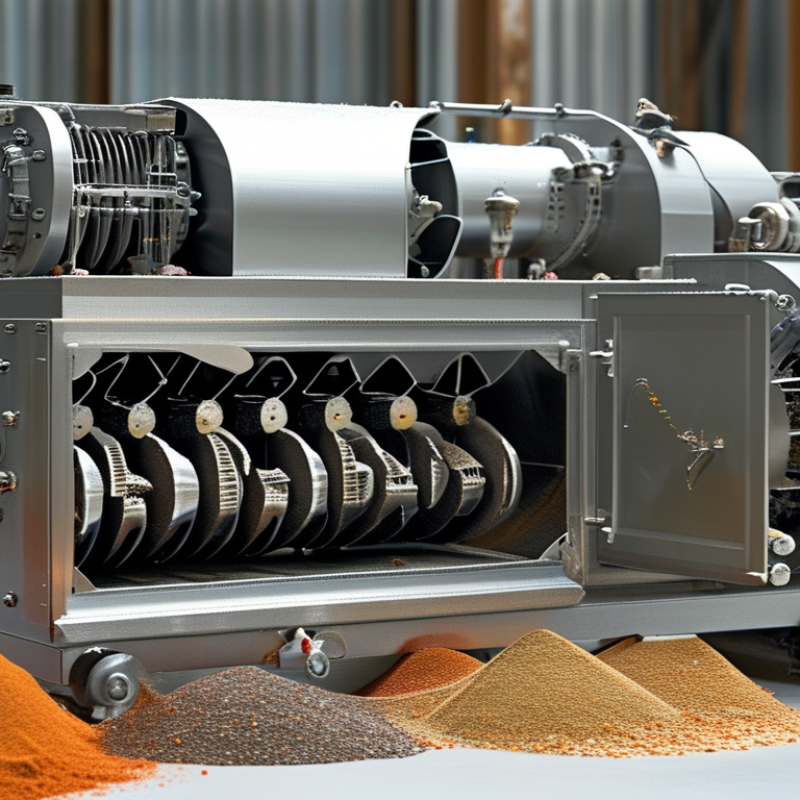
Table of Contents [Hide]
What Is a Vibratory Dryer and How Does It Work?
How to Choose the Right Vibratory Dryer in 2026?
What Is a Vibratory Dryer and How Does It Work?
A vibratory dryer removes moisture by combining controlled vibration, warm air, and particle movement. Unlike a static tray, it keeps wet solids shifting across a perforated deck. This movement exposes fresh surfaces to the drying air. It also reduces clumps that can trap water.
A drive motor creates vibration through eccentric weights or another tuned mechanism. The deck oscillates at a set frequency and amplitude. Material advances as deck angle, motion, and friction interact. Heated air passes upward or across the bed, depending on the design. Moisture leaves the particles, enters the air stream, and exits through an exhaust system. Operators should monitor inlet temperature, outlet humidity, product temperature, and residence time. These readings show whether the dryer removes moisture efficiently or simply heats the load.
In practical testing, feed consistency matters more than many buyers expect. A sudden increase in particle size can slow drying. Excessive vibration may cause dust, breakage, or uneven residence time. Too little movement leaves damp pockets. Trial runs should use measured moisture results, not appearance alone. Energy use, cleanability, noise, and inspection access also deserve attention. A dryer that looks efficient on paper may perform poorly with sticky material. Small trials often expose that uncomfortable gap.

© Copyright - Pro Tool & Supply - Site by SVM E-Marketing Solutions - Sitemap
- Privacy policy