- Products
- Air Compressors & Air Tools
- Climate Control
- Compaction Equipment
- Concrete Cutting Tools & Equipment
- Concrete and Masonry
- Demolition & Excavation
- Electrical & Mechanical
- Fasteners and Anchoring Adhesives
- Floor Protection
- Generators and Welders
- Hand Tools
- Heaters
- Janitorial and Office Supplies
- Jobsite Protection
- Ladders & Storage
- Lighting & Lighting Accessories
- Man Lifts
- Material Handling Equipment
- Power Tools
- Pressure Washers & Pumps
- Safety Gear
- Safety Products
- Saws
- Surface Preparation
- SEASONAL PRODUCTS
- Rentals
- Air Compressor and Air Tool Rentals
- Climate Control Rental
- Compaction Rentals
- Concrete Equipment Rentals
- Demolition & Excavation Equipment Rentals
- Concrete Floor Grinder Rentals
- General Construction Equipment Rentals
- Generator Rentals and Welder Rentals
- Heater Rentals
- Light Tower Rentals
- Man Lift Rentals in Massachusetts and Rhode Island
- Material Handling Equipment Rentals
- Pressure Washer & Pump Rentals
- Saw Rentals in New England
- SEASONAL PRODUCTS
- Products
- Air Compressors & Air Tools
- Climate Control
- Compaction Equipment
- Concrete Cutting Tools & Equipment
- Demolition & Excavation
- Electrical & Mechanical
- Floor Protection
- Generators and Welders
- Construction Heaters
- Construction Ladders, Staging, & Storage
- Construction Lighting
- Man Lifts
- Material Handling Equipment
- Industrial Janitorial and Office Supplies
- Pressure Washers & Pumps
- Construction Safety Products
- Construction Safety Gear
- Surface Preparation
- Building Protection
- Diesel Accessories
- Zero Emissions
- Rentals
- Air Compressor and Air Tool Rentals
- Climate Control Rental
- Compaction Rentals
- Concrete Equipment Rental
- Demolition & Excavation Equipment Rental
- General Construction Equipment Rental
- Generator Rentals and Welder Rentals
- Construction Heaters Rental
- Light Tower Rentals
- Man Lift Rentals
- Material Handling Equipment Rental
- Pressure Washer & Pump Rentals
- Saw Rentals in New England
- Concrete Floor Grinder Rentals
- Zero Emissions Rentals
- Repairs & Used
- Parts
- Blog
- Services
- Resources
- About Us
- Contact Us
Sales & Rental of Construction | Industrial Equipment & Supplies


How to Choose the Right Stocko Connector in 2026?
Choosing the right Stocko Connector in 2026 requires more than matching pins and housing shapes. Engineers must examine current ratings, wire sizes, pitch, temperature limits, vibration resistance, and locking performance. A connector may fit perfectly on a drawing yet fail beside a hot motor or vibrating control panel.
Ron Bishop, founder of Bishop & Associates, has emphasized this practical principle: “A connector must be selected for the application, not merely for its appearance.” That advice remains valuable when comparing Stocko Connector solutions for appliances, automotive systems, industrial controls, and compact electronic assemblies. The best choice begins with real operating conditions, not catalog convenience.
Small details matter. A 2.8-millimeter terminal can behave differently after repeated crimping. Plating quality can influence contact stability over time. Housing material can affect heat resistance, stiffness, and assembly confidence. Designers should verify the manufacturer’s datasheet, application limits, test evidence, and traceability records. They should also test the connector with the actual wire, tool, and enclosure.
That sounds obvious. It is often missed.
A careful selection process should compare service life, installation speed, field replacement needs, and total cost. The cheapest part may create expensive rework later. However, premium specifications are not automatically better. Some projects overdesign the connection and waste valuable space or budget. This guide examines those trade-offs honestly, including the uncomfortable gaps between laboratory ratings and everyday use. The goal is a reliable Stocko Connector choice that survives real assembly conditions, not just a convincing product description.
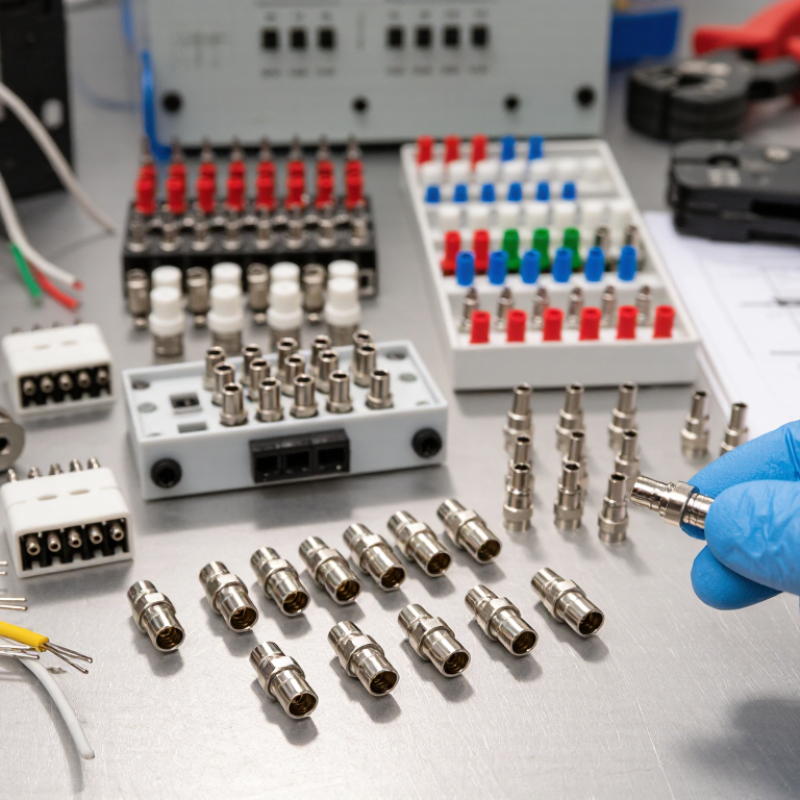
Table of Contents [Hide]
What Is a Stocko Connector and Where Is It Used?
How to Choose the Right Stocko Connector in 2026?
A Stocko connector is a compact electrical connector that joins wires, terminals, or small circuit boards. Many versions use crimping, spring pressure, or insulation-displacement contact. They are common in appliances, lighting assemblies, control panels, heating equipment, and automotive subassemblies. Their small size helps engineers save space behind a switch or inside a narrow housing. The connection may look simple. It still carries real safety responsibilities.
Fortune Business Insights valued the global connector market at USD 84.84 billion in 2023. Its report forecasts USD 146.31 billion by 2032. Grand View Research also identifies miniaturization and rising electronics content as major growth drivers. These figures explain why compact connectors matter in 2026. However, market growth does not make every connector suitable. Check current rating, wire size, contact material, temperature range, and vibration resistance. A connector for a quiet control panel may fail inside a vibrating vehicle.
Look closely at the installation. Is the wire solid or stranded? Will workers assemble it by hand or with tooling? Does moisture reach the housing? IEC 60512 test methods can help verify electrical and mechanical performance. A practical check includes pulling the wire gently, measuring contact resistance, and inspecting the terminal under magnification. Do not rely on appearance alone. That shortcut is tempting, but often wrong. In real projects, connector selection is sometimes rushed, and the cable specification gets overlooked. That mistake deserves another review.

© Copyright - Pro Tool & Supply - Site by SVM E-Marketing Solutions - Sitemap
- Privacy policy