Sales & Rental of Construction | Industrial Equipment & Supplies

How to Choose the Right Pallet Conveyor System?

Choosing the right Pallet Conveyor system can shape an entire warehouse operation. It affects throughput, product safety, labor effort, maintenance, and future expansion. A conveyor may look suitable on a layout, yet perform poorly under real loading conditions.

The decision should begin with clear operating facts. Measure pallet dimensions, load weights, surface conditions, travel distances, and required cycle times. Consider whether pallets move continuously, stop at workstations, or change direction often. Roller conveyors may suit stable loads and straight routes. Chain conveyors can provide controlled movement for heavy or uneven pallets. Automated systems may improve consistency, but they require reliable sensors, controls, and trained support staff.

Small details matter. A damaged pallet board can create repeated stoppages. Dust near sensors can cause false signals. A narrow transfer point may slow an otherwise efficient line. These issues are easy to overlook during planning. They deserve practical testing.

A dependable selection process also examines safety guarding, emergency stops, noise, energy use, cleaning access, and spare-part availability. Suppliers should provide load calculations, layout drawings, performance limits, and maintenance guidance. Independent technical review can expose assumptions that sales materials do not mention. No system is perfect. Budget pressure may encourage shortcuts, while excessive automation may add unnecessary complexity.

The best choice balances present needs with realistic growth. Compare total ownership cost, not only the initial quotation. A well-matched Pallet Conveyor system should move goods steadily, protect workers, and remain serviceable after installation. That standard is demanding, but it prevents expensive regrets.
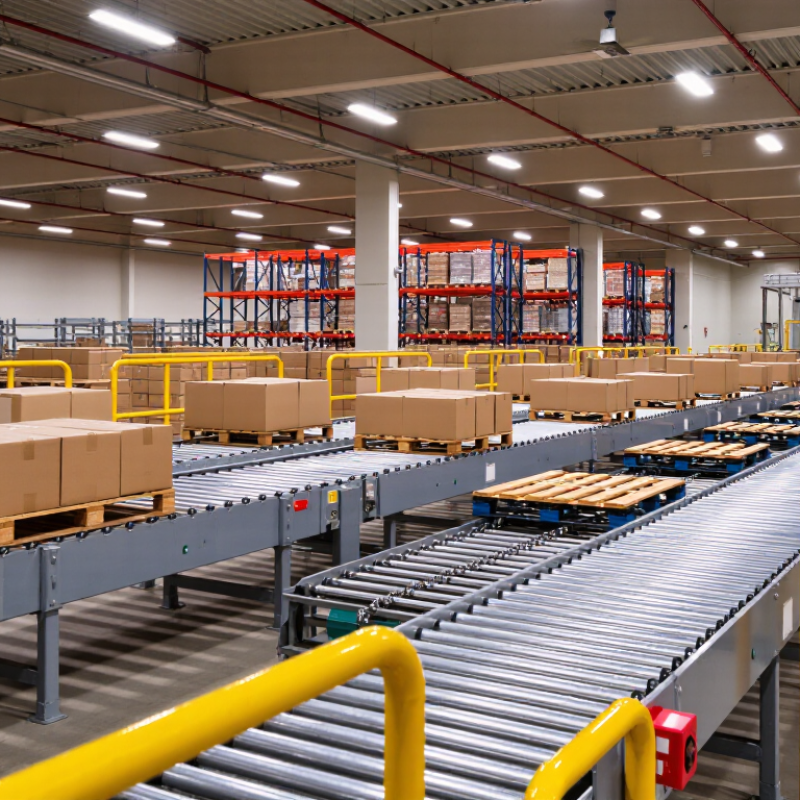
How to Choose the Right Pallet Conveyor System?

Define Your Pallet Handling Requirements and Operating Conditions

How to Choose the Right Pallet Conveyor System?

Define Your Pallet Handling Requirements and Operating Conditions

Start with the pallet, not the conveyor. Record pallet length, width, height, weight, and load stability. Include damaged pallets, overhanging cartons, and uneven loads. These details affect roller spacing, frame strength, transfers, and sensor positions.

Map the operating conditions carefully. Measure hourly throughput, peak demand, accumulation time, aisle space, temperature, dust, moisture, and cleaning methods. A conveyor designed for 80 pallets per hour may fail during a 140-pallet peak. The 2024 MHI Annual Industry Report identifies robotics and automation as major investment priorities, but automation cannot correct poor input data. That lesson is easy to overlook. It deserves attention.

Tips: Test representative pallets before final design. Run heavy, light, wrapped, and slightly damaged loads. Check starts, stops, transfers, and emergency access. Ask operators where jams actually occur; their experience often challenges the layout drawing. Keep a safety margin, but avoid oversizing every component. Oversizing increases cost and may reduce control. Review ISO 3691-4 guidance where automated mobile equipment interacts with conveyor zones. Record test results, not just opinions. One failed trial can reveal more than a polished specification.

Compare Pallet Conveyor Types and Their Best-Fit Applications

Choosing a pallet conveyor system starts with the load, not the catalog. Pallet dimensions, weight, base condition, throughput, and accumulation needs determine the best fit. In site reviews, I often see teams select equipment for peak speed, then struggle with damaged pallets and poor spacing. That choice looks efficient on paper.

Powered roller conveyors suit stable, standardized pallets and distribution lanes with controlled accumulation. Chain conveyors handle heavier or uneven loads, especially in production areas where pallets need precise transfers.

Belt conveyors offer continuous support for fragile or unstable bases, but they can require more cleaning and belt maintenance. Transfer cars and turntables fit compact layouts with multiple destinations. They save floor space, though their extra moving parts can increase service demands.

The MHI 2024 Annual Industry Report states that 55% of supply-chain professionals expect to adopt robotics and automation within one to two years. That investment should follow a measured process. A conveyor running 60 pallets per hour may still fail if forklifts deliver loads in irregular bursts. CEMA guidance emphasizes guarding, emergency stops, and safe conveyor access, while ISO 13849-1 supports risk-based control design. Test the heaviest pallet, the weakest pallet, and the worst alignment. Small details matter. A neat spreadsheet can still mislead. Select roller systems for repeatability, chains for rugged handling, belts for surface stability, and transfers where routing complexity justifies the maintenance burden.

Evaluate Capacity, Layout, Load Compatibility, and System Dimensions

Choosing a pallet conveyor system starts with capacity, not equipment catalogs. Measure pallets per hour, peak bursts, operating hours, and accumulation time. A system handling 120 pallets hourly may fail during a 20-minute shipping surge. MHI’s 2024 Annual Industry Report identifies labor shortages as a major automation driver, but automation still needs measured demand. Use actual scans and dispatch records. Estimates are often too optimistic.

Layout decides whether capacity survives daily pressure. Map receiving, storage, picking, inspection, and shipping zones before selecting conveyor length. Check turning radii, column positions, fire exits, maintenance access, and pedestrian crossings. Keep service clearances visible on the drawing. A neat layout can still create a dangerous bottleneck near dock doors. Test the busiest route, not the average route.

Load compatibility requires more than pallet weight. Record pallet dimensions, deck-board spacing, surface condition, center of gravity, and load stability. Verify roller pitch and conveyor width against the smallest pallet. Include damaged or warped pallets in testing. They are inconvenient, but they exist. The Packaging Machinery Manufacturers Institute’s 2024 industry reporting highlights continuing investment in automation and integration, reinforcing the need for connected equipment data. Finally, confirm height, floor loading, transfer elevations, guardrails, and ceiling clearance. Leave room for imperfect future loads; real warehouses rarely stay as tidy as the original plan.

Review Safety Features, Controls, Maintenance, and Expandability

How to Choose the Right Pallet Conveyor System?

Choosing a pallet conveyor system should begin with safety, not speed. Safety starts here. Check guarding around chains, rollers, transfer points, and pinch areas. Emergency-stop devices should be easy to reach and simple to reset after inspection. Photoelectric sensors can detect misplaced pallets before they cause jams. Warning lights and audible signals also help operators recognize a stopped zone quickly. Keep it visible. A safe layout should protect maintenance staff, forklift drivers, and nearby workers during normal movement and unexpected stops.

Controls should match the workflow and the people using them. Clear screens can show pallet location, motor status, fault codes, and blocked zones without confusing technical language. Manual controls are useful during testing, but they should not bypass essential safety functions. Maintenance access matters just as much. Choose components with reachable lubrication points, removable guards, and documented inspection intervals. I have seen minor roller wear become a long shutdown because access was awkward. That mistake deserves review. Keep spare sensors, belts, and fasteners identified near the service area.

Plan before growth. Leave physical space for extra conveyor sections, accumulation lanes, and future scanning equipment. A modular frame can reduce disruption when the warehouse changes. Ask whether the control system can accept new zones without replacing the entire panel. Expansion may look affordable on paper, yet cable routes, floor loading, and power capacity can change the cost quickly. Test the proposed layout with real pallet dimensions, damaged packaging, and peak-hour traffic. Clean diagrams are helpful, but real pallets are rarely perfect.

How to Choose the Right Pallet Conveyor System? - Review Safety Features, Controls, Maintenance, and Expandability

Evaluation Dimension Gravity Roller Conveyor Powered Roller Conveyor Chain Conveyor Belt Conveyor
Typical pallet load range Approximately 100–2,000 kg, depending on roller diameter, spacing, and frame design. Approximately 500–2,000 kg for common industrial applications; heavier designs are possible. Approximately 500–2,500 kg when the pallet base is suitable for chain support. Approximately 100–1,500 kg; load capacity depends strongly on belt width, cleats, and incline.
Best-fit application Low-throughput accumulation, staging, loading, and short-distance movement. Controlled transport, accumulation, sorting, and integration with automated systems. Heavy pallets, dirty environments, transfers, and applications requiring positive movement. Pallets with uneven bottoms, packaged goods, inclines, or applications requiring continuous surface support.
Safety features to specify End stops, side guides, anti-rollback devices on inclines, and guarded transfer points. Emergency-stop devices, guarding, photoelectric sensors, jam detection, and controlled restart. Fixed guarding around chains and sprockets, emergency stops, pallet presence sensors, and anti-rollback protection. Guarding at pulleys and nip points, emergency stops, belt tracking protection, and access interlocks where required.
Emergency-stop arrangement Usually limited to nearby workstations unless the conveyor is integrated with powered equipment. Pull-cord or push-button emergency stops should be accessible along the conveyor length. Emergency stops should cover transfer zones, operator access points, and both sides of long sections. Emergency stops should be accessible from operating aisles and maintenance locations.
Control requirements Manual flow; may need operator-controlled stops or mechanical regulators. Motor starters or variable-frequency drives, photoeyes, zone control, PLC logic, and fault indication. Motor control, sensors, sequencing logic, transfer synchronization, and overload protection. Motor control, speed adjustment, belt-slip detection, tracking monitoring, and accumulation logic if required.
Typical operating speed Commonly 0.1–0.3 m/s, controlled by pallet weight and conveyor incline. Commonly 0.1–0.8 m/s, with lower speeds preferred for heavy or unstable loads. Commonly 0.1–0.5 m/s for heavy pallet handling and accurate positioning. Commonly 0.1–0.6 m/s, depending on belt type, load stability, and incline.
Accumulation capability Limited; pallets can contact one another and may require manual separation. High when designed with zero-pressure or minimum-pressure accumulation zones. Moderate to high; requires suitable pallet spacing and coordinated controls. Moderate; continuous belts generally require sensors and controlled stopping to prevent load contact.
Maintenance tasks Inspect rollers, bearings, frame alignment, side guides, and debris buildup. Inspect motors, gearboxes, rollers, chains or belts, sensors, wiring, and accumulation zones. Check chain tension, lubrication, sprockets, bearings, guides, and transfer alignment. Check belt tension, tracking, splice condition, pulley bearings, scrapers, and material buildup.
Recommended inspection starting point Visual inspection weekly; detailed alignment and hardware check monthly. Visual inspection daily or per shift; sensor and drive checks monthly; preventive service quarterly. Visual inspection daily or per shift; lubrication and tension checks according to operating hours. Visual inspection daily or per shift; tracking and tension checks weekly or as operating conditions require.
Noise and workplace impact Usually low noise, but pallet impacts can be noticeable at stops and transfers. Moderate noise from motors, gearboxes, rollers, and pallet transfers. Potentially higher mechanical noise from chains, sprockets, and pallet impacts. Generally moderate noise; belt cleaners, pulleys, and misalignment can increase noise.
Expandability Easy to extend mechanically, but limited for automated routing and controlled accumulation. Highly expandable with additional zones, scanners, transfers, sensors, and PLC modules. Expandable for heavy-duty routes, transfers, and pallet positioning; controls may require redesign. Expandable in straight runs and inclines; complex routing may require additional conveyors or transfers.
Space and layout considerations Requires sufficient slope or manual pushing; allow space for pallet stopping and retrieval. Requires electrical routing, control panels, maintenance access, and safe operator clearances. Requires protected chain paths, suitable pallet runners, and access for lubrication and adjustment. Requires adequate belt clearance, return-side access, tracking space, and clean transfer geometry.
Selection recommendation Choose for simple, low-cost movement where powered control is not essential. Choose when safety monitoring, controlled accumulation, automation, and future expansion are priorities. Choose for heavy, rigid pallets and demanding transfer or positioning requirements. Choose when continuous support, inclines, or irregular pallet bottoms make rollers unsuitable.
Important design note: The load capacities, speeds, and maintenance intervals shown are typical preliminary design ranges rather than guaranteed ratings. Final selection should be verified against pallet dimensions, pallet condition, load center of gravity, duty cycle, environmental conditions, applicable safety requirements, and the conveyor manufacturer's engineering calculations.

Calculate Total Costs and Select the Right Conveyor System

Choosing a pallet conveyor system should begin with total cost, not the equipment quote. Calculate purchase, installation, controls, guarding, training, maintenance, energy, and floor-space costs. Add the cost of downtime when one motor or sensor stops production.

MHI’s 2024 Annual Industry Report found that 55% of respondents planned to increase technology investment. That investment must improve measurable performance. Compare cost per pallet, hourly throughput, accumulation capacity, and expected service life. Roller conveyors suit stable, flat pallets. Chain conveyors may handle heavier or uneven loads. A hybrid layout can reduce transfers, but it may increase controls complexity.

Tips: Build a five-year cost model. Request energy estimates under normal load. Ask for spare-part lead times. Test the heaviest pallet, not the average one. The U.S. Department of Energy reports that motor-driven systems consume more than half of industrial electricity. Efficient motors and smart standby settings can therefore reduce operating costs. Still, energy savings are often overstated. Measure actual duty cycles after installation.

Leave space for maintenance access. A cheaper conveyor can become expensive when technicians cannot reach a drive safely. Include safety devices, inspection time, and software updates in the budget. Review at least three operating scenarios: normal demand, peak demand, and partial utilization. The best system is not always the fastest. It is the one that protects throughput without creating hidden costs.

© Copyright - Pro Tool & Supply - Site by SVM E-Marketing Solutions - Sitemap - Privacy policy
