- Products
- Air Compressors & Air Tools
- Climate Control
- Compaction Equipment
- Concrete Cutting Tools & Equipment
- Concrete and Masonry
- Demolition & Excavation
- Electrical & Mechanical
- Fasteners and Anchoring Adhesives
- Floor Protection
- Generators and Welders
- Hand Tools
- Heaters
- Janitorial and Office Supplies
- Jobsite Protection
- Ladders & Storage
- Lighting & Lighting Accessories
- Man Lifts
- Material Handling Equipment
- Power Tools
- Pressure Washers & Pumps
- Safety Gear
- Safety Products
- Saws
- Surface Preparation
- SEASONAL PRODUCTS
- Rentals
- Air Compressor and Air Tool Rentals
- Climate Control Rental
- Compaction Rentals
- Concrete Equipment Rentals
- Demolition & Excavation Equipment Rentals
- Concrete Floor Grinder Rentals
- General Construction Equipment Rentals
- Generator Rentals and Welder Rentals
- Heater Rentals
- Light Tower Rentals
- Man Lift Rentals in Massachusetts and Rhode Island
- Material Handling Equipment Rentals
- Pressure Washer & Pump Rentals
- Saw Rentals in New England
- SEASONAL PRODUCTS
- Products
- Air Compressors & Air Tools
- Climate Control
- Compaction Equipment
- Concrete Cutting Tools & Equipment
- Demolition & Excavation
- Electrical & Mechanical
- Floor Protection
- Generators and Welders
- Construction Heaters
- Construction Ladders, Staging, & Storage
- Construction Lighting
- Man Lifts
- Material Handling Equipment
- Industrial Janitorial and Office Supplies
- Pressure Washers & Pumps
- Construction Safety Products
- Construction Safety Gear
- Surface Preparation
- Building Protection
- Diesel Accessories
- Zero Emissions
- Rentals
- Air Compressor and Air Tool Rentals
- Climate Control Rental
- Compaction Rentals
- Concrete Equipment Rental
- Demolition & Excavation Equipment Rental
- General Construction Equipment Rental
- Generator Rentals and Welder Rentals
- Construction Heaters Rental
- Light Tower Rentals
- Man Lift Rentals
- Material Handling Equipment Rental
- Pressure Washer & Pump Rentals
- Saw Rentals in New England
- Concrete Floor Grinder Rentals
- Zero Emissions Rentals
- Repairs & Used
- Parts
- Blog
- Services
- Resources
- About Us
- Contact Us
Sales & Rental of Construction | Industrial Equipment & Supplies


How to Choose the Right Neon LED Strip for Your Project?
Choosing the right Neon Led Strip is not simply a matter of selecting the brightest product. Your project may need flexible curves, clean architectural lines, outdoor durability, or a soft glow behind translucent acrylic. Each requirement changes the specification. A strip that looks excellent in a showroom can disappoint when installed beneath a kitchen cabinet or around a tight sign corner.
Lighting engineer Sarah Chen explains, “The best Neon Led Strip disappears into the design while making the intended feature impossible to miss.” This principle keeps selection practical. Examine brightness, color temperature, voltage, power consumption, bending direction, and diffuser quality. Also check the IP rating, especially for bathrooms, gardens, storefronts, and exposed façades. IP65 may resist water spray, while submerged applications require a more suitable rating. Product labels alone are not enough.
Measure the installation path carefully. Leave room for connectors, power supplies, ventilation, and maintenance access. A twelve-volt system may suit short runs, while twenty-four volts often reduces voltage drop across longer sections. Test a sample before ordering hundreds of meters. Small details matter.
Do not chase maximum brightness.
In my experience, many failures begin with an attractive photograph and an incomplete specification. Color can shift against painted walls. Adhesive can weaken on dusty surfaces. Even a premium strip can perform poorly with an undersized driver. The selection process deserves a little hesitation. Recheck the environment, viewing distance, control method, and expected operating hours. A reliable Neon Led Strip should look right, install safely, and continue performing after the first impressive evening.
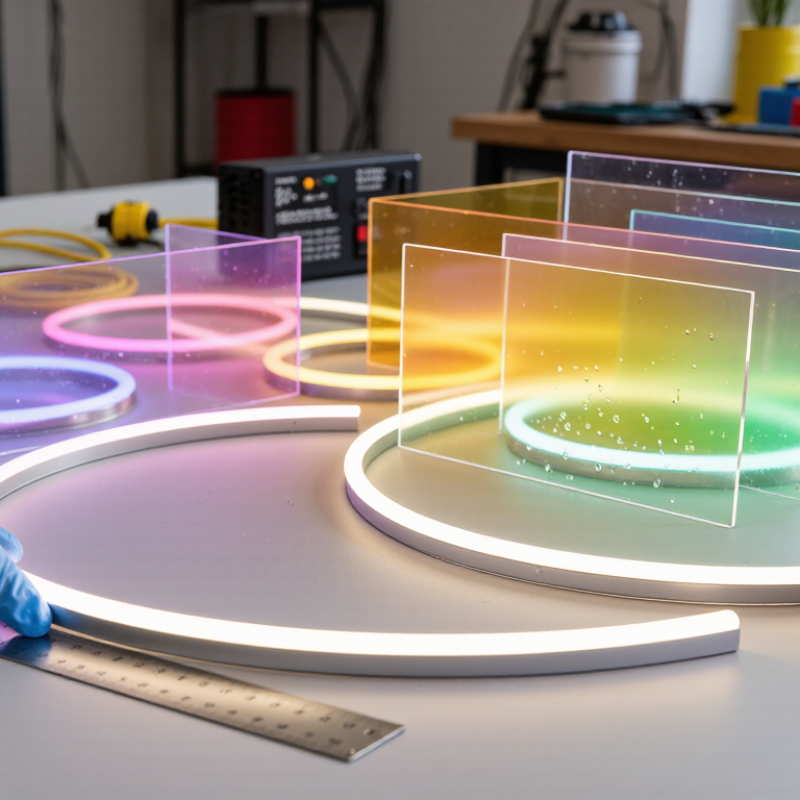
Table of Contents [Hide]
Define Your Project’s Lighting Goals and Installation Requirements
Choosing a neon LED strip starts with defining the lighting goal. Is it for signage, task lighting, architectural edging, or a soft decorative glow? Each purpose needs a different brightness, color temperature, and diffusion level. The International Energy Agency reported that lighting uses about 15% of global electricity. Efficient LEDs matter, but energy efficiency alone cannot fix poor planning. A strip that looks vivid in a showroom may feel harsh in a small room.
Installation conditions are equally important. Measure the full route, including corners, joins, and concealed sections. For long runs, 24-volt systems usually reduce voltage drop compared with 12-volt options. Heat still matters. The U.S. Department of Energy notes that LED products often reach 25,000 to 50,000 hours, but real service life depends on temperature, drivers, and installation quality. I have seen elegant projects fail because the strip was tightly enclosed. That mistake is easy to repeat.
Tips: Select an IP rating under IEC 60529 for the actual environment. IP20 suits dry interiors, while damp areas may require IP65 or higher. Check the stated bend radius before forming curves. Leave access for the power supply. Do not rely only on wattage; review lumens per meter, color consistency, and maximum run length. A small sample test is worthwhile, even when the specification sheet looks convincing. Sometimes the “perfect” color becomes disappointing beside painted walls.

© Copyright - Pro Tool & Supply - Site by SVM E-Marketing Solutions - Sitemap
- Privacy policy