Sales & Rental of Construction | Industrial Equipment & Supplies

How to Choose the Right Metal Hole Saw?

Choosing the right Metal Hole Saw can determine whether a project ends with a clean opening or a damaged workpiece. A suitable saw cuts smoothly, controls heat, and reduces wasted material. The wrong choice may chatter, bind, or leave ragged edges around the hole.

Material matters most. Carbon steel, stainless steel, aluminum, and cast iron respond differently to cutting teeth. A bi-metal hole saw often suits general steelwork, while carbide-grit models can handle abrasive materials more effectively. Check the manufacturer’s recommended material range before cutting. Do not rely on appearance alone.

Thickness matters too. A shallow sheet and a heavy steel plate require different cutting approaches. The hole diameter must match the project, but the arbor, pilot drill, and drill capacity also need attention. Small details matter. In workshop practice, excessive pressure often creates more heat than progress. Cutting oil, controlled speed, and steady feed can improve performance. Always secure the workpiece and wear suitable eye protection.

A perfect choice does not always exist. Cost, cutting speed, durability, and finish may conflict. That is where careful comparison becomes valuable. This guide examines tooth design, construction, diameter, cutting depth, drill compatibility, and operating technique. It also considers common mistakes, such as using a high-speed setting on thick metal or ignoring worn pilot drills. Product specifications and practical testing should support the final decision, especially when accuracy and repeatable results matter.
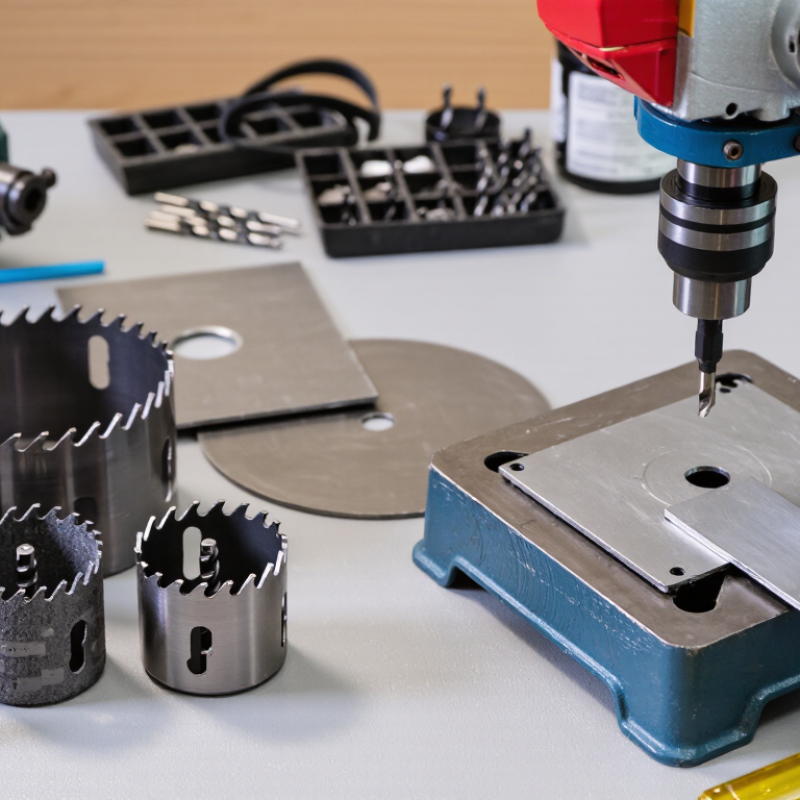
How to Choose the Right Metal Hole Saw?

Define the Metal, Thickness, and Hole Size

Choosing a metal hole saw starts with identifying the metal, not the tool. The World Steel Association reported 1,888.2 million tonnes of crude steel production in 2023. The International Aluminium Institute recorded about 70.6 million tonnes of primary aluminium production that year. These metals cut differently. Mild steel usually tolerates general-purpose bi-metal teeth. Stainless steel needs sharper, heat-resistant teeth and slower cutting. Aluminium cuts quickly, but its chips can clog the gullets. Cast iron is abrasive and often benefits from carbide-grit construction.

Heat changes everything. Measure twice. Check the metal with drawings, a magnet, or a small test cut before drilling the finished surface. I have seen operators select a saw by diameter alone, then discover that a thin stainless panel warped under pressure. Thickness determines tooth engagement, cutting speed, and whether the saw can clear chips. For thin sheet, use light pressure and secure backing material. For thicker plate, confirm the saw’s published maximum depth and arbor capacity. A manufacturer’s rating is useful, but real conditions may reduce it.

Hole size must match the opening’s function, not merely the cable or pipe diameter. Measure the outside diameter, including insulation, fittings, or movement clearance. Then verify the pilot bit can start safely without striking hidden material. Standards and technical guidance from ISO and ANSI emphasize controlled tooling selection, secure workholding, and dimensional accuracy. Still, guidance cannot replace judgment. If the metal grade, thickness, or clearance remains uncertain, stop and test on scrap.

Match the Hole Saw Material to the Cutting Task

How to Choose the Right Metal Hole Saw?

Match the Hole Saw Material to the Cutting Task

The hole saw material should match the metal, thickness, and cutting speed. For thin mild steel, a high-speed steel saw can produce clean openings with controlled pressure. It works well for brackets, light tubing, and electrical panels. Keep the drill steady. Excessive force can bend the pilot bit or damage the teeth.

A bi-metal hole saw is more forgiving for regular workshop use. Its flexible body resists cracking, while hardened teeth handle mild steel, aluminum, and some stainless steel. Use cutting fluid on thicker sections. It reduces heat and helps clear chips from the cut. I have found that a slower speed often gives better results than extra pressure.

For hardened steel or frequent stainless-steel work, choose carbide-tipped teeth. They stay effective under higher heat, but they need a rigid setup and careful feeding. A dull saw may squeal before it stops cutting. That sound matters. Stop, inspect the teeth, and adjust the speed. Diamond-grit hole saws are better suited to tile or masonry, not ordinary metal. Material charts are useful, but they cannot replace checking the actual workpiece. Surface coatings, welds, and hidden thickness can change the result. My first choice is not always perfect, and that is worth remembering.

How to Choose the Right Metal Hole Saw? - Match the Hole Saw Material to the Cutting Task

Hole Saw Material or Construction Best-Matched Cutting Tasks Suitable Workpiece Materials Cutting Performance Main Advantages Important Limitations Recommended Operating Approach
High-Speed Steel (HSS) Light-duty drilling and occasional hole cutting where a lower initial cost is important. Mild steel, thin sheet steel, aluminum, brass, copper, and other relatively soft metals. Good for soft to medium-hard metals; heat buildup can reduce edge life. Sharp cutting edge, clean entry, and suitable for general workshop use. Less resistant to heat and shock than bi-metal or carbide-equipped designs; not the first choice for repeated stainless-steel cutting. Use a slow-to-moderate speed, firm pressure, cutting fluid, and frequent chip clearance. Avoid rubbing without cutting.
Bi-Metal HSS General-purpose production and maintenance work requiring a balance of cutting speed, toughness, and service life. Mild steel, structural steel, stainless steel, aluminum, brass, copper, and galvanized sheet. Very good for mixed metal work and interrupted cutting. Combines a tough spring-steel body with an HSS cutting edge; resists tooth breakage and is more versatile than standard HSS. Usually cuts more slowly than carbide-equipped designs in abrasive or heat-resistant alloys. Use a lower speed for stainless steel than for mild steel. Apply cutting fluid, maintain steady feed pressure, and prevent the saw from dwelling in one spot.
M42 Bi-Metal HSS Frequent cutting of harder steels and stainless steel where improved hot hardness and edge retention are needed. Stainless steel, alloy steel, mild steel, cast iron, aluminum, and other medium-hard metals. Excellent for demanding general-purpose metal cutting. Cobalt-alloyed HSS cutting edges retain hardness at higher temperatures and provide strong wear resistance. Costs more than conventional HSS and can still be damaged by excessive speed, inadequate lubrication, or excessive tooth loading. Use controlled speed, continuous feed, and suitable cutting fluid. Use a pilot drill only when it can be securely supported.
Carbide-Tipped Fast hole cutting in hard, abrasive, or heat-resistant materials, especially when long edge life is required. Stainless steel, cast iron, tool steel, hardened sheet, aluminum alloys, brass, and nonferrous metals. Excellent in wear resistance and high-temperature cutting; requires stable equipment. Carbide tips stay hard at high temperatures and can cut abrasive materials faster than HSS designs. Tips are brittle and may chip from vibration, side loading, impact, or a crooked entry. Usually costs more. Use a rigid machine setup, steady feed, correct speed, and adequate coolant. Do not twist or lever the saw while it is engaged.
Carbide-Grit Edge Cutting abrasive, brittle, or non-metal materials that can damage conventional toothed hole saws. Cast iron, fiberglass, cement board, ceramic tile, brick, masonry, and some abrasive nonferrous materials. Very good for abrasive materials; produces a more grinding-like cut. Resists abrasion and does not rely on individual sharp teeth, reducing tooth snagging in brittle materials. Usually cuts more slowly and may leave a rougher edge than a toothed HSS or carbide-tipped saw; unsuitable for many ductile metals. Use moderate pressure, avoid excessive speed, clear dust or chips frequently, and use appropriate dust control for non-metal materials.
Diamond-Grit Edge Precision cutting of extremely hard, abrasive, or brittle materials rather than ordinary metal fabrication. Glass, porcelain, ceramic, stone, cement-based products, and selected very hard composites. Excellent for hard brittle materials; generally not intended for conventional steel cutting. Very high abrasion resistance and the ability to cut materials that quickly dull ordinary metal-cutting teeth. Slow in ductile metals, sensitive to overheating, and often requires water cooling or another specified cooling method. Use the manufacturer-specified speed and cooling method. Keep the tool aligned and apply light, consistent pressure.
Selection note: For most general metalwork, bi-metal HSS is the practical starting point. Choose M42 bi-metal HSS for frequent stainless-steel cutting, carbide-tipped construction for hard or abrasive metals, and carbide-grit construction for brittle or abrasive non-metal materials. Actual tool life also depends on workpiece thickness, saw diameter, machine rigidity, speed, feed pressure, and lubrication.

Select the Right Tooth Design and Cutting Speed

How to Choose the Right Metal Hole Saw?

The tooth design should match the metal, thickness, and drilling conditions. For thin sheet metal, fine teeth reduce snagging and produce a cleaner edge. Variable-pitch teeth are more forgiving on tubing and mixed metal thicknesses. They also reduce vibration during hand-held drilling. For stainless steel or hardened alloys, carbide-tipped teeth can stay effective longer. However, they need steady pressure and careful alignment. A rigid setup matters.

Cutting speed is equally important. A large hole saw needs a lower RPM than a small one. Use the material’s recommended surface speed, then calculate RPM with this formula: RPM = cutting speed × 1000 ÷ (3.14 × saw diameter in millimeters). Start slightly slower when the metal is unknown. Apply cutting fluid, keep the saw level, and let the teeth cut without forcing them. Too much pressure can flatten teeth or create blue heat marks. Stop if chips become powdery.

Watch the chips. They should leave the cut as small, visible curls. Short chips may indicate correct pressure and speed. I still make mistakes when changing from mild steel to stainless steel; the same setting rarely works perfectly. Clean the gullets during deeper cuts, especially in thick plate. A pilot drill can wander, too. Check its condition before starting, because a damaged pilot often ruins an otherwise suitable hole saw.

How to Choose the Right Metal Hole Saw?

Select the Right Tooth Design and Cutting Speed

The chart shows representative starting cutting speeds in surface feet per minute (SFM). Variable-pitch bi-metal teeth are a practical choice for general steel work, while carbide-tipped teeth can support higher speeds and longer life in abrasive or hard materials.

Use these values as starting points, then adjust for hole-saw diameter, material thickness, machine rigidity, coolant, and feed pressure. Reduce speed when cutting stainless steel or when heat buildup and work-hardening occur.

Check Tool Compatibility, Safety, and Operating Conditions

Choosing the right metal hole saw starts with tool compatibility. Check the saw diameter, arbor size, pilot drill, and drill chuck capacity. The arbor must lock firmly without visible wobble. Match the saw to the metal thickness and type. Thin sheet steel cuts differently from stainless steel or aluminum.

Read the tool instructions before fitting anything. Wear safety glasses, hearing protection, and close-fitting work gloves when appropriate. Secure the workpiece with clamps, not one hand. Remove loose clothing and keep the power cable away from the cutting path. A sharp pilot drill helps prevent wandering, but excessive pressure can damage both teeth and material. Stop immediately if the saw binds or vibrates.

Operating conditions also control cutting quality. Use a stable, low-speed setting for harder metals, and apply suitable cutting fluid when the instructions permit it. Keep the saw aligned at ninety degrees to the surface. Short pauses can clear chips and reduce heat. Never force a dull saw. I have sometimes blamed the tool when the real problem was poor alignment or a loose clamp. That mistake is easy to repeat. Check the work area, the drill setting, and the saw teeth before restarting. On overhead or awkward cuts, plan for falling slugs and hot chips before pulling the trigger.

Compare Durability, Cost, and Maintenance Requirements

How to Choose the Right Metal Hole Saw?

Compare Durability, Cost, and Maintenance Requirements

Choosing a metal hole saw starts with the material you need to cut. Thin sheet metal, stainless steel, and cast iron create different demands. A bi-metal hole saw usually offers a practical balance between toughness and price. For frequent work, carbide-tipped teeth may last longer, especially on hard alloys. However, higher purchase cost does not guarantee better value. The wrong tooth design can still wear quickly.

Durability depends on cutting pressure, speed, and heat control. In my workshop experience, forcing the saw creates dull teeth and rough holes. A steady feed works better. Use cutting fluid when the material and tool instructions allow it. Clear chips often, because packed chips increase friction. Check the pilot drill, teeth, and arbor before each job. Small damage can become expensive downtime. I have sometimes replaced a complete set too early; inspection would have saved money.

Tips: Match the tooth pitch to the metal thickness. Use slower speeds for harder materials. Let the tool cut. Do not push aggressively. Clean and dry the hole saw after use, then store it away from moisture. Keep spare pilot drills available, but avoid replacing parts automatically. Compare replacement costs with the tool’s expected service life. A cheaper saw may suit occasional repairs, while a stronger model may earn its cost through repeated, consistent use. Test one hole before committing to a larger purchase.

Article Source:

© Copyright - Pro Tool & Supply - Site by SVM E-Marketing Solutions - Sitemap - Privacy policy
