- Products
- Air Compressors & Air Tools
- Climate Control
- Compaction Equipment
- Concrete Cutting Tools & Equipment
- Concrete and Masonry
- Demolition & Excavation
- Electrical & Mechanical
- Fasteners and Anchoring Adhesives
- Floor Protection
- Generators and Welders
- Hand Tools
- Heaters
- Janitorial and Office Supplies
- Jobsite Protection
- Ladders & Storage
- Lighting & Lighting Accessories
- Man Lifts
- Material Handling Equipment
- Power Tools
- Pressure Washers & Pumps
- Safety Gear
- Safety Products
- Saws
- Surface Preparation
- SEASONAL PRODUCTS
- Rentals
- Air Compressor and Air Tool Rentals
- Climate Control Rental
- Compaction Rentals
- Concrete Equipment Rentals
- Demolition & Excavation Equipment Rentals
- Concrete Floor Grinder Rentals
- General Construction Equipment Rentals
- Generator Rentals and Welder Rentals
- Heater Rentals
- Light Tower Rentals
- Man Lift Rentals in Massachusetts and Rhode Island
- Material Handling Equipment Rentals
- Pressure Washer & Pump Rentals
- Saw Rentals in New England
- SEASONAL PRODUCTS
- Products
- Air Compressors & Air Tools
- Climate Control
- Compaction Equipment
- Concrete Cutting Tools & Equipment
- Demolition & Excavation
- Electrical & Mechanical
- Floor Protection
- Generators and Welders
- Construction Heaters
- Construction Ladders, Staging, & Storage
- Construction Lighting
- Man Lifts
- Material Handling Equipment
- Industrial Janitorial and Office Supplies
- Pressure Washers & Pumps
- Construction Safety Products
- Construction Safety Gear
- Surface Preparation
- Building Protection
- Diesel Accessories
- Zero Emissions
- Rentals
- Air Compressor and Air Tool Rentals
- Climate Control Rental
- Compaction Rentals
- Concrete Equipment Rental
- Demolition & Excavation Equipment Rental
- General Construction Equipment Rental
- Generator Rentals and Welder Rentals
- Construction Heaters Rental
- Light Tower Rentals
- Man Lift Rentals
- Material Handling Equipment Rental
- Pressure Washer & Pump Rentals
- Saw Rentals in New England
- Concrete Floor Grinder Rentals
- Zero Emissions Rentals
- Repairs & Used
- Parts
- Blog
- Services
- Resources
- About Us
- Contact Us
Sales & Rental of Construction | Industrial Equipment & Supplies


How to Choose the Right DC Motor Drive?
Choosing the right Dc Motor Drive begins with the motor, not the catalog cover. A drive must match rated voltage, continuous current, peak current, speed range, and braking requirements. A 24-volt conveyor motor may start smoothly unloaded, then stall when boxes accumulate. That brief stall can expose weak current limiting, poor cooling, or an undersized power supply. Measure the real load. Record startup torque, running torque, duty cycle, ambient temperature, and available cabinet space. These details often matter more than a tempting low purchase price.
Experienced engineers also examine feedback compatibility, PWM frequency, acceleration control, protection features, and communication options. An encoder can improve speed regulation, while a simple open-loop system may suit a small fan. Read the manufacturer’s manual carefully, especially derating curves and fault-reset behavior. Bench testing should include repeated starts, reverse commands, overload events, and operation near maximum temperature. Watch the motor housing. It should not become an unnoticed heater. Compliance documentation and credible technical support add confidence when production depends on consistent motion. Still, no selection method is flawless. I have seen specifications look perfect until wiring length introduced noise and unstable feedback. That is why practical verification, clear measurements, and honest review of assumptions remain essential. The best Dc Motor Drive is not merely powerful; it is predictable, serviceable, and appropriate for the complete machine.
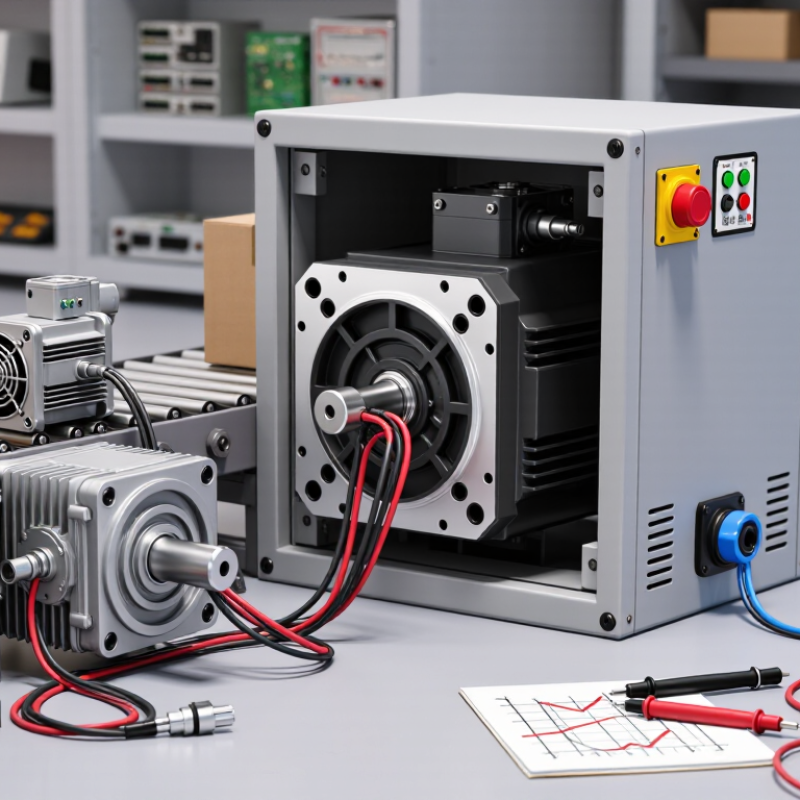
Table of Contents [Hide]
Define the Motor, Load, and Operating Requirements
How to Choose the Right DC Motor Drive?
Define the motor, load, and operating requirements before comparing drive ratings. Identify the motor’s nominal voltage, rated speed, continuous current, and stall current. Check whether it uses brushed or brushless commutation. A drive must handle normal operation and short acceleration peaks without overheating. Do not size it from voltage alone. Current capacity matters more during startup.
Measure the load at the shaft, not only on paper. Record required torque, running speed, acceleration time, friction, and reflected inertia. A conveyor carrying uneven boxes may need several times its running torque briefly. A fan behaves differently because its torque rises with speed. My first estimate is often too optimistic. Real friction, alignment, and belt tension can change the result. Test under the heaviest expected condition.
Define the operating environment and control behavior. Note the supply tolerance, duty cycle, ambient temperature, enclosure limits, braking needs, and speed-control method. Decide whether the drive needs current limiting, fault feedback, regenerative handling, or an emergency stop interface. Leave thermal and electrical margin, but avoid excessive oversizing, which can reduce control quality and increase cost. Use measured data, motor curves, and a controlled prototype test. Document the assumptions. Recheck them when the load changes.

© Copyright - Pro Tool & Supply - Site by SVM E-Marketing Solutions - Sitemap
- Privacy policy