- Products
- Air Compressors & Air Tools
- Climate Control
- Compaction Equipment
- Concrete Cutting Tools & Equipment
- Concrete and Masonry
- Demolition & Excavation
- Electrical & Mechanical
- Fasteners and Anchoring Adhesives
- Floor Protection
- Generators and Welders
- Hand Tools
- Heaters
- Janitorial and Office Supplies
- Jobsite Protection
- Ladders & Storage
- Lighting & Lighting Accessories
- Man Lifts
- Material Handling Equipment
- Power Tools
- Pressure Washers & Pumps
- Safety Gear
- Safety Products
- Saws
- Surface Preparation
- SEASONAL PRODUCTS
- Rentals
- Air Compressor and Air Tool Rentals
- Climate Control Rental
- Compaction Rentals
- Concrete Equipment Rentals
- Demolition & Excavation Equipment Rentals
- Concrete Floor Grinder Rentals
- General Construction Equipment Rentals
- Generator Rentals and Welder Rentals
- Heater Rentals
- Light Tower Rentals
- Man Lift Rentals in Massachusetts and Rhode Island
- Material Handling Equipment Rentals
- Pressure Washer & Pump Rentals
- Saw Rentals in New England
- SEASONAL PRODUCTS
- Products
- Air Compressors & Air Tools
- Climate Control
- Compaction Equipment
- Concrete Cutting Tools & Equipment
- Demolition & Excavation
- Electrical & Mechanical
- Floor Protection
- Generators and Welders
- Construction Heaters
- Construction Ladders, Staging, & Storage
- Construction Lighting
- Man Lifts
- Material Handling Equipment
- Industrial Janitorial and Office Supplies
- Pressure Washers & Pumps
- Construction Safety Products
- Construction Safety Gear
- Surface Preparation
- Building Protection
- Diesel Accessories
- Zero Emissions
- Rentals
- Air Compressor and Air Tool Rentals
- Climate Control Rental
- Compaction Rentals
- Concrete Equipment Rental
- Demolition & Excavation Equipment Rental
- General Construction Equipment Rental
- Generator Rentals and Welder Rentals
- Construction Heaters Rental
- Light Tower Rentals
- Man Lift Rentals
- Material Handling Equipment Rental
- Pressure Washer & Pump Rentals
- Saw Rentals in New England
- Concrete Floor Grinder Rentals
- Zero Emissions Rentals
- Repairs & Used
- Parts
- Blog
- Services
- Resources
- About Us
- Contact Us
Sales & Rental of Construction | Industrial Equipment & Supplies


How to Choose an Automated Injection Molding Machine?
Choosing an Automated Injection Molding machine is not simply a matter of selecting the fastest model. It is a process decision. The right machine must match the part, mold, material, production volume, and quality target.
John Bozzelli, a respected scientific molding educator, emphasizes a practical principle: “Consistency is the real goal of automation.” This idea matters on the factory floor. A machine may produce a perfect sample during testing, yet struggle after eight hours of cycling. Temperature drift, unstable feeding, poor mold alignment, or an undersized shot can quietly increase scrap. Small errors become expensive.
Start with the product requirements. Check the required clamp force, shot size, injection pressure, screw design, and mold dimensions. Consider the material’s sensitivity to moisture and shear. Engineering polymers may demand tighter temperature control than common polypropylene. A servo-electric machine can reduce energy use and improve repeatability, while a hydraulic model may offer strong performance and lower initial cost. Neither option is automatically best.
Look closely at automation compatibility. The machine should communicate reliably with robots, conveyors, mold-temperature controllers, dryers, and inspection systems. Cycle time is important, but recovery time and maintenance access matter too. Ask for production data, not only brochure claims. Request a material trial with the actual mold.
Some choices remain imperfect. Energy savings may not justify a higher purchase price for low-volume work. A highly automated cell can also create new training needs. The best decision balances measurable performance with practical factory experience, documented service support, and room for future production changes.
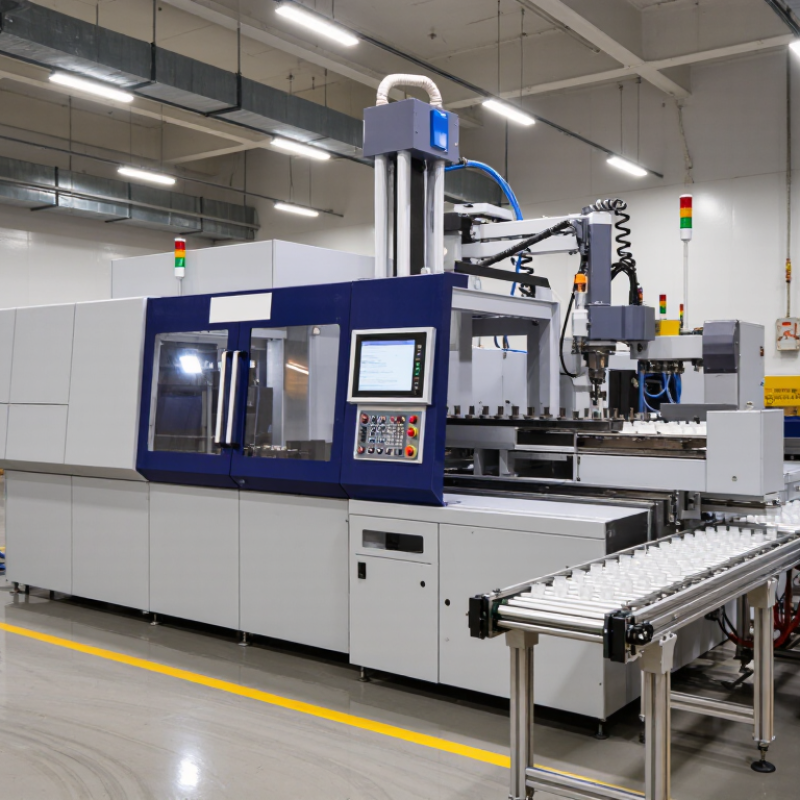
Table of Contents [Hide]
Define Production Needs and Machine Requirements
Choosing an automated injection molding machine starts with production facts, not catalog features. Define annual volume, part weight, resin type, cavity count, cycle time, and required uptime. Record the largest and smallest parts separately. They expose different constraints. A 2024 MarketsandMarkets report estimates continued growth in the global injection molding machine market, increasing pressure to improve capacity and efficiency. Growth alone, however, does not justify buying the largest machine.
Calculate clamp force from projected part area, cavity pressure, and safety margin. Confirm shot size, mold thickness, daylight, tie-bar spacing, and ejection stroke. Keep the normal shot between 30% and 80% of barrel capacity when possible. This supports stable plasticizing and reduces residence-time problems. Automation also needs definition: part removal, sprue separation, vision inspection, packaging, and material drying may require different interfaces. Small details matter.
Energy should be measured per molded part, not only by installed power. The U.S. Department of Energy reports that motor-driven systems can consume more than 70% of industrial electricity. Therefore, compare kWh per cycle under realistic loads. Request process data, alarm history, maintenance access, and acceptance-test criteria. ISO 20430:2020 provides relevant safety requirements for injection molding machines. I have seen teams overestimate future demand and under-specify mold access. That mistake is expensive. A careful spreadsheet is useful, but it is not a substitute for a mold trial.

© Copyright - Pro Tool & Supply - Site by SVM E-Marketing Solutions - Sitemap
- Privacy policy