- Products
- Air Compressors & Air Tools
- Climate Control
- Compaction Equipment
- Concrete Cutting Tools & Equipment
- Concrete and Masonry
- Demolition & Excavation
- Electrical & Mechanical
- Fasteners and Anchoring Adhesives
- Floor Protection
- Generators and Welders
- Hand Tools
- Heaters
- Janitorial and Office Supplies
- Jobsite Protection
- Ladders & Storage
- Lighting & Lighting Accessories
- Man Lifts
- Material Handling Equipment
- Power Tools
- Pressure Washers & Pumps
- Safety Gear
- Safety Products
- Saws
- Surface Preparation
- SEASONAL PRODUCTS
- Rentals
- Air Compressor and Air Tool Rentals
- Climate Control Rental
- Compaction Rentals
- Concrete Equipment Rentals
- Demolition & Excavation Equipment Rentals
- Concrete Floor Grinder Rentals
- General Construction Equipment Rentals
- Generator Rentals and Welder Rentals
- Heater Rentals
- Light Tower Rentals
- Man Lift Rentals in Massachusetts and Rhode Island
- Material Handling Equipment Rentals
- Pressure Washer & Pump Rentals
- Saw Rentals in New England
- SEASONAL PRODUCTS
- Products
- Air Compressors & Air Tools
- Climate Control
- Compaction Equipment
- Concrete Cutting Tools & Equipment
- Demolition & Excavation
- Electrical & Mechanical
- Floor Protection
- Generators and Welders
- Construction Heaters
- Construction Ladders, Staging, & Storage
- Construction Lighting
- Man Lifts
- Material Handling Equipment
- Industrial Janitorial and Office Supplies
- Pressure Washers & Pumps
- Construction Safety Products
- Construction Safety Gear
- Surface Preparation
- Building Protection
- Diesel Accessories
- Zero Emissions
- Rentals
- Air Compressor and Air Tool Rentals
- Climate Control Rental
- Compaction Rentals
- Concrete Equipment Rental
- Demolition & Excavation Equipment Rental
- General Construction Equipment Rental
- Generator Rentals and Welder Rentals
- Construction Heaters Rental
- Light Tower Rentals
- Man Lift Rentals
- Material Handling Equipment Rental
- Pressure Washer & Pump Rentals
- Saw Rentals in New England
- Concrete Floor Grinder Rentals
- Zero Emissions Rentals
- Repairs & Used
- Parts
- Blog
- Services
- Resources
- About Us
- Contact Us
Sales & Rental of Construction | Industrial Equipment & Supplies

How to Choose the Best Seawater Desalination Membrane
Choosing the Best Seawater Desalination Membrane begins with a practical question: what must the membrane achieve at the intake site?
A membrane with impressive salt rejection may still struggle with fouling, pressure, or rapid performance loss. Temperature, feedwater quality, algae, suspended solids, and boron levels can change the decision. Small details matter. A cloudy intake is not the same as clear offshore water.
Professor Menachem Elimelech, a leading desalination researcher, has warned, “Desalination is not a silver bullet.” His statement remains important when evaluating membrane technology. Reverse osmosis can produce reliable freshwater, but it cannot compensate for poor pretreatment or careless system design. The best Seawater Desalination Membrane must balance salt rejection, water permeability, chemical resistance, energy demand, and operating life.
Manufacturers often present attractive flux and rejection figures. These numbers need context. Were they measured with clean laboratory water, or realistic seawater? Was the test conducted for hours, weeks, or several years? A pilot trial beside the actual intake can reveal problems that brochures cannot show.
Cost also deserves careful attention. A cheaper membrane may require more cleaning, more frequent replacement, or higher operating pressure. That can increase the total lifecycle cost. However, premium pricing does not guarantee better results.
There is no universal winner. Selection requires field experience, verified test data, and honest comparison. Some recommendations may remain uncertain. That is acceptable. Good engineering recognizes uncertainty and tests it before full-scale installation.
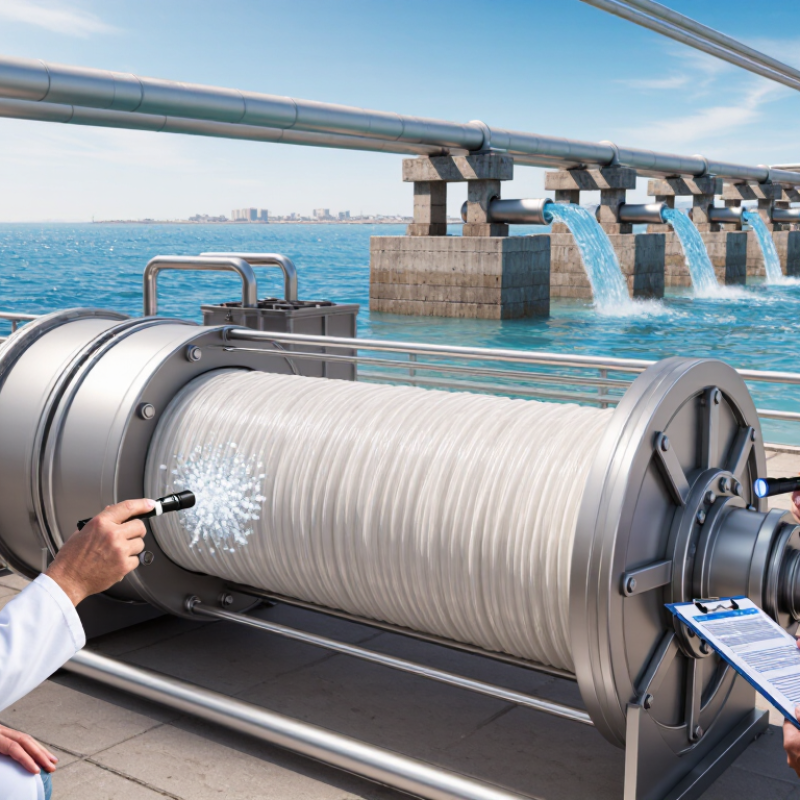
Table of Contents [Hide]
Characterize Feedwater: ~35 g/L Salinity, Boron, Temperature, and SDI15 < 5
Choosing the best seawater desalination membrane starts with accurate feedwater characterization. A seawater sample may look stable, but its chemistry can change quickly.
At approximately 35 g/L salinity, osmotic pressure strongly affects operating pressure and energy demand. Measure temperature during sampling because warmer water usually passes through membranes more easily. Small changes matter. Boron also requires close attention. Its rejection depends on pH, temperature, and membrane selectivity. Record pH with boron concentration, rather than treating boron as a single fixed value.
SDI15 below 5 indicates relatively favorable fouling conditions, but it does not guarantee stable operation. SDI testing can vary with sampling technique, filter handling, and suspended solids distribution. Operators should test several samples across tides, seasons, and production shifts. Field records are valuable. Monitor turbidity, conductivity, pressure, and pretreatment performance alongside SDI15.
Membrane selection should match the complete feedwater profile, not salinity alone. Compare salt rejection, boron rejection, permeate flow, pressure requirements, and cleaning tolerance. Pilot testing with actual seawater provides stronger evidence than laboratory water. Run the pilot at realistic flux and recovery conditions. Lab water flatters performance. I would not trust one sampling day. Seasonal seawater shifts can expose weaknesses in an otherwise reasonable design. Track pressure rise and permeate quality over time before finalizing the membrane configuration.

© Copyright - Pro Tool & Supply - Site by SVM E-Marketing Solutions - Sitemap
- Privacy policy