- Products
- Air Compressors & Air Tools
- Climate Control
- Compaction Equipment
- Concrete Cutting Tools & Equipment
- Concrete and Masonry
- Demolition & Excavation
- Electrical & Mechanical
- Fasteners and Anchoring Adhesives
- Floor Protection
- Generators and Welders
- Hand Tools
- Heaters
- Janitorial and Office Supplies
- Jobsite Protection
- Ladders & Storage
- Lighting & Lighting Accessories
- Man Lifts
- Material Handling Equipment
- Power Tools
- Pressure Washers & Pumps
- Safety Gear
- Safety Products
- Saws
- Surface Preparation
- SEASONAL PRODUCTS
- Rentals
- Air Compressor and Air Tool Rentals
- Climate Control Rental
- Compaction Rentals
- Concrete Equipment Rentals
- Demolition & Excavation Equipment Rentals
- Concrete Floor Grinder Rentals
- General Construction Equipment Rentals
- Generator Rentals and Welder Rentals
- Heater Rentals
- Light Tower Rentals
- Man Lift Rentals in Massachusetts and Rhode Island
- Material Handling Equipment Rentals
- Pressure Washer & Pump Rentals
- Saw Rentals in New England
- SEASONAL PRODUCTS
- Products
- Air Compressors & Air Tools
- Climate Control
- Compaction Equipment
- Concrete Cutting Tools & Equipment
- Demolition & Excavation
- Electrical & Mechanical
- Floor Protection
- Generators and Welders
- Construction Heaters
- Construction Ladders, Staging, & Storage
- Construction Lighting
- Man Lifts
- Material Handling Equipment
- Industrial Janitorial and Office Supplies
- Pressure Washers & Pumps
- Construction Safety Products
- Construction Safety Gear
- Surface Preparation
- Building Protection
- Diesel Accessories
- Zero Emissions
- Rentals
- Air Compressor and Air Tool Rentals
- Climate Control Rental
- Compaction Rentals
- Concrete Equipment Rental
- Demolition & Excavation Equipment Rental
- General Construction Equipment Rental
- Generator Rentals and Welder Rentals
- Construction Heaters Rental
- Light Tower Rentals
- Man Lift Rentals
- Material Handling Equipment Rental
- Pressure Washer & Pump Rentals
- Saw Rentals in New England
- Concrete Floor Grinder Rentals
- Zero Emissions Rentals
- Repairs & Used
- Parts
- Blog
- Services
- Resources
- About Us
- Contact Us
Sales & Rental of Construction | Industrial Equipment & Supplies


How to Choose the Best Renishaw Raman Spectrometer in 2026?
Choosing a Renishaw Raman spectrometer in 2026 starts with a practical question: what must the instrument reveal about your sample? A powder, a thin film, and a biological specimen can demand different sampling accessories, laser wavelengths, and microscope configurations. The best choice is not automatically the model with the longest feature list. It is the system that answers your research question reliably, fits your workflow, and can be operated by your team.
A useful buying principle, presented here as an editorial paraphrase rather than a verified quotation, is: “Match the Raman system to the sample and the question before comparing specifications.” Raman specialist Dr. Paul Monaghan is a relevant industry name to consult for product-specific guidance; this wording should not be treated as his verbatim statement. Ask vendors to demonstrate your sample under realistic conditions. Check signal quality, fluorescence, mapping speed, software usability, and the time needed to train new users. Small details matter: a sample holder that is awkward to change can slow a busy laboratory.
This guide compares key Renishaw Raman options through those practical considerations. It also covers budget, upgrade paths, service, and application fit. Specifications can look decisive on a screen, yet performance depends on the sample and setup. That is easy to overlook. A demo may not reproduce every real-world constraint, so document your requirements before making a decision. The right system should deliver useful data, not merely impressive specifications.
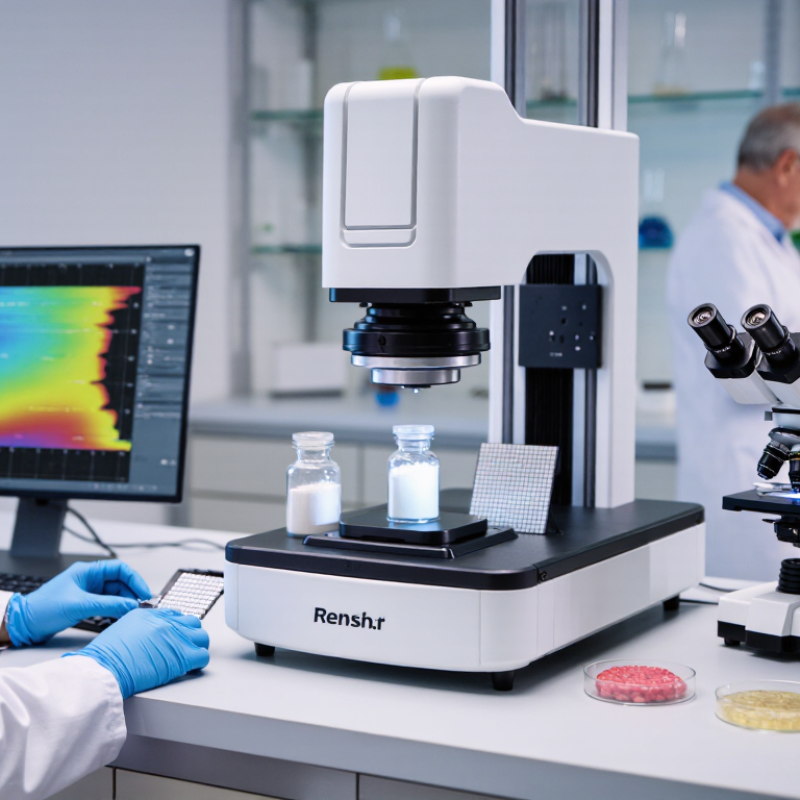
Table of Contents [Hide]
Define Your Raman Analysis Goals and Sample Requirements
A useful instrument choice starts with a precise question. Are you identifying unknown compounds, mapping ingredients across a surface, or tracking changes during a process? Each goal calls for different priorities. Chemical identification may need broad spectral coverage and dependable reference comparisons. A tiny inclusion inside a material may require finer spatial resolution. Time matters, too. Ten samples per day is a different workload from hundreds.
Know the samples before comparing specifications. Note their size, shape, surface texture, and expected variation. A dark, rough coating can behave differently from a clear liquid in a clean vial. Some materials fluoresce strongly or change when exposed to laser light. Test representative samples when possible, using realistic exposure times and handling conditions. Small details count. Sample preparation can also introduce variation, and it is easy to overlook.
Translate these observations into practical requirements: suitable excitation wavelength, laser-power control, microscope capability, measurement speed, and access for awkward samples. Consider who will collect and interpret the data. Clear software workflows and repeatable settings can matter as much as headline resolution. Keep a record of baseline spectra, calibration checks, and measurement conditions. The first requirements list may be imperfect; revise it after a pilot study reveals what your samples actually do.

© Copyright - Pro Tool & Supply - Site by SVM E-Marketing Solutions - Sitemap
- Privacy policy