- Products
- Air Compressors & Air Tools
- Climate Control
- Compaction Equipment
- Concrete Cutting Tools & Equipment
- Concrete and Masonry
- Demolition & Excavation
- Electrical & Mechanical
- Fasteners and Anchoring Adhesives
- Floor Protection
- Generators and Welders
- Hand Tools
- Heaters
- Janitorial and Office Supplies
- Jobsite Protection
- Ladders & Storage
- Lighting & Lighting Accessories
- Man Lifts
- Material Handling Equipment
- Power Tools
- Pressure Washers & Pumps
- Safety Gear
- Safety Products
- Saws
- Surface Preparation
- SEASONAL PRODUCTS
- Rentals
- Air Compressor and Air Tool Rentals
- Climate Control Rental
- Compaction Rentals
- Concrete Equipment Rentals
- Demolition & Excavation Equipment Rentals
- Concrete Floor Grinder Rentals
- General Construction Equipment Rentals
- Generator Rentals and Welder Rentals
- Heater Rentals
- Light Tower Rentals
- Man Lift Rentals in Massachusetts and Rhode Island
- Material Handling Equipment Rentals
- Pressure Washer & Pump Rentals
- Saw Rentals in New England
- SEASONAL PRODUCTS
- Products
- Air Compressors & Air Tools
- Climate Control
- Compaction Equipment
- Concrete Cutting Tools & Equipment
- Demolition & Excavation
- Electrical & Mechanical
- Floor Protection
- Generators and Welders
- Construction Heaters
- Construction Ladders, Staging, & Storage
- Construction Lighting
- Man Lifts
- Material Handling Equipment
- Industrial Janitorial and Office Supplies
- Pressure Washers & Pumps
- Construction Safety Products
- Construction Safety Gear
- Surface Preparation
- Building Protection
- Diesel Accessories
- Zero Emissions
- Rentals
- Air Compressor and Air Tool Rentals
- Climate Control Rental
- Compaction Rentals
- Concrete Equipment Rental
- Demolition & Excavation Equipment Rental
- General Construction Equipment Rental
- Generator Rentals and Welder Rentals
- Construction Heaters Rental
- Light Tower Rentals
- Man Lift Rentals
- Material Handling Equipment Rental
- Pressure Washer & Pump Rentals
- Saw Rentals in New England
- Concrete Floor Grinder Rentals
- Zero Emissions Rentals
- Repairs & Used
- Parts
- Blog
- Services
- Resources
- About Us
- Contact Us
Sales & Rental of Construction | Industrial Equipment & Supplies


How to Choose the Best Puppy Collar in 2026?
Choosing the best Puppy Collar in 2026 is about more than color or style. A collar should fit a growing puppy comfortably, stay secure during everyday walks, and allow regular checks as the puppy changes. Too loose, and it may slip over the head. Too tight, and it can rub the soft skin beneath the fur. Small details matter.
The American Pet Products Association’s 2025 State of the Industry Report estimated U.S. pet-industry spending at $152 billion in 2024, with $157 billion projected for 2025. Its National Pet Owners Survey also reported that 94 million U.S. households owned at least one pet. These figures describe a broad market, not collar sales specifically. Still, they show why buyers face so many choices—and why clear, practical guidance matters. Veterinarian and animal behaviorist Dr. Sophia Yin offered a useful training principle: “Dogs do what works.” A collar is only one part of that learning process.
This guide will compare materials, closures, adjustability, and everyday comfort. It will also explain how to check fit without guessing: inspect the buckle, feel for rough seams, and reassess as your puppy grows. A product label cannot tell you how a collar behaves on your dog. That takes observation. Even careful shoppers may need to change their choice as a puppy’s size and habits develop.
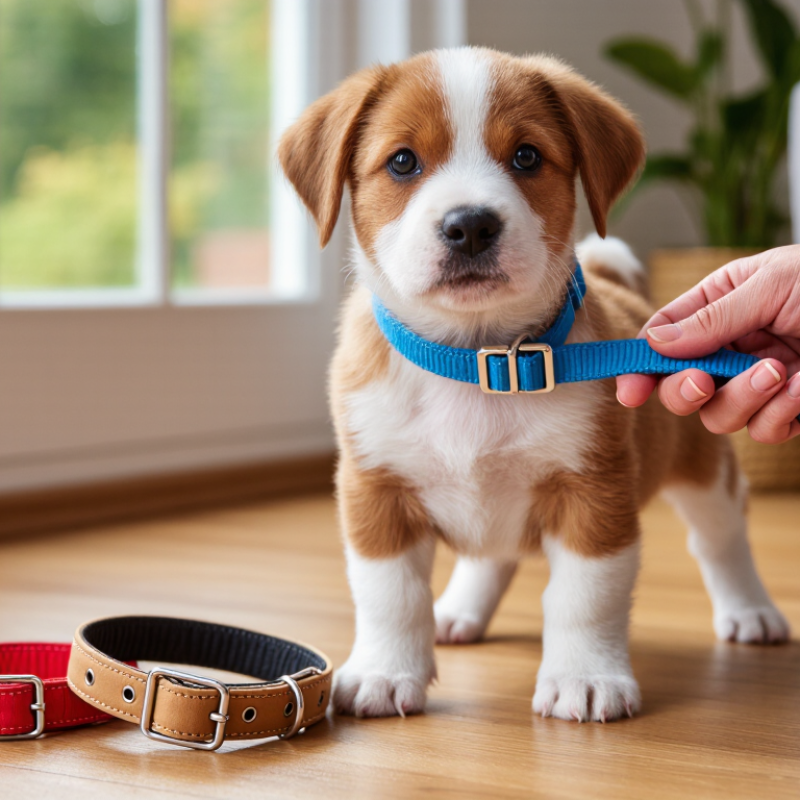
Table of Contents [Hide]
Understanding a Puppy Collar’s Purpose and Basic Requirements
A puppy collar has a simple job: hold an identification tag and help you guide your puppy during brief, calm walks. It should not take the full force of a hard pull; a well-fitted harness may be more suitable for that. Puppies grow quickly, so a collar that fits today may become tight within weeks. Comfort matters. A stiff, heavy, or rough-edged collar can rub a young dog’s neck and distract them from learning.
Tips: Choose a lightweight collar with smooth seams and a secure buckle. Once fastened, you should be able to slide two fingers beneath the band without squeezing. Check the fit every few days, especially after a growth spurt. Watch for red skin, flattened fur, coughing, or repeated scratching. Remove the collar when your puppy is resting in a crate or playing unsupervised with other dogs; it could snag on nearby objects or playmates.
A collar is not a substitute for supervision or gradual training. Let your puppy sniff it first, then fasten it for a few minutes indoors and reward relaxed behavior. Increase the time slowly. Some puppies freeze or paw at the strap at first. That does not always mean the fit is wrong, but discomfort should not be ignored. Inspect the stitching and hardware regularly, and replace the collar if anything frays or loosens. Small checks are easy to forget. They matter.

© Copyright - Pro Tool & Supply - Site by SVM E-Marketing Solutions - Sitemap
- Privacy policy