- Products
- Air Compressors & Air Tools
- Climate Control
- Compaction Equipment
- Concrete Cutting Tools & Equipment
- Concrete and Masonry
- Demolition & Excavation
- Electrical & Mechanical
- Fasteners and Anchoring Adhesives
- Floor Protection
- Generators and Welders
- Hand Tools
- Heaters
- Janitorial and Office Supplies
- Jobsite Protection
- Ladders & Storage
- Lighting & Lighting Accessories
- Man Lifts
- Material Handling Equipment
- Power Tools
- Pressure Washers & Pumps
- Safety Gear
- Safety Products
- Saws
- Surface Preparation
- SEASONAL PRODUCTS
- Rentals
- Air Compressor and Air Tool Rentals
- Climate Control Rental
- Compaction Rentals
- Concrete Equipment Rentals
- Demolition & Excavation Equipment Rentals
- Concrete Floor Grinder Rentals
- General Construction Equipment Rentals
- Generator Rentals and Welder Rentals
- Heater Rentals
- Light Tower Rentals
- Man Lift Rentals in Massachusetts and Rhode Island
- Material Handling Equipment Rentals
- Pressure Washer & Pump Rentals
- Saw Rentals in New England
- SEASONAL PRODUCTS
- Products
- Air Compressors & Air Tools
- Climate Control
- Compaction Equipment
- Concrete Cutting Tools & Equipment
- Demolition & Excavation
- Electrical & Mechanical
- Floor Protection
- Generators and Welders
- Construction Heaters
- Construction Ladders, Staging, & Storage
- Construction Lighting
- Man Lifts
- Material Handling Equipment
- Industrial Janitorial and Office Supplies
- Pressure Washers & Pumps
- Construction Safety Products
- Construction Safety Gear
- Surface Preparation
- Building Protection
- Diesel Accessories
- Zero Emissions
- Rentals
- Air Compressor and Air Tool Rentals
- Climate Control Rental
- Compaction Rentals
- Concrete Equipment Rental
- Demolition & Excavation Equipment Rental
- General Construction Equipment Rental
- Generator Rentals and Welder Rentals
- Construction Heaters Rental
- Light Tower Rentals
- Man Lift Rentals
- Material Handling Equipment Rental
- Pressure Washer & Pump Rentals
- Saw Rentals in New England
- Concrete Floor Grinder Rentals
- Zero Emissions Rentals
- Repairs & Used
- Parts
- Blog
- Services
- Resources
- About Us
- Contact Us
Sales & Rental of Construction | Industrial Equipment & Supplies

How to Choose the Best Magnetic Hooks for Global Sourcing?
Choosing the best Magnetic Hooks for global sourcing requires more than comparing prices or polished product photos. A hook that holds a kitchen towel may fail under warehouse conditions. Another may lose strength after repeated movement. Sourcing decisions should connect magnet strength, hook design, surface protection, packaging, and supplier reliability.
Begin with the intended application. Define the load, contact surface, temperature range, and expected usage frequency. A hook for office partitions differs from one used on steel shelving. Request measured pull-force data, material details, coating information, and dimensional drawings. Sample testing matters. Place each sample on the actual target surface, then test vertical and sideways loads. Record results with simple photographs and repeat the test after several days.
Small details reveal supplier competence.
Global sourcing also requires disciplined supplier evaluation. Review production experience, quality-control procedures, batch consistency, and export packaging. Ask how the supplier handles scratches, weak magnets, loose hooks, and mixed cartons. Independent inspection can verify quantities and basic specifications before shipment. Relevant product documentation should be checked for the destination market and intended use. Requirements may differ between countries, so local compliance advice remains valuable.
The cheapest option is rarely the safest choice. However, the most expensive hook is not automatically the best. A practical comparison should include unit cost, tooling, packaging, shipping volume, defect risk, and replacement costs. Some assumptions will be wrong. That is normal. Strong sourcing teams test those assumptions early and revise the specification when evidence changes. Reliability grows through careful questions, documented tests, and honest supplier communication.
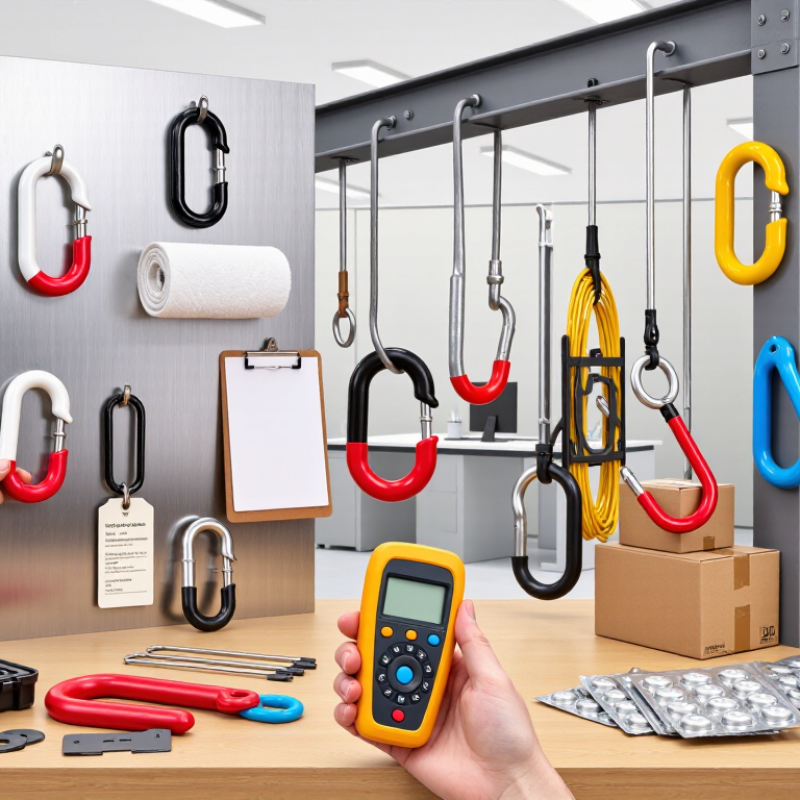
Table of Contents [Hide]
Define Magnetic Hook Types and Pull-Force Ratings in Newtons and Kilograms
How to Choose the Best Magnetic Hooks for Global Sourcing?
Magnetic hooks come in several practical forms. Cup-base hooks suit flat steel panels and offer strong vertical holding power. Swivel hooks rotate, helping cables or tools hang at different angles. Covered hooks protect painted surfaces, while compact disc hooks fit narrow storage areas. Select the type according to the mounting surface, load direction, and available space.
Pull-force ratings require careful reading. Manufacturers may list force in Newtons (N) or kilograms-force (kgf), not ordinary kilograms. One kilogram-force equals about 9.81 N. Therefore, a 100 N rating equals roughly 10.2 kgf under ideal testing. It does not guarantee a 10.2-kilogram load in daily use. Testing usually involves a clean, thick steel plate and a direct pull. Paint, rust, air gaps, and sideways loading can reduce performance sharply. Ask suppliers for test conditions, magnet grade, surface thickness, and inspection records.
In practical sourcing, apply a safety margin of two or three times the working load. A 10-kilogram hanging load may need a hook rated near 196–294 N, depending on movement and impact. Check the hook after installation. It should not slide when gently pulled sideways.
I once underestimated a thin steel cabinet door; the rated hook held, but the door flexed. The specification was accurate, yet my application judgment was weak. That lesson matters when comparing samples from different factories. Small details often decide real-world reliability.
© Copyright - Pro Tool & Supply - Site by SVM E-Marketing Solutions - Sitemap
- Privacy policy