Sales & Rental of Construction | Industrial Equipment & Supplies

How to Choose the Best HDPE Floater in 2026?

Choosing the best Hdpe Floater in 2026 requires more than comparing prices or attractive product photos. Real performance depends on buoyancy, wall thickness, material quality, and installation conditions. A reliable floater should support the planned load without sitting dangerously low in the water. It should also resist ultraviolet exposure, saltwater, impact, and repeated temperature changes.

In practical projects, small details often decide long-term stability. Check the float’s dimensions, closed-cell structure, welding quality, and connection points. A poorly finished joint may collect water or weaken under movement. Review technical datasheets carefully, then compare them with independent test results when available. Manufacturers with traceable production records and clear warranty terms usually inspire greater confidence. However, certificates alone do not guarantee suitability.

Water conditions deserve close attention. Calm ponds, tidal marinas, rivers, and offshore areas create different stresses. A float designed for sheltered water may fail in strong waves. Calculate the total load, including people, equipment, frames, and safety margins. Leave enough reserve buoyancy. Too little reserve can make a platform unstable.

There is no universal best choice. Even experienced buyers can overlook changing weather, local currents, or future equipment weight. I have found that a simple load sketch and site inspection often reveal more than a sales brochure. In 2026, the strongest buying decision will combine verified data, field experience, and honest attention to uncertainty. Choose the Hdpe Floater that fits the application, not merely the one with the lowest quoted cost.
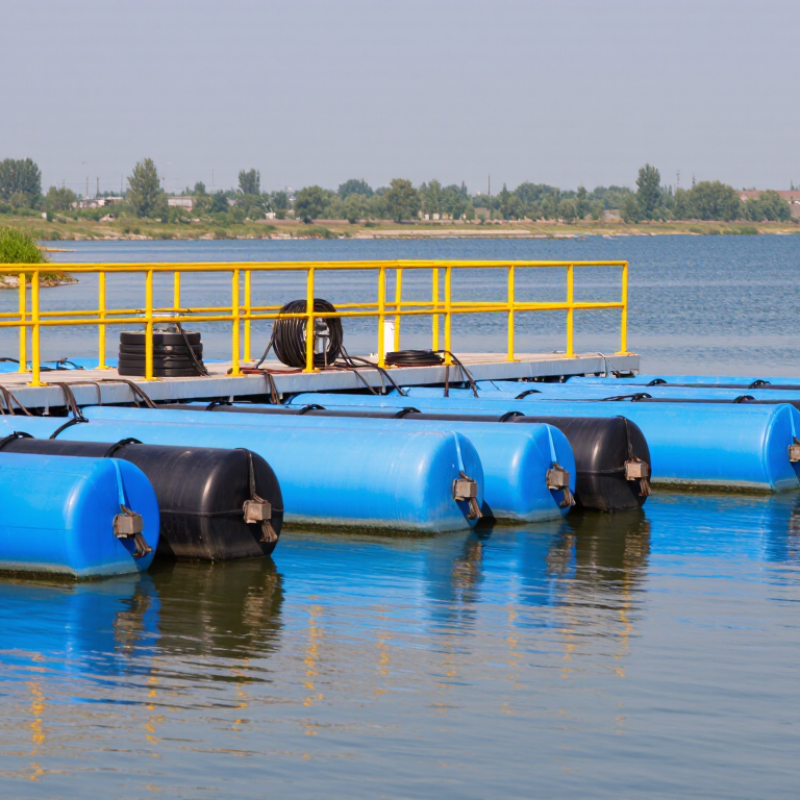
How to Choose the Best HDPE Floater in 2026?

HDPE Floater Basics: Materials, Structure, and Core Functions

How to Choose the Best HDPE Floater in 2026?

HDPE Floater Basics: Materials, Structure, and Core Functions

A reliable HDPE floater starts with the resin, not its appearance. High-density polyethylene offers low water absorption, good impact resistance, and stable performance outdoors. UV protection is also important, especially for floating platforms exposed to strong sunlight. Recycled content may reduce environmental impact, but its quality must be verified carefully. Inconsistent material can create weak spots.

The structure controls how the floater behaves on water. Check the wall thickness, internal ribs, connection points, and sealed chambers. Molded ribs should distribute loads instead of concentrating stress around one bolt. A sealed chamber improves buoyancy, while drainage details help prevent trapped water during maintenance. Size matters too. A large unit is not automatically safer. Its rated load should match people, equipment, waves, and safety margins.

Look closely at the connection system. It should resist movement without making installation unnecessarily difficult. During inspections, small cracks around fasteners often reveal poor stress distribution. That detail is easy to miss. Technical documents should state buoyancy, load capacity, temperature range, UV resistance, and test methods. Standards are useful, but field conditions still matter. I have seen calculations look perfect while floating equipment moved excessively in choppy water. A practical choice combines tested HDPE material, sound structure, clear data, and realistic site assessment.

Key Factors for Comparing HDPE Floater Quality in 2026

How to Choose the Best HDPE Floater in 2026?

When comparing HDPE floater quality, start with the resin, not the surface color. Reliable HDPE should have consistent density and strong resistance to sunlight, saltwater, and repeated impacts. Ask for material data, UV testing, and production records. A bright finish may look impressive. Appearance can mislead.

Check wall thickness at several points, especially near corners and connection holes. Uneven sections can create weak areas under waves or changing loads. Inspect welds for smooth bonding, full penetration, and clean edges. Small cracks matter. Pressurized or submerged testing can reveal leaks that visual checks miss. Confirm buoyancy through measured load tests, not simple claims. The floater should remain stable after adding cables, brackets, or maintenance equipment.

Fittings also affect long-term quality. Stainless or properly protected hardware reduces corrosion around attachment points. Drainage design helps prevent trapped water and hidden damage. Request test reports from an independent laboratory when project risks are high. Standards can guide comparison, but they do not replace practical inspection. A sample should be checked for dimensions, weight, surface defects, and connection strength before approval. No checklist is perfect. Field conditions may expose weaknesses that factory tests overlook. I would compare several samples under similar loads, record the results, and question any unusually low price. Supplier traceability, warranty terms, and replacement support also indicate reliability. Fancy brochures do not.

How to Choose the Best HDPE Floater in 2026? - Key Factors for Comparing HDPE Floater Quality in 2026

Quality Factor What to Compare Acceptable Benchmark Preferred Benchmark for 2026 Recommended Verification
Base Material Virgin or recycled HDPE content, material consistency, and resin traceability. Consistent HDPE grade with documented production-batch identification. Virgin or controlled-content HDPE with a full material certificate and batch traceability. Review the resin certificate, technical data sheet, and batch records.
Material Density HDPE density affects stiffness, weight, and theoretical buoyancy. Approximately 0.941–0.965 g/cm³ for standard high-density polyethylene. Stable density within the manufacturer’s declared tolerance, with no significant variation between production batches. Test according to ASTM D792 or ISO 1183.
Tensile Strength Resistance to stretching, pulling forces, mooring loads, and handling stress. Typical HDPE tensile yield strength is approximately 20–30 MPa, depending on grade and processing. A declared value supported by a test report and suitable safety factors for the intended load. Use ASTM D638 or ISO 527 test results.
Impact Resistance Ability to withstand collision, dropping, wave action, and cold-weather handling. No cracking, splitting, or leakage after the specified impact test. Impact performance verified at the lowest expected operating temperature, not only at room temperature. Request Charpy or Izod impact data under ASTM D256, ISO 179, or an equivalent method.
Wall Thickness Resistance to puncture, deformation, abrasion, and localized impact. Uniform wall thickness with no thin areas, voids, sink marks, or excessive warpage. Thickness designed according to float size, load, wave exposure, connection points, and manufacturing method. Measure multiple points using ultrasonic or calibrated mechanical gauges; inspect cross-sections when possible.
Buoyancy and Reserve Capacity Net lifting capacity after deducting the floater’s own weight, fittings, cables, and safety margin. Capacity calculated for the actual operating water density and the full design load. A documented buoyancy calculation with reserve capacity for wave action, water absorption, accessories, and uneven loading. Confirm displacement, dry weight, rated load, freeboard, and reserve buoyancy through calculation or controlled float testing.
Water Absorption Dimensional stability and weight gain during long-term water exposure. HDPE normally has very low water absorption, commonly around 0.01% or lower by mass under standard testing conditions. Low absorption supported by test data, with sealed or properly welded cavities that prevent water ingress. Use ASTM D570 or ISO 62, and perform leak testing on hollow sections.
UV Resistance Protection against chalking, embrittlement, fading, and loss of impact strength caused by sunlight. UV-stabilized HDPE suitable for the installation’s solar-exposure category. UV package or carbon-black content documented by the manufacturer, plus accelerated-weathering data. Review UV formulation records and test results from ISO 4892 or ASTM G154/G155 exposure methods.
Weld and Joint Quality Leak resistance and structural reliability at seams, fittings, and connection points. No visible cracks, incomplete fusion, pinholes, or sharp stress concentrations. Controlled butt-fusion, extrusion-welding, or rotational-molding process with qualified operators and inspection records. Conduct visual inspection, dimensional checks, dye testing where appropriate, and hydrostatic or air-pressure leak testing.
Dimensional Accuracy Consistency of length, width, height, bolt patterns, and connection geometry. Dimensions remain within the manufacturer’s stated tolerances. Tight, documented tolerances that allow modules to align without forced loading or uneven stress. Compare production samples with approved drawings using calibrated measuring equipment.
Hardware and Inserts Quality of anchors, bolts, lifting points, threaded inserts, and load-transfer components. Corrosion-resistant hardware correctly isolated from the HDPE and securely embedded or attached. Marine-grade corrosion-resistant hardware with load-rated attachment points and replaceable wear components where needed. Check material certificates, load ratings, torque requirements, and galvanic-corrosion protection.
Air or Water Tightness Resistance to leakage in sealed chambers and hollow float sections. No detectable leakage during the specified pressure or immersion test. Each finished floater tested individually, with test pressure, duration, and acceptance criteria recorded. Request documented pressure-decay, immersion, or hydrostatic test records.
Temperature Performance Performance during hot sunlight, cold storage, installation, and seasonal temperature changes. Operating range declared for the intended climate and application. Design verified for the project’s minimum and maximum temperatures, including thermal expansion allowances. Review the material datasheet and inspect installation details for expansion and contraction control.
Abrasion Resistance Resistance to rubbing against pontoons, frames, shorelines, ice, or adjacent floaters. Contact areas protected from continuous sharp-edge or high-pressure abrasion. Rounded geometry, replaceable wear strips, protective bumpers, and adequate clearance at moving interfaces. Inspect contact surfaces and review simulated or field abrasion-test results.
Fire and Environmental Requirements Compliance with project-specific fire, recycling, chemical, and environmental requirements. Material and additives are declared and suitable for the installation environment. Recyclable HDPE design with documented additive disclosure and compliance with applicable local regulations. Request declarations of conformity, safety data, and end-of-life recycling information.
Quality Control and Documentation Consistency of production, inspection, testing, installation, and maintenance information. Basic drawings, material data, rated-load information, and inspection records are available. Complete technical file including drawings, batch traceability, test reports, installation instructions, maintenance schedule, and warranty terms. Use a documented supplier-quality checklist before purchase and again at delivery.

Note: Actual floater performance depends on geometry, wall structure, water density, load distribution, connection design, wave conditions, temperature, and installation quality. Rated capacity should be confirmed through project-specific engineering calculations rather than material properties alone.

How to Match Floater Design with Water-Based Applications

How to Choose the Best HDPE Floater in 2026?

Choosing an HDPE floater starts with the water-based application, not its color or shape. A quiet pond needs different performance from an exposed coastal dock. Measure the working load, wave height, current speed, and expected water level changes. Include people, equipment, cables, and maintenance tools. Small details matter.

For floating walkways, use wide floaters with stable spacing and reliable connection points. A low center of gravity can reduce uncomfortable movement underfoot. Aquaculture systems often need abrasion resistance, easy cleaning, and enough freeboard to protect nets and service lines. Floating pipelines require shaped supports that limit rubbing and prevent sharp bending. For marinas, check impact resistance around boat contact zones. HDPE handles moisture well, but sunlight, temperature changes, and constant friction still affect service life.

Look for published buoyancy data, wall thickness, material specifications, and load-testing information. Ask how performance changes after repeated loading. It is easy to select a floater by maximum buoyancy alone. That can be misleading. Reserve buoyancy is important during storms, uneven loading, or temporary equipment storage. I have seen designs perform well in calm water but feel unstable after wind shifted the load. The original calculation was not wrong; the application assumptions were incomplete. Inspect connectors, welds, and mounting points regularly. A practical design leaves room for imperfect conditions, because real water rarely behaves like a laboratory tank.

Safety, Durability, and Environmental Performance Considerations

Choosing the best HDPE floater in 2026 requires more than checking buoyancy and price.

Safety begins with verified load capacity, stable geometry, and sealed fittings. Ask for test records covering impact resistance, UV exposure, weld strength, and flotation performance. A floater should remain stable when waves, uneven loading, or repeated boarding create sudden stress.

Small cracks matter.

HDPE offers strong durability because it resists corrosion, moisture, and many chemicals. However, sunlight slowly weakens unprotected plastic. Look for UV-stabilized material and documented testing under ISO 4892 conditions.

Field inspections still matter. Check faded surfaces, loose connectors, abrasion marks, and water inside hollow sections. No certificate replaces practical maintenance.

Environmental performance deserves equal attention.

The OECD reported that global plastic waste reached 353 million tonnes in 2019, while only 9% was recycled. Therefore, choose floats designed for repair, disassembly, and eventual recycling. Request the material grade, recycled-content statement, and end-of-life instructions.

UNEP projects that better systems could reduce plastic pollution by 80% by 2040, but product design remains essential. A recyclable floater is not automatically sustainable if transport, replacement, and maintenance are ignored.

This is where buyers often oversimplify. A slightly heavier unit may last longer, yet its total footprint could still be higher.

Consider service life, not appearance alone.

A Practical Checklist for Selecting the Right HDPE Floater

Choosing the best HDPE floater starts with site conditions, not color or price. Measure water depth, wave exposure, current speed, and seasonal changes. Record the equipment, people, or materials the platform must support. A floater should have enough reserve buoyancy for uneven loading and unexpected water movement. Do not rely only on the advertised capacity. Ask for buoyancy calculations, material specifications, and test reports.

Inspect the HDPE grade and wall thickness carefully. UV resistance matters under strong sunlight. Check every weld, corner, fitting, and connection point. Weak hardware can undermine a well-made float. Choose dimensions that match your frame, walkway, or modular platform. Slips are common. A textured surface can improve footing, especially when algae or rain creates a thin film. Confirm that replacement fittings and repair guidance are available locally.

Think about maintenance before installation. Drainage openings, cleaning access, and easy inspection can save time later. I once selected a float based mainly on buoyancy, then underestimated the weight of the connecting frame. That mistake changed the final layout. A perfect checklist does not exist. Review the supplier’s engineering documents, installation method, warranty terms, and relevant safety requirements with a qualified professional. When specifications conflict, pause and verify them. A slightly higher initial cost may be reasonable if it improves stability, service life, and inspection access.

Article Source:

© Copyright - Pro Tool & Supply - Site by SVM E-Marketing Solutions - Sitemap - Privacy policy
