- Products
- Air Compressors & Air Tools
- Climate Control
- Compaction Equipment
- Concrete Cutting Tools & Equipment
- Concrete and Masonry
- Demolition & Excavation
- Electrical & Mechanical
- Fasteners and Anchoring Adhesives
- Floor Protection
- Generators and Welders
- Hand Tools
- Heaters
- Janitorial and Office Supplies
- Jobsite Protection
- Ladders & Storage
- Lighting & Lighting Accessories
- Man Lifts
- Material Handling Equipment
- Power Tools
- Pressure Washers & Pumps
- Safety Gear
- Safety Products
- Saws
- Surface Preparation
- SEASONAL PRODUCTS
- Rentals
- Air Compressor and Air Tool Rentals
- Climate Control Rental
- Compaction Rentals
- Concrete Equipment Rentals
- Demolition & Excavation Equipment Rentals
- Concrete Floor Grinder Rentals
- General Construction Equipment Rentals
- Generator Rentals and Welder Rentals
- Heater Rentals
- Light Tower Rentals
- Man Lift Rentals in Massachusetts and Rhode Island
- Material Handling Equipment Rentals
- Pressure Washer & Pump Rentals
- Saw Rentals in New England
- SEASONAL PRODUCTS
- Products
- Air Compressors & Air Tools
- Climate Control
- Compaction Equipment
- Concrete Cutting Tools & Equipment
- Demolition & Excavation
- Electrical & Mechanical
- Floor Protection
- Generators and Welders
- Construction Heaters
- Construction Ladders, Staging, & Storage
- Construction Lighting
- Man Lifts
- Material Handling Equipment
- Industrial Janitorial and Office Supplies
- Pressure Washers & Pumps
- Construction Safety Products
- Construction Safety Gear
- Surface Preparation
- Building Protection
- Diesel Accessories
- Zero Emissions
- Rentals
- Air Compressor and Air Tool Rentals
- Climate Control Rental
- Compaction Rentals
- Concrete Equipment Rental
- Demolition & Excavation Equipment Rental
- General Construction Equipment Rental
- Generator Rentals and Welder Rentals
- Construction Heaters Rental
- Light Tower Rentals
- Man Lift Rentals
- Material Handling Equipment Rental
- Pressure Washer & Pump Rentals
- Saw Rentals in New England
- Concrete Floor Grinder Rentals
- Zero Emissions Rentals
- Repairs & Used
- Parts
- Blog
- Services
- Resources
- About Us
- Contact Us
Sales & Rental of Construction | Industrial Equipment & Supplies


How to Choose the Best China Roller Conveyor Supplier?
Choosing the Best China Roller Conveyor Supplier requires more than comparing catalog prices. The supplier must understand your product, throughput, layout, and operating environment. A roller conveyor carrying cartons behaves differently from one handling pallets, drums, or fragile components. Small details matter.
Conveyor engineering specialist Dr. David J. Bennett states, “A conveyor should be designed around the process, not forced into it.” This principle deserves attention. Ask whether the Roller Conveyor Supplier can calculate load capacity, roller spacing, speed, accumulation pressure, and motor requirements. Request drawings, material specifications, factory photographs, and documented quality procedures. A trustworthy supplier should explain assumptions clearly, including what the system cannot handle.
Look beyond polished websites. Review manufacturing experience, export records, inspection methods, spare-parts support, and communication practices. Confirm whether rollers, frames, bearings, and controls meet relevant technical standards. ISO 9001 certification can support confidence, but it does not replace product testing or careful verification. Ask for reference projects with similar loads and working conditions.
Price still matters. It should not lead the decision. A cheaper conveyor may create higher installation, downtime, and maintenance costs later. I would not pretend that every supplier relationship runs perfectly. Misunderstandings happen, especially across languages and time zones. Clear drawings and written acceptance criteria reduce that risk. The strongest supplier is not always the largest. It is the one that asks precise questions, admits limitations, and supports the equipment after delivery.
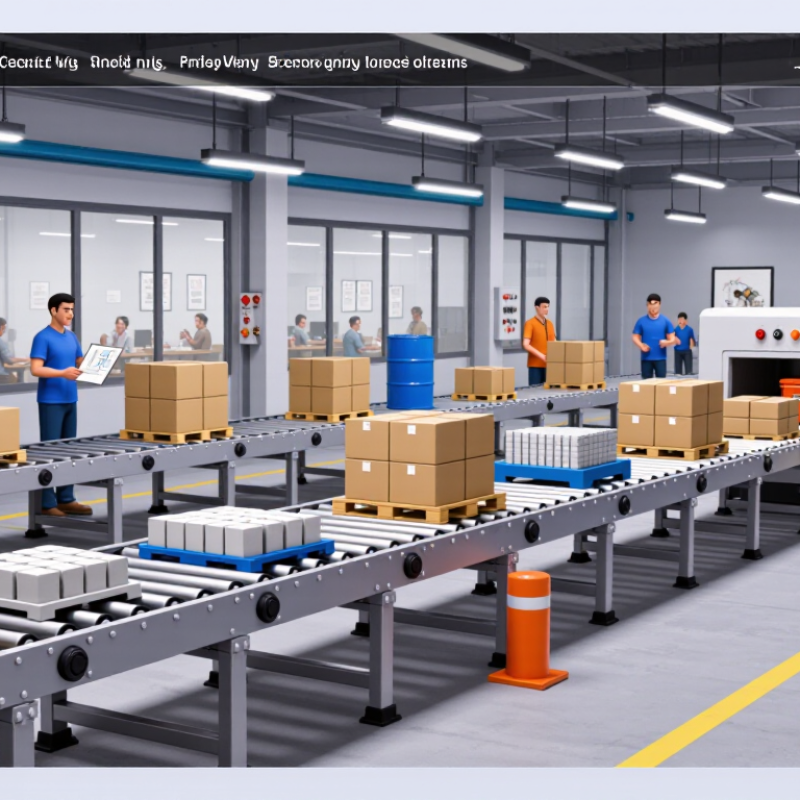
Table of Contents [Hide]
Understanding China Roller Conveyor Types and Applications
Choosing a China roller conveyor supplier starts with matching conveyor type to the application. Gravity roller conveyors suit cartons moving down a slight slope. Powered roller conveyors handle heavier loads and controlled transfer. Chain-driven models are better for pallets, steel containers, and uneven bottoms. Accumulation conveyors protect products by creating controlled gaps between packages.
Grand View Research valued the global conveyor systems market at about USD 8 billion in 2022. Its report also projects steady growth through 2030, driven by warehouses, manufacturing, and distribution centers. This growth does not make every conveyor suitable. A small parcel line may need 50 mm rollers, while a pallet line may require larger rollers, stronger frames, and higher torque. Measure the load carefully.
Applications reveal practical differences. E-commerce warehouses often need powered rollers, scanners, and rapid diverting. Food facilities may require corrosion-resistant components and easy cleaning. Cold storage demands suitable lubricants and stable motor performance. MHI’s 2024 Annual Industry Report identifies robotics and automation as major supply-chain investment priorities. A supplier should explain how its conveyors connect with sensors and warehouse controls, not only quote a low unit price.
Request load tests, dimensional drawings, motor data, noise readings, and spare-parts plans. Ask for videos of similar installations. A perfect specification rarely survives the first shift. I would leave adjustment space for speed, product variation, and future expansion. Supplier communication matters too; unclear drawings can become expensive delays.
| Roller Conveyor Type | Operating Principle | Typical Load and Speed | Best-Fit Applications | Main Advantages | Important Supplier Questions | Selection Rating |
|---|---|---|---|---|---|---|
| Gravity Roller Conveyor | Loads move by manual pushing or by gravity on a slightly inclined conveyor. Rollers are usually unpowered. | Light to heavy unit loads; commonly used at low to medium speeds. Actual capacity depends on roller diameter, pitch, frame, and load distribution. | Cartons, totes, pallets, order-picking areas, loading zones, and short transfer sections. | Low energy consumption, simple construction, easy maintenance, and comparatively low purchase cost. | What is the minimum carton size? Is the roller pitch suitable for the smallest load? What is the allowable load per meter and per roller? | Best for: Low-cost handling |
| Powered Roller Conveyor | Motor-driven rollers or drive belts provide continuous movement without requiring a conveyor slope. | Light to heavy unit loads; speed can be fixed or variable. The motor and drive system must be sized for load weight, incline, and duty cycle. | Distribution centers, packaging lines, production assembly, shipping, and long-distance internal transport. | Controlled speed, consistent throughput, and suitability for level layouts or automated material-flow systems. | What motor efficiency, control method, emergency-stop system, and duty cycle are provided? Can the supplier provide load and speed calculations? | Best for: Continuous transport |
| Accumulation Roller Conveyor | Zones stop or release products independently, usually through zero-pressure or minimum-pressure control. | Designed for controlled carton or tote flow. Speed and zone length depend on product dimensions, spacing requirements, and control logic. | Buffer areas, sorting lines, picking stations, packaging, inspection, and production synchronization. | Reduces product collisions, supports buffering, and improves coordination between upstream and downstream equipment. | Is zero-pressure accumulation required? What sensors, zone controls, PLC interfaces, and communication protocols are included? | Best for: Automated buffering |
| Chain-Driven Roller Conveyor | A motor drives the rollers through a chain transmission, allowing positive movement of heavy or irregular loads. | Medium to heavy unit loads, including pallets and industrial containers. Load capacity varies significantly with roller and frame design. | Pallet handling, manufacturing plants, automotive parts, metal products, and heavy-duty transfer lines. | High traction, reliable load movement, and effective handling of pallets with uneven or rigid bases. | What chain size, roller spacing, pallet dimensions, safety guarding, and maintenance access are specified? | Best for: Heavy-duty loads |
| Flexible Roller Conveyor | A movable, extendable conveyor uses linked sections and rollers to create temporary or adjustable transport paths. | Generally suitable for light to medium cartons and totes; capacity and length are limited by the frame, wheel arrangement, and support spacing. | Truck loading and unloading, temporary packing areas, warehouse dispatch, and applications requiring layout changes. | Portable, space-saving, quick to deploy, and useful where fixed conveyor installation is impractical. | What are the collapsed and extended lengths? What is the safe working load, turning radius, wheel-lock design, and maximum incline? | Best for: Flexible layouts |
| Belt-Over-Roller Conveyor | A belt runs over powered rollers, providing a continuous conveying surface while retaining roller-supported structure. | Suitable for cartons, parcels, and products that need stable support. Speed and capacity depend on belt width, motor power, and product characteristics. | Small cartons, bags, irregular-bottom packages, accumulation zones, and applications requiring smooth product orientation. | Better support for small or unstable products than open-roller designs and generally quieter product movement. | What belt material, splice method, tracking system, cleaning access, and minimum product dimensions are specified? | Best for: Small or unstable packages |
| Curve Roller Conveyor | Angled or tapered rollers guide loads around a bend while maintaining product flow between conveyor sections. | Capacity and speed depend on curve radius, roller taper, product dimensions, and whether the conveyor is powered or gravity-fed. | Warehouse routing, packing lines, distribution systems, and layouts requiring directional changes. | Saves floor space and connects straight conveyor sections without manual transfers. | What is the minimum inside radius? Can the conveyor handle the smallest package without skewing or falling between rollers? | Best for: Direction changes |
| Stainless-Steel Roller Conveyor | Uses corrosion-resistant structural and roller components, with powered or gravity operation depending on the design. | Load and speed are application-specific. Stainless construction may be selected for washdown, humidity, or corrosion exposure. | Food processing, pharmaceutical production, clean areas, chemical environments, and humid facilities. | Improved corrosion resistance, cleanability, and suitability for demanding hygiene or moisture conditions. | Which stainless-steel grade is used? Are welds finished and smooth? Is the motor, bearing, and electrical enclosure suitable for washdown? | Best for: Corrosive or hygienic environments |
| Supplier Evaluation Dimension | How the supplier should be assessed before ordering a roller conveyor system. | Review technical drawings, load calculations, test records, production capacity, delivery schedule, and after-sales response time. | Applicable to every conveyor type and especially important for integrated lines or customized equipment. | Helps reduce technical mismatches, hidden costs, installation problems, and spare-parts delays. | Confirm material specifications, quality-control procedures, acceptance criteria, packaging method, documentation, warranty terms, and remote or on-site support. | Best for: Risk control |
| Important specification note: The load, speed, roller pitch, frame dimensions, motor power, and environmental requirements shown above are typical selection considerations rather than universal limits. Final specifications should be confirmed through a supplier's engineering calculation using the actual product dimensions, weight distribution, operating cycle, layout, temperature, humidity, and applicable safety requirements. | ||||||

© Copyright - Pro Tool & Supply - Site by SVM E-Marketing Solutions - Sitemap
- Privacy policy