- Products
- Air Compressors & Air Tools
- Climate Control
- Compaction Equipment
- Concrete Cutting Tools & Equipment
- Concrete and Masonry
- Demolition & Excavation
- Electrical & Mechanical
- Fasteners and Anchoring Adhesives
- Floor Protection
- Generators and Welders
- Hand Tools
- Heaters
- Janitorial and Office Supplies
- Jobsite Protection
- Ladders & Storage
- Lighting & Lighting Accessories
- Man Lifts
- Material Handling Equipment
- Power Tools
- Pressure Washers & Pumps
- Safety Gear
- Safety Products
- Saws
- Surface Preparation
- SEASONAL PRODUCTS
- Rentals
- Air Compressor and Air Tool Rentals
- Climate Control Rental
- Compaction Rentals
- Concrete Equipment Rentals
- Demolition & Excavation Equipment Rentals
- Concrete Floor Grinder Rentals
- General Construction Equipment Rentals
- Generator Rentals and Welder Rentals
- Heater Rentals
- Light Tower Rentals
- Man Lift Rentals in Massachusetts and Rhode Island
- Material Handling Equipment Rentals
- Pressure Washer & Pump Rentals
- Saw Rentals in New England
- SEASONAL PRODUCTS
- Products
- Air Compressors & Air Tools
- Climate Control
- Compaction Equipment
- Concrete Cutting Tools & Equipment
- Demolition & Excavation
- Electrical & Mechanical
- Floor Protection
- Generators and Welders
- Construction Heaters
- Construction Ladders, Staging, & Storage
- Construction Lighting
- Man Lifts
- Material Handling Equipment
- Industrial Janitorial and Office Supplies
- Pressure Washers & Pumps
- Construction Safety Products
- Construction Safety Gear
- Surface Preparation
- Building Protection
- Diesel Accessories
- Zero Emissions
- Rentals
- Air Compressor and Air Tool Rentals
- Climate Control Rental
- Compaction Rentals
- Concrete Equipment Rental
- Demolition & Excavation Equipment Rental
- General Construction Equipment Rental
- Generator Rentals and Welder Rentals
- Construction Heaters Rental
- Light Tower Rentals
- Man Lift Rentals
- Material Handling Equipment Rental
- Pressure Washer & Pump Rentals
- Saw Rentals in New England
- Concrete Floor Grinder Rentals
- Zero Emissions Rentals
- Repairs & Used
- Parts
- Blog
- Services
- Resources
- About Us
- Contact Us
Sales & Rental of Construction | Industrial Equipment & Supplies


How to Choose a Suction and Discharge Hose in 2026?
Choosing the right Suction And Discharge Hose in 2026 requires more than comparing prices and diameter charts. Field experience shows that hose failures often begin with overlooked details, such as vacuum rating, sharp bends, incompatible chemicals, or poorly matched couplings. A hose may look strong on a warehouse floor but collapse under suction beside a hot pump.
This guide examines the practical factors that influence safe and reliable selection. It considers inner diameter, working pressure, temperature range, abrasion resistance, flexibility, bend radius, and material compatibility. Manufacturer specifications remain essential, but they should be checked against actual operating conditions. A pump moving abrasive slurry needs different protection from one transferring clean water or food-grade liquids.
Real installations are rarely tidy.
Space may be limited. The hose may drag across concrete, twist during loading, or face repeated pressure surges. These conditions can expose weaknesses that a laboratory test does not reveal. For that reason, selection should combine technical data, maintenance records, and advice from qualified suppliers or engineers.
There is no universal hose for every application. That point deserves attention. Choosing only by nominal size can create leaks, reduced flow, or premature damage. In some cases, the most expensive option is still unsuitable.
The sections ahead explain how to compare hose construction, performance ratings, connection methods, inspection needs, and total service cost. They also highlight common assumptions that deserve reconsideration before purchase. A careful decision protects equipment, workers, products, and operating continuity.
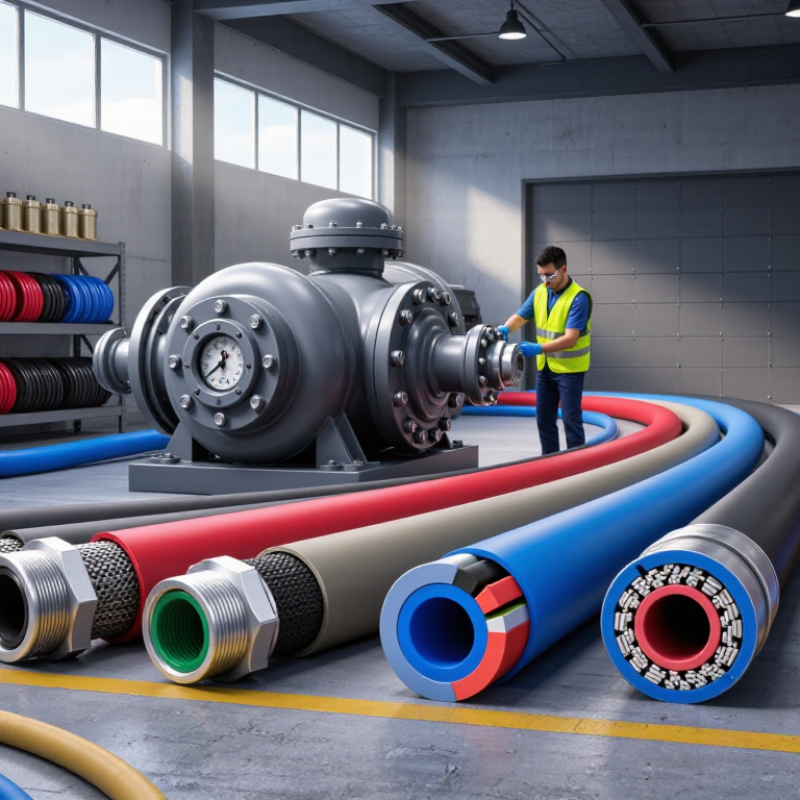
Table of Contents [Hide]
Understanding Suction and Discharge Hose Functions
How to Choose a Suction and Discharge Hose in 2026?
A suction hose draws liquid toward a pump, while a discharge hose carries it away under pressure. Their functions are different, so treating them as interchangeable can cause early failure.
Suction service may create negative pressure. The hose therefore needs strong reinforcement to resist collapse. A discharge hose needs pressure-rated construction, especially near pumps, valves, and elevated outlets.
Start with the working conditions. Identify the liquid, temperature range, flow rate, pressure, and expected vacuum.
Check chemical compatibility from the hose manufacturer’s technical data, not from appearance alone. A clear hose may help operators see air pockets or sediment, but visibility does not prove chemical resistance.
Small details matter. Measure the actual connection diameter. An incorrect inner diameter can reduce flow and increase friction.
In practical installations, support the hose without sharp bends or twisting. Keep suction runs short where possible. A heavy hose hanging from a fitting can damage the connection over time.
Inspect for soft spots, cracks, exposed reinforcement, and flattened sections before each demanding operation. Replace questionable assemblies. Waiting for a leak is poor maintenance.
Selection is not always perfect on the first attempt. Fluid temperature can change, fittings may restrict flow, and field conditions can differ from specifications. Record those observations and adjust the next selection using measured data.

© Copyright - Pro Tool & Supply - Site by SVM E-Marketing Solutions - Sitemap
- Privacy policy