- Products
- Air Compressors & Air Tools
- Climate Control
- Compaction Equipment
- Concrete Cutting Tools & Equipment
- Concrete and Masonry
- Demolition & Excavation
- Electrical & Mechanical
- Fasteners and Anchoring Adhesives
- Floor Protection
- Generators and Welders
- Hand Tools
- Heaters
- Janitorial and Office Supplies
- Jobsite Protection
- Ladders & Storage
- Lighting & Lighting Accessories
- Man Lifts
- Material Handling Equipment
- Power Tools
- Pressure Washers & Pumps
- Safety Gear
- Safety Products
- Saws
- Surface Preparation
- SEASONAL PRODUCTS
- Rentals
- Air Compressor and Air Tool Rentals
- Climate Control Rental
- Compaction Rentals
- Concrete Equipment Rentals
- Demolition & Excavation Equipment Rentals
- Concrete Floor Grinder Rentals
- General Construction Equipment Rentals
- Generator Rentals and Welder Rentals
- Heater Rentals
- Light Tower Rentals
- Man Lift Rentals in Massachusetts and Rhode Island
- Material Handling Equipment Rentals
- Pressure Washer & Pump Rentals
- Saw Rentals in New England
- SEASONAL PRODUCTS
- Products
- Air Compressors & Air Tools
- Climate Control
- Compaction Equipment
- Concrete Cutting Tools & Equipment
- Demolition & Excavation
- Electrical & Mechanical
- Floor Protection
- Generators and Welders
- Construction Heaters
- Construction Ladders, Staging, & Storage
- Construction Lighting
- Man Lifts
- Material Handling Equipment
- Industrial Janitorial and Office Supplies
- Pressure Washers & Pumps
- Construction Safety Products
- Construction Safety Gear
- Surface Preparation
- Building Protection
- Diesel Accessories
- Zero Emissions
- Rentals
- Air Compressor and Air Tool Rentals
- Climate Control Rental
- Compaction Rentals
- Concrete Equipment Rental
- Demolition & Excavation Equipment Rental
- General Construction Equipment Rental
- Generator Rentals and Welder Rentals
- Construction Heaters Rental
- Light Tower Rentals
- Man Lift Rentals
- Material Handling Equipment Rental
- Pressure Washer & Pump Rentals
- Saw Rentals in New England
- Concrete Floor Grinder Rentals
- Zero Emissions Rentals
- Repairs & Used
- Parts
- Blog
- Services
- Resources
- About Us
- Contact Us
Sales & Rental of Construction | Industrial Equipment & Supplies


How to Choose Rebar Wire Rod for Global Projects?
Choosing Rebar Wire Rod for global construction projects requires more than comparing price per tonne. The right selection begins with project conditions, applicable standards, and the final reinforcement process. Diameter consistency matters when wire drawing or cold forming follows delivery. Chemical composition matters even more. Carbon, manganese, sulfur, and phosphorus levels influence strength, ductility, weldability, and fatigue performance. Small variations can create serious production problems.
Edwin Basson, Director General of worldsteel, has said, “Steel is essential to modern society.” That principle is practical here. Rebar Wire Rod supports bridges, towers, tunnels, ports, and industrial foundations. Buyers should request mill certificates, heat numbers, mechanical test results, and independent inspection records. Traceability must continue from furnace to coil and from shipment to fabrication. A reliable supplier should explain production tolerances clearly. Avoid vague promises.
The project location also changes the decision. Humid coastal air may require stronger corrosion controls. Remote sites may need heavier coils, stronger packaging, or different delivery schedules. Check container limits, port handling, storage conditions, and customs documentation before placing an order. A technically suitable rod can still fail commercially if it arrives damaged or late.
Real experience teaches caution. A specification can appear complete yet miss the buyer’s actual forming conditions. That weakness deserves honest review. Ask whether the selected Rebar Wire Rod performs consistently on the customer’s machines, not only in laboratory reports. Compare samples, verify supplier history, and test a trial batch before full production. Quality is measurable. Reliability is earned over repeated deliveries.
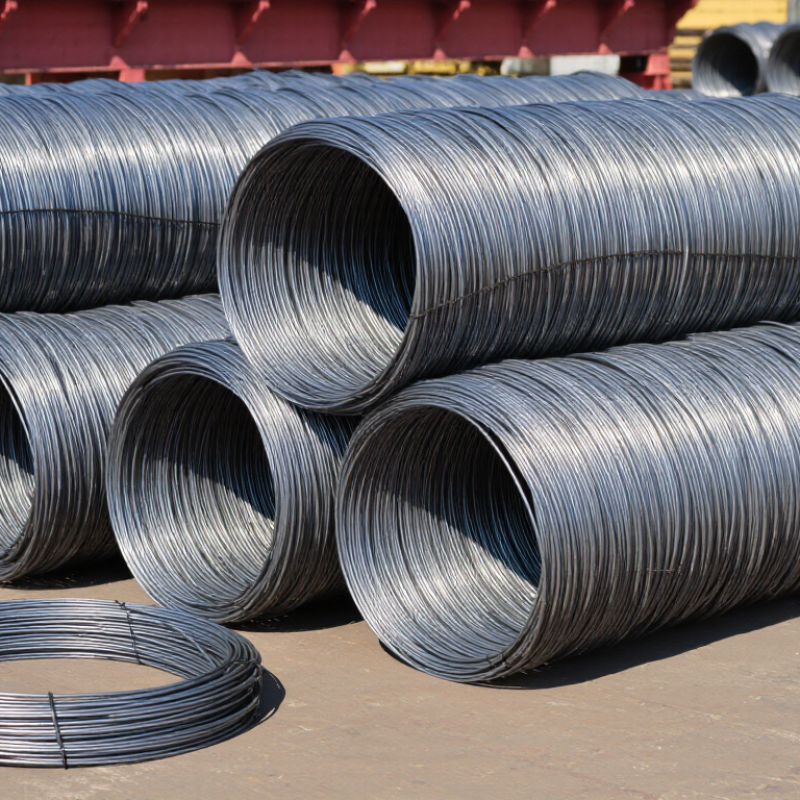
Table of Contents [Hide]
Define Rebar Wire Rod and Its Role in Global Construction
Rebar wire rod is a hot-rolled steel product supplied in coils, not finished reinforcement bars. Fabricators draw, straighten, cut, or weld it into reinforcing wire, mesh, ties, and small structural components. Its role is practical: it converts mill-produced steel into reinforcement that controls cracking and carries tension inside concrete. The final performance depends on more than nominal diameter.
For a global project, buyers should review grade, carbon equivalent, tensile strength, yield behavior, ductility, and weldability. Diameter tolerance matters when automated machines feed thousands of meters of rod. Coil weight affects crane handling, container loading, and storage safety. A dusty yard, coastal air, or long sea voyage can damage poorly protected material. Request a traceable heat number, test certificate, dimensional report, and inspection plan before shipment. Do not rely on appearance alone.
Experienced procurement teams compare the rod with the concrete design, fabrication equipment, and regional standards. A product that performs well in one market may need different documentation or ductility limits elsewhere. Clear records help engineers verify chemistry and strength without guessing. Small details matter. Yet paperwork is not perfection. Sampling errors, inconsistent coils, or unclear translations can still create costly rework. Independent inspection and a trial fabrication run often reveal problems earlier than a warehouse check.

© Copyright - Pro Tool & Supply - Site by SVM E-Marketing Solutions - Sitemap
- Privacy policy