- Products
- Air Compressors & Air Tools
- Climate Control
- Compaction Equipment
- Concrete Cutting Tools & Equipment
- Concrete and Masonry
- Demolition & Excavation
- Electrical & Mechanical
- Fasteners and Anchoring Adhesives
- Floor Protection
- Generators and Welders
- Hand Tools
- Heaters
- Janitorial and Office Supplies
- Jobsite Protection
- Ladders & Storage
- Lighting & Lighting Accessories
- Man Lifts
- Material Handling Equipment
- Power Tools
- Pressure Washers & Pumps
- Safety Gear
- Safety Products
- Saws
- Surface Preparation
- SEASONAL PRODUCTS
- Rentals
- Air Compressor and Air Tool Rentals
- Climate Control Rental
- Compaction Rentals
- Concrete Equipment Rentals
- Demolition & Excavation Equipment Rentals
- Concrete Floor Grinder Rentals
- General Construction Equipment Rentals
- Generator Rentals and Welder Rentals
- Heater Rentals
- Light Tower Rentals
- Man Lift Rentals in Massachusetts and Rhode Island
- Material Handling Equipment Rentals
- Pressure Washer & Pump Rentals
- Saw Rentals in New England
- SEASONAL PRODUCTS
- Products
- Air Compressors & Air Tools
- Climate Control
- Compaction Equipment
- Concrete Cutting Tools & Equipment
- Demolition & Excavation
- Electrical & Mechanical
- Floor Protection
- Generators and Welders
- Construction Heaters
- Construction Ladders, Staging, & Storage
- Construction Lighting
- Man Lifts
- Material Handling Equipment
- Industrial Janitorial and Office Supplies
- Pressure Washers & Pumps
- Construction Safety Products
- Construction Safety Gear
- Surface Preparation
- Building Protection
- Diesel Accessories
- Zero Emissions
- Rentals
- Air Compressor and Air Tool Rentals
- Climate Control Rental
- Compaction Rentals
- Concrete Equipment Rental
- Demolition & Excavation Equipment Rental
- General Construction Equipment Rental
- Generator Rentals and Welder Rentals
- Construction Heaters Rental
- Light Tower Rentals
- Man Lift Rentals
- Material Handling Equipment Rental
- Pressure Washer & Pump Rentals
- Saw Rentals in New England
- Concrete Floor Grinder Rentals
- Zero Emissions Rentals
- Repairs & Used
- Parts
- Blog
- Services
- Resources
- About Us
- Contact Us
Sales & Rental of Construction | Industrial Equipment & Supplies


China Top Tote Shuttle Manufacturers How to Choose
Choosing among China’s top Tote Shuttle manufacturers requires more than comparing catalog prices. A reliable supplier should understand warehouse flow, tote dimensions, load weights, aisle widths, and peak-season pressure. The right system must move goods smoothly while protecting inventory, operators, and long-term operating costs.
This guide examines manufacturer experience, engineering capability, production controls, and after-sales support. Look for evidence, not polished promises. Factory audits, sample testing, reference projects, and clear technical drawings can reveal important differences. Ask how the shuttle handles misaligned totes, battery changes, sensor faults, and emergency stops. These details matter on a busy warehouse floor.
Small details matter.
A capable manufacturer should explain cycle times under realistic conditions, not only ideal laboratory data. Request performance figures for your tote size, storage depth, temperature range, and expected daily volume. Check whether software integrates with your warehouse management system and whether spare parts remain available after installation. Independent certifications and documented quality inspections can strengthen confidence, but paperwork alone is not proof of performance.
There is no perfect supplier. A lower quotation may hide weaker commissioning support or expensive future modifications. Even experienced buyers can overlook maintenance access or operator training. That is why a careful selection process should combine technical reviews, site visits, transparent contracts, and practical acceptance tests. The best Tote Shuttle partner is not simply the cheapest manufacturer. It is the supplier that communicates clearly, admits limitations, and consistently supports measurable warehouse results.
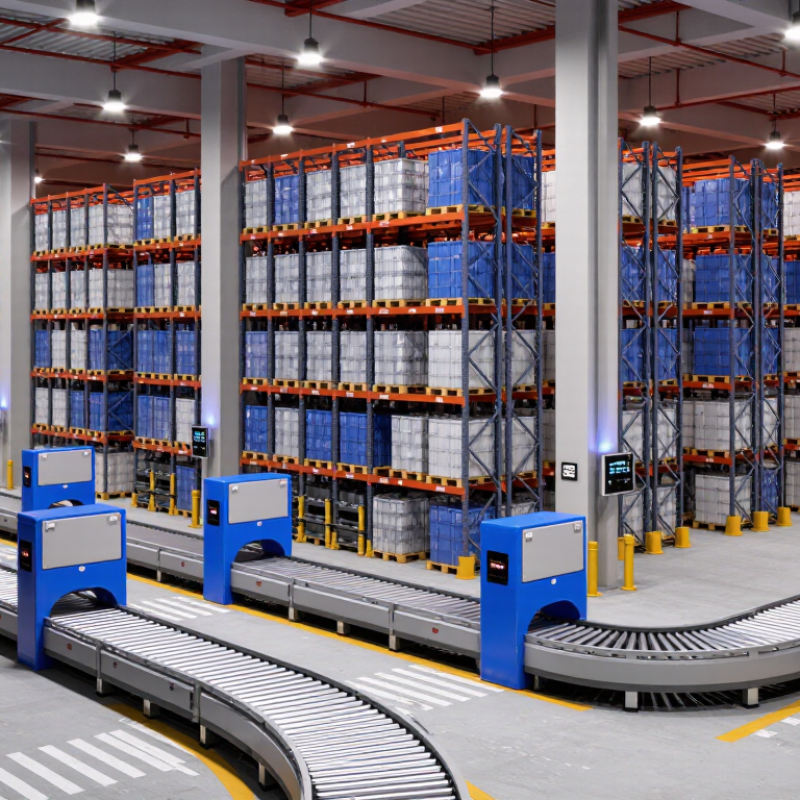
Table of Contents [Hide]
Understanding Tote Shuttle Systems and Their Main Applications
China Top Tote Shuttle Manufacturers: How to Choose
Understanding a tote shuttle system starts with its basic movement. Motorized shuttles carry plastic totes through storage lanes. A lift transfers totes between levels, while conveyors connect workstations and picking areas. Sensors track each tote’s position, weight, and destination. The system works best when software, mechanics, and operators share accurate data.
These systems suit distribution centers, spare-parts warehouses, pharmacies, and temperature-controlled facilities. They handle high order volumes in compact spaces. A shuttle can retrieve a tote from a dense lane within seconds. In practice, aisle width, tote dimensions, peak demand, and required storage temperature shape the design. Small errors matter. A poorly measured tote may jam repeatedly.
When assessing manufacturers in China, request application records, load tests, cycle-time data, and maintenance procedures. Ask how the shuttle manages power loss, sensor faults, and emergency access. Reliable suppliers should explain component origins, inspection methods, software updates, and operator training. Check whether their proposed system allows manual recovery without damaging stored goods. Factory visits can reveal more than polished presentations. Look for clean cable routing, labeled test areas, spare-part availability, and technicians who explain limitations clearly. Some proposals promise maximum speed, but real performance may decline during peak congestion. That detail deserves careful questioning.
China Top Tote Shuttle Manufacturers How to Choose - Understanding Tote Shuttle Systems and Their Main Applications
| Selection Dimension | Typical Options or Range | How It Works | Main Benefits | Best-Fit Applications | Key Questions Before Purchase |
|---|---|---|---|---|---|
| System Configuration | Single-deep, multi-deep, goods-to-person, or buffer storage | Shuttles move totes horizontally on storage levels, while lifts or conveyors transfer totes between levels and workstations. | Improves storage density and reduces unnecessary travel by operators. | E-commerce fulfillment, spare-parts storage, retail distribution, and manufacturing supermarkets. | Is the system intended for storage, order picking, sequencing, buffering, or a combination of these tasks? |
| Storage Tote Compatibility | Common tote footprints include approximately 400 × 300 mm, 600 × 400 mm, and other application-specific sizes. | The shuttle, rails, lift, conveyor, and rack structure are designed around the selected tote dimensions. | Ensures stable transport, correct positioning, and efficient use of available storage volume. | Standard plastic totes, carton containers, reusable bins, and selected trays. | What are the tote outside dimensions, usable internal dimensions, material, condition, and bottom design? |
| Load Capacity | Often about 30–50 kg per tote for light-duty systems; heavier designs may support higher loads. | The shuttle carries the tote on powered wheels or a platform and places it into a storage location. | Allows the system to handle a broad range of inventory weights when properly engineered. | Consumer goods, electronics, cosmetics, packaged food, and industrial components. | What are the average, maximum, and peak tote weights, and how frequently will maximum loads occur? |
| Storage Height | Usually selected according to building height, fire protection, rack design, lift stroke, and tote handling requirements. | Vertical lifts move totes between storage levels and input or output conveyors. | Uses vertical building space and can provide high storage density in a compact footprint. | Facilities with high ceilings or limited floor area. | What clear height, floor loading, sprinkler arrangement, maintenance access, and emergency access are available? |
| Throughput Requirement | Measured in totes per hour, orders per hour, or order lines per hour; actual capacity depends on layout and workload. | Multiple shuttles, lifts, conveyors, workstations, and control software are balanced to meet the required flow. | Supports scalable handling capacity and helps reduce manual travel. | High-volume e-commerce, omnichannel distribution, and fast-moving spare-parts operations. | What are the average and peak receipts, replenishment tasks, picks, dispatches, and required service windows? |
| Shuttle Operating Mode | One shuttle per level, multiple shuttles per level, or shuttle fleets with coordinated traffic control. | Vehicles receive missions from a warehouse control system and travel to assigned storage or retrieval locations. | Multiple shuttles can increase availability and throughput when the system is correctly zoned. | Operations requiring high availability, short response times, or future expansion. | How will traffic conflicts, charging, vehicle replacement, and peak-period mission allocation be managed? |
| Power and Charging | Rail-based power, battery-powered operation, or automatic charging zones, depending on system architecture. | Power is supplied continuously or batteries are recharged during planned operating intervals. | Supports continuous operation while allowing different maintenance and layout strategies. | Single-shift, multi-shift, and extended operating schedules. | What operating hours, battery life, charging time, spare-battery policy, and electrical standards apply? |
| Control Software | Warehouse control system, warehouse management system interface, inventory tracking, and equipment monitoring. | Software assigns storage locations, creates transport missions, records inventory status, and coordinates equipment. | Improves traceability, inventory accuracy, and workload balancing. | Facilities requiring batch picking, FIFO or FEFO rules, lot tracking, or integration with enterprise systems. | Which communication protocols, APIs, host systems, reporting functions, and cybersecurity controls are supported? |
| Picking Strategy | Person-to-goods, goods-to-person, batch picking, zone picking, or put-wall-supported picking. | Stored totes are delivered to operators or replenishment stations according to order priorities. | Can reduce walking distance and improve ergonomic conditions at picking stations. | Online retail orders, healthcare supplies, apparel accessories, and small-item distribution. | What are the SKU count, order profile, units per order, picking accuracy target, and station ergonomics? |
| Inventory Characteristics | Small and medium-sized items with relatively stable tote dimensions and controlled handling requirements. | Items are stored in totes and retrieved according to location, order, batch, or product rotation rules. | Provides organized access to high-SKU inventory and supports controlled replenishment. | Small parts, pharmaceuticals subject to applicable regulations, cosmetics, electronics, and consumer products. | Are products fragile, temperature-sensitive, hazardous, dusty, liquid, irregularly shaped, or subject to expiry control? |
| Integration Equipment | Conveyors, lifts, barcode scanners, weighing stations, labeling equipment, robotic arms, and packing stations. | Peripheral equipment connects storage levels with receiving, picking, packing, and shipping processes. | Creates a continuous material flow and reduces manual handling between process steps. | Automated distribution centers and production logistics areas. | Which processes should be automated first, and where are accumulation, inspection, exception, or manual intervention points needed? |
| Safety Features | Guarding, access doors, emergency stops, light curtains, safety scanners, interlocks, and controlled access zones. | Safety systems prevent or limit access to moving equipment and stop operation when unsafe conditions are detected. | Supports safer operation and helps meet applicable workplace and machinery requirements. | All tote shuttle installations, especially systems integrated with personnel workstations. | Which local machinery, electrical, fire, occupational safety, and risk-assessment requirements apply? |
| Reliability and Maintenance | Designed around duty cycle, component service intervals, spare parts availability, and preventive maintenance procedures. | Monitoring functions identify equipment status, faults, and maintenance needs before major interruptions occur. | Helps control downtime and supports predictable operating costs. | Continuous or high-utilization warehouses where system availability is critical. | What are the response time, remote support, local service coverage, spare-parts lead time, and preventive maintenance requirements? |
| Scalability | Expandable by adding storage levels, shuttle vehicles, workstations, lifts, conveyors, or software capacity. | The initial design reserves suitable interfaces, space, controls, and structural capacity for later expansion. | Allows capacity to grow with order volume and inventory requirements. | Growing businesses, seasonal operations, and multi-stage automation projects. | Can future equipment be added without shutting down the entire system or rebuilding the rack structure? |
| Application Match | High-SKU storage, order buffering, sequencing, rapid picking, or line-side replenishment. | The system is configured around the required combination of storage density, access frequency, and material flow. | Improves the likelihood that automation delivers measurable operational value. | Distribution centers, manufacturing plants, spare-parts hubs, and omnichannel fulfillment facilities. | Does the proposed design match the actual demand pattern rather than only the maximum theoretical capacity? |
Note: Performance ranges and configurations are indicative rather than universal. Final specifications should be confirmed through a site survey, tote testing, workload analysis, safety assessment, and an agreed system acceptance test.

© Copyright - Pro Tool & Supply - Site by SVM E-Marketing Solutions - Sitemap
- Privacy policy