- Products
- Air Compressors & Air Tools
- Climate Control
- Compaction Equipment
- Concrete Cutting Tools & Equipment
- Concrete and Masonry
- Demolition & Excavation
- Electrical & Mechanical
- Fasteners and Anchoring Adhesives
- Floor Protection
- Generators and Welders
- Hand Tools
- Heaters
- Janitorial and Office Supplies
- Jobsite Protection
- Ladders & Storage
- Lighting & Lighting Accessories
- Man Lifts
- Material Handling Equipment
- Power Tools
- Pressure Washers & Pumps
- Safety Gear
- Safety Products
- Saws
- Surface Preparation
- SEASONAL PRODUCTS
- Rentals
- Air Compressor and Air Tool Rentals
- Climate Control Rental
- Compaction Rentals
- Concrete Equipment Rentals
- Demolition & Excavation Equipment Rentals
- Concrete Floor Grinder Rentals
- General Construction Equipment Rentals
- Generator Rentals and Welder Rentals
- Heater Rentals
- Light Tower Rentals
- Man Lift Rentals in Massachusetts and Rhode Island
- Material Handling Equipment Rentals
- Pressure Washer & Pump Rentals
- Saw Rentals in New England
- SEASONAL PRODUCTS
- Products
- Air Compressors & Air Tools
- Climate Control
- Compaction Equipment
- Concrete Cutting Tools & Equipment
- Demolition & Excavation
- Electrical & Mechanical
- Floor Protection
- Generators and Welders
- Construction Heaters
- Construction Ladders, Staging, & Storage
- Construction Lighting
- Man Lifts
- Material Handling Equipment
- Industrial Janitorial and Office Supplies
- Pressure Washers & Pumps
- Construction Safety Products
- Construction Safety Gear
- Surface Preparation
- Building Protection
- Diesel Accessories
- Zero Emissions
- Rentals
- Air Compressor and Air Tool Rentals
- Climate Control Rental
- Compaction Rentals
- Concrete Equipment Rental
- Demolition & Excavation Equipment Rental
- General Construction Equipment Rental
- Generator Rentals and Welder Rentals
- Construction Heaters Rental
- Light Tower Rentals
- Man Lift Rentals
- Material Handling Equipment Rental
- Pressure Washer & Pump Rentals
- Saw Rentals in New England
- Concrete Floor Grinder Rentals
- Zero Emissions Rentals
- Repairs & Used
- Parts
- Blog
- Services
- Resources
- About Us
- Contact Us
Sales & Rental of Construction | Industrial Equipment & Supplies


China Top Padlock Lockout Suppliers How to Choose?
Choosing among China’s top Padlock Lockout suppliers is not simply a price comparison. It is a risk-control decision for maintenance teams, contractors, and purchasing managers. A dependable supplier should explain how its locks perform in real work areas. Consider crowded electrical cabinets, oily gloves, rain, dust, and low light. The product must remain identifiable after repeated use. Color stability matters. So does a clear label. Occupational-safety expert Dr. David Michaels has emphasized, “Most workplace injuries and illnesses are preventable.” That principle gives this sourcing decision a practical direction. A Padlock Lockout device should help isolate hazardous energy, not merely look professional in a catalogue. Small details count. Key retention, shackle clearance, corrosion resistance, and lock-body strength deserve direct questions.
This guide presents a careful way to compare Chinese manufacturers. Look for documented quality controls, material specifications, sample testing, production traceability, and responsive technical support. Ask for inspection records, dimensional drawings, and packaging details before approving bulk orders. A serious supplier can discuss compatible hasps, tags, group lockout boxes, and site-specific color systems. It should also explain limitations honestly. No lock fits every environment. A plastic body may suit chemical exposure, while a hardened steel shackle may better resist impact. The cheapest offer can be attractive. It can also create hidden replacement costs. That is easy to overlook. Supplier claims should be checked against samples, certificates, factory evidence, and user feedback. This is not a perfect formula. Human judgment still matters. Yet disciplined questions can separate a capable partner from a polished reseller, helping buyers choose safer, more consistent Padlock Lockout equipment.
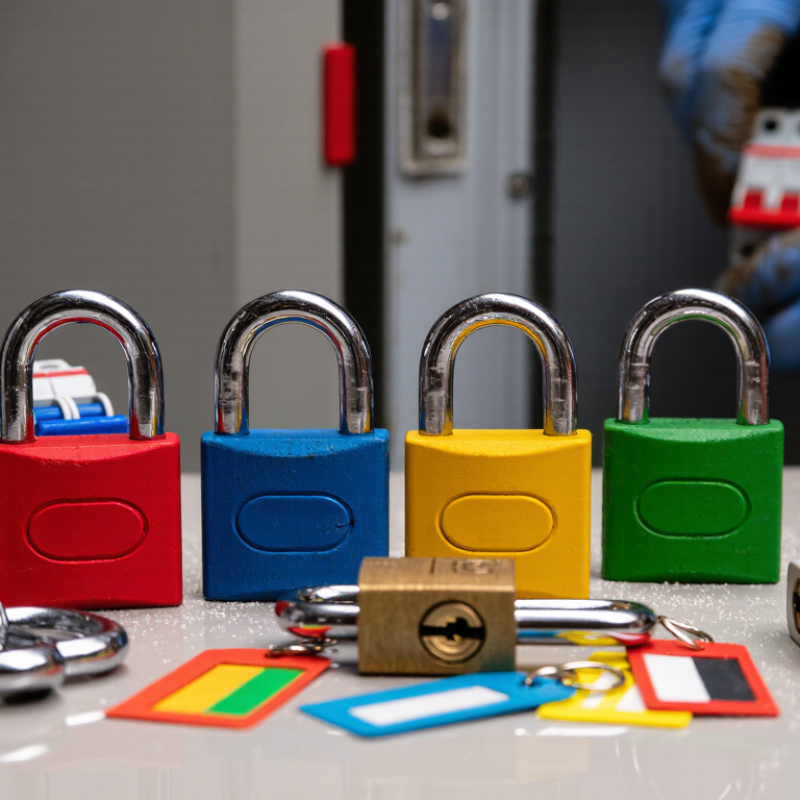
Table of Contents [Hide]
What Are Lockout Padlocks and Why Are They Used?
A lockout padlock is a safety device used to keep an energy-isolating point in a safe position. It is commonly applied during machine maintenance, cleaning, inspection, and repair. The lock prevents unexpected startup while a worker is exposed to electrical, mechanical, hydraulic, pneumatic, or thermal energy.
Each authorized worker should use a uniquely assigned lock and key. This arrangement shows who controls the equipment. A visible color and clear identification label can help teams recognize the lock quickly. However, color alone is not enough. The label, key control, and written procedure must work together.
A suitable padlock usually has a non-conductive body, corrosion-resistant parts, and a shackle sized for the isolation point. It should remain identifiable in dusty workshops, cold storage rooms, and outdoor service areas. Before use, inspect the shackle, keyway, label, and locking action. Do not force a damaged lock.
In practical maintenance work, one overlooked detail can weaken the entire process. Some teams focus on price and forget key control. That is a mistake. A lower-cost lock may become difficult to identify or operate after repeated exposure to oil and moisture. Suppliers should provide clear specifications, sample testing, production records, and consistent key management. The right choice depends on the workplace risk, not appearance alone. Even experienced teams should review their procedure when equipment or staffing changes.
China Top Padlock Lockout Suppliers How to Choose? - What Are Lockout Padlocks and Why Are They Used?
| Evaluation Dimension | What It Means | Recommended Specification or Evidence | Why It Matters |
|---|---|---|---|
| Product Definition | A lockout padlock is a safety padlock used to secure an energy-isolating device during maintenance or servicing. | Confirm that the product is designed for lockout/tagout use rather than general security only. | It helps prevent unauthorized operation while equipment is being serviced. |
| Primary Application | Used on electrical disconnects, valves, circuit breakers, switches, and other isolating points with compatible lockout devices. | Ask for application guidance and compatibility information for the intended equipment. | Correct compatibility is essential for reliable energy isolation. |
| Body Material | The lock body may be manufactured from materials such as reinforced nylon or coated metal, depending on the environment. | Select non-conductive materials for suitable electrical applications and corrosion-resistant materials for harsh environments. | Material selection affects electrical safety, durability, and resistance to corrosion or impact. |
| Shackle Material | The shackle is the metal loop that passes through the lockout point or hasp. | Common choices include steel, stainless steel, and corrosion-resistant coated shackles. Verify diameter and length. | The shackle must fit the device and withstand the expected workplace conditions. |
| Shackle Dimensions | Shackle diameter, vertical clearance, and horizontal clearance determine whether the padlock can be installed. | Request a dimension drawing and compare it with the hasps, valves, breakers, or disconnects used at the facility. | A padlock that cannot pass through the isolation point cannot provide effective lockout protection. |
| Keying Arrangement | Keyed-different locks use separate keys, while keyed-alike locks can be opened by the same key. | Choose the arrangement according to the site’s safety procedure and authorized-user structure. | Key control supports personal responsibility and prevents unintended removal. |
| Key Retention | A key-retaining design keeps the key captive while the padlock is unlocked. | Confirm whether the cylinder prevents key removal in the unlocked position. | It reduces the chance of misplaced keys during lockout preparation. |
| Color Identification | High-visibility colors make personal or departmental lockout devices easier to recognize. | Request consistent color options and verify color availability for the required quantity. | Clear identification improves visual management and helps reduce accidental removal. |
| Identification Marking | Markings may include key numbers, employee identification, department codes, or warning text. | Evaluate engraving, laser marking, labels, and the supplier’s ability to maintain a traceable numbering system. | Durable identification supports asset control and lockout accountability. |
| Environmental Resistance | The padlock may be exposed to moisture, dust, chemicals, ultraviolet light, or temperature changes. | Request corrosion, operating-temperature, and material-resistance information relevant to the installation site. | Environmental suitability influences service life and locking reliability. |
| Safety Function | The padlock is part of a lockout/tagout procedure that isolates hazardous energy before work begins. | Verify that the product supports the facility’s documented procedures and applicable workplace safety requirements. | The padlock is one component of a complete energy-control system, not a substitute for the procedure. |
| Quality Management | Quality management covers incoming materials, manufacturing controls, inspection, and corrective action. | Request a current quality-management certificate when applicable, inspection records, and product traceability information. | Consistent process control helps reduce dimensional, functional, and batch-to-batch variation. |
| Testing and Inspection | Testing may cover operation, key-cylinder function, dimensions, corrosion resistance, and visual quality. | Ask for inspection criteria, sampling methods, test reports, and pre-shipment inspection options. | Documented testing provides objective evidence that products meet agreed specifications. |
| Customization Capability | Customization can include color, dimensions, keying plans, markings, packaging, and documentation. | Confirm minimum order quantities, tooling requirements, sample approval, and production lead time. | A controlled customization process helps match the padlock to the site’s lockout system. |
| Sample Evaluation | Samples allow the buyer to verify fit, operation, marking, color, and packaging before bulk production. | Test samples on actual lockout hasps and isolation devices used at the facility. | Practical testing can identify compatibility problems before a large purchase. |
| Supply Capacity | Supply capacity includes production equipment, workforce, material availability, and order scheduling. | Request realistic monthly capacity, standard lead times, peak-season planning, and backup arrangements. | Reliable capacity supports consistent replenishment and reduces project delays. |
| Packaging and Documentation | Packaging should protect the locks and preserve identification during shipping and storage. | Confirm packing quantities, carton markings, key-management records, instructions, and inspection documents. | Accurate documentation simplifies receiving, distribution, training, and inventory control. |
| Commercial Terms | Commercial terms include unit price, tooling charges, minimum order quantity, payment terms, and delivery conditions. | Compare total landed cost rather than unit price alone, including samples, inspection, freight, duties, and replacement keys. | A complete cost comparison supports a more accurate purchasing decision. |
| After-Sales Support | Support may include technical responses, replacement parts, key management, claims handling, and corrective action. | Confirm response times, warranty terms, replacement procedures, and the contact process for quality issues. | Responsive support reduces downtime and helps maintain the integrity of the lockout program. |

© Copyright - Pro Tool & Supply - Site by SVM E-Marketing Solutions - Sitemap
- Privacy policy