- Products
- Air Compressors & Air Tools
- Climate Control
- Compaction Equipment
- Concrete Cutting Tools & Equipment
- Concrete and Masonry
- Demolition & Excavation
- Electrical & Mechanical
- Fasteners and Anchoring Adhesives
- Floor Protection
- Generators and Welders
- Hand Tools
- Heaters
- Janitorial and Office Supplies
- Jobsite Protection
- Ladders & Storage
- Lighting & Lighting Accessories
- Man Lifts
- Material Handling Equipment
- Power Tools
- Pressure Washers & Pumps
- Safety Gear
- Safety Products
- Saws
- Surface Preparation
- SEASONAL PRODUCTS
- Rentals
- Air Compressor and Air Tool Rentals
- Climate Control Rental
- Compaction Rentals
- Concrete Equipment Rentals
- Demolition & Excavation Equipment Rentals
- Concrete Floor Grinder Rentals
- General Construction Equipment Rentals
- Generator Rentals and Welder Rentals
- Heater Rentals
- Light Tower Rentals
- Man Lift Rentals in Massachusetts and Rhode Island
- Material Handling Equipment Rentals
- Pressure Washer & Pump Rentals
- Saw Rentals in New England
- SEASONAL PRODUCTS
- Products
- Air Compressors & Air Tools
- Climate Control
- Compaction Equipment
- Concrete Cutting Tools & Equipment
- Demolition & Excavation
- Electrical & Mechanical
- Floor Protection
- Generators and Welders
- Construction Heaters
- Construction Ladders, Staging, & Storage
- Construction Lighting
- Man Lifts
- Material Handling Equipment
- Industrial Janitorial and Office Supplies
- Pressure Washers & Pumps
- Construction Safety Products
- Construction Safety Gear
- Surface Preparation
- Building Protection
- Diesel Accessories
- Zero Emissions
- Rentals
- Air Compressor and Air Tool Rentals
- Climate Control Rental
- Compaction Rentals
- Concrete Equipment Rental
- Demolition & Excavation Equipment Rental
- General Construction Equipment Rental
- Generator Rentals and Welder Rentals
- Construction Heaters Rental
- Light Tower Rentals
- Man Lift Rentals
- Material Handling Equipment Rental
- Pressure Washer & Pump Rentals
- Saw Rentals in New England
- Concrete Floor Grinder Rentals
- Zero Emissions Rentals
- Repairs & Used
- Parts
- Blog
- Services
- Resources
- About Us
- Contact Us
Sales & Rental of Construction | Industrial Equipment & Supplies


Why Choose an Industrial Managed PoE Switch?
An Industrial Managed Poe Switch is more than a rugged box supplying power. It connects cameras, wireless access points, sensors, and controllers while giving operators visibility into each port. That visibility matters on a factory floor, where a loose cable or overloaded link can interrupt a production line. Small faults add up.
Cisco’s Annual Internet Report, 2018–2023, forecast 29.3 billion networked devices and connections worldwide by 2023. That figure is a forecast, not a count of industrial devices, but it signals the scale of growing network demands. Meanwhile, IEEE 802.3bt defines Power over Ethernet capable of delivering up to 90 watts from the power-sourcing equipment. For planners, those figures make power budgets, port-level monitoring, and traffic management practical design concerns—not just specification-sheet details.
Cisco’s former CEO John Chambers summed up networking with the phrase, “The network is the platform.” For industrial teams, a managed switch helps make that platform observable and easier to troubleshoot. VLANs can separate control traffic from video feeds; diagnostics can help locate a failing connection without checking every cable by hand. But the switch cannot compensate for poor wiring, weak security practices, or an unrealistic power calculation. That part is easy to overlook. Choosing the right model means matching temperature ratings, power needs, redundancy, and management features to the actual site. A little caution here is worthwhile; industrial networks rarely fail at convenient times.
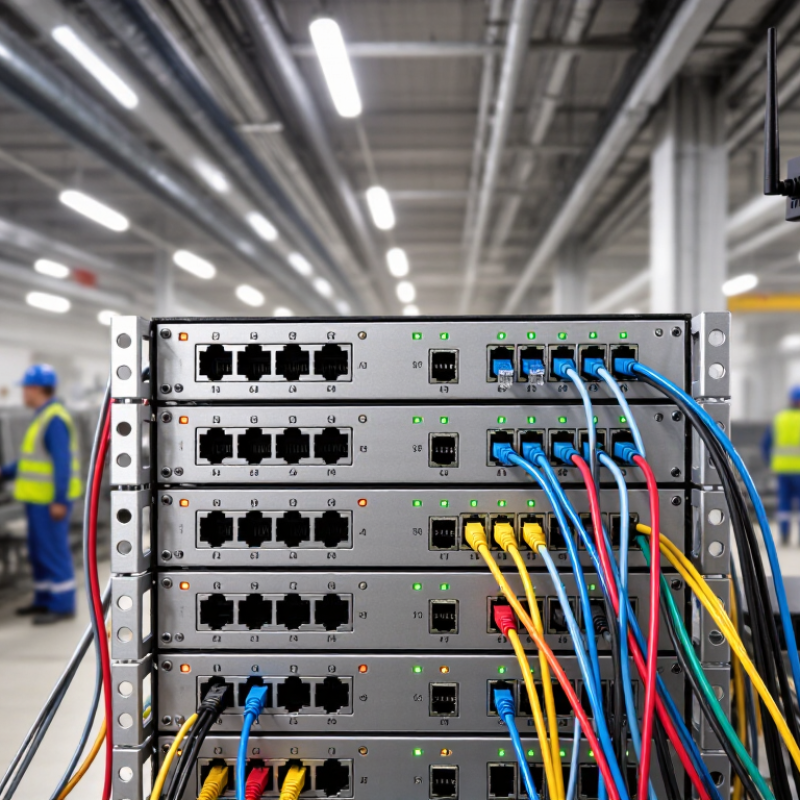
Table of Contents [Hide]
What Is an Industrial Managed PoE Switch?
An industrial managed PoE switch combines Ethernet connectivity, device power, and network controls in one rugged unit. It sends data and electrical power over a single cable to devices such as cameras, wireless access points, and sensors. “Managed” means technicians can configure and monitor the network: set VLANs, prioritize traffic, check port status, and review alarms. One cable. Less clutter. Industrial models typically add a wider operating-temperature range, vibration resistance, and redundant power inputs for control cabinets or factory floors.
Power budgets matter. IEEE 802.3bt supports up to 90 watts from the switch port, with up to 71.3 watts available to a powered device under the standard’s limits. The Ethernet Alliance’s technical guidance and the device datasheet help engineers check compatibility before installation.
Deloitte’s 2024 Smart Manufacturing Survey found that 92% of surveyed manufacturers view smart manufacturing as a competitiveness driver over the next three years, increasing the importance of dependable plant networks.
Still, PoE is not magic: cable length, temperature, and the total switch power budget can constrain performance. A port may power a camera alone, yet fail when several devices draw peak power together. That deserves a second look during design.

© Copyright - Pro Tool & Supply - Site by SVM E-Marketing Solutions - Sitemap
- Privacy policy