Sales & Rental of Construction | Industrial Equipment & Supplies

How to Choose a Stamped Metal Parts Manufacturer?

Choosing a Stamped Metal Parts manufacturer is a decision about repeatability, not just price. Grand View Research estimated the global metal stamping market at USD 218.5 billion in 2023 and projected a 4.3% compound annual growth rate from 2024 to 2030 in its 2024 market report. That scale signals a competitive, evolving industry; it does not prove that any individual supplier can meet your tolerances or delivery schedule.

W. Edwards Deming, a manufacturing quality expert, said, “Quality is everyone’s responsibility.” For buyers, that means looking beyond a polished capability sheet. Ask how the supplier controls tooling wear, verifies first-off parts, and tracks scrap. Request evidence: a sample inspection report, a production part approval record, and a clear explanation of how material changes are handled. If a press line runs overnight, who checks the first parts after a tool adjustment? Small details matter. A low quotation may omit inspection, packaging, or secondary operations, so compare the full scope. Also examine the supplier’s experience with your material, part geometry, and annual volume—not just its largest press tonnage.

No scorecard tells the whole story. A promising factory visit can still leave questions about communication or recovery plans when a tool fails. That uncertainty deserves attention, not a sales promise. The right choice is a manufacturer whose documented process, practical experience, and honest limits match your project’s real demands.
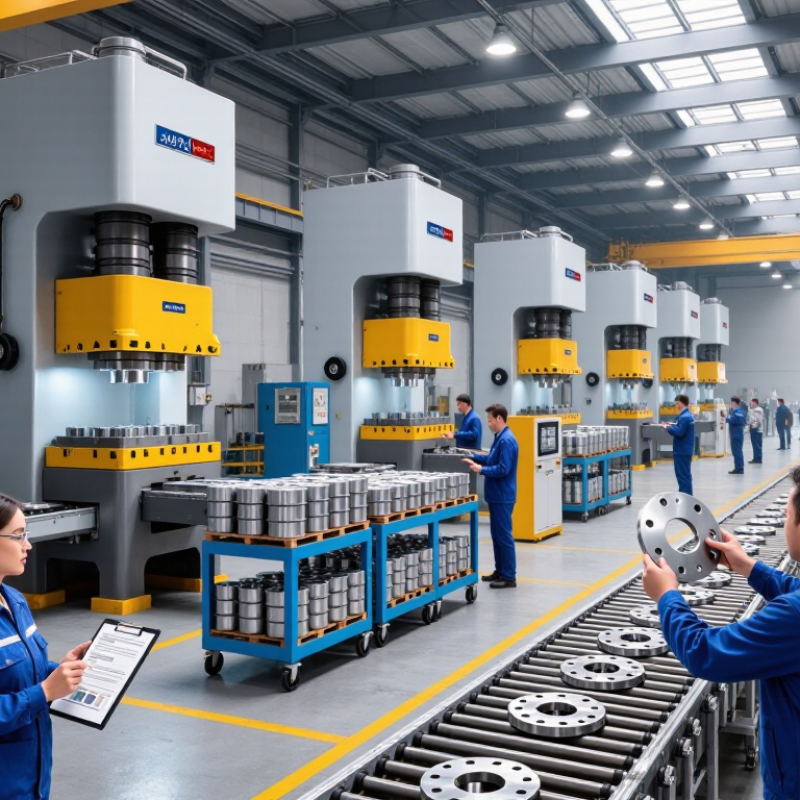
How to Choose a Stamped Metal Parts Manufacturer?

Define Your Part Requirements and Production Scope

Before requesting quotes, turn the part drawing into a production brief. Specify the alloy and grade, sheet thickness, temper, finish, critical dimensions, tolerances, and acceptable burr direction. Identify which features need checking, such as a 0.2 mm slot or a hole-to-edge distance, and provide the expected inspection method where possible. Small details matter. A stamped part may look simple, yet a tight tolerance can affect die design, press choice, scrap rates, and inspection time. A drawing is not the whole story.

Define the production scope in numbers: prototype quantity, annual demand, order frequency, peak requirements, and expected program life. Tell manufacturers whether the quote should include tooling, deburring, plating, assembly, packaging, and inspection records. Ask who owns the tooling and how changes are handled. Deloitte’s 2024 Smart Manufacturing Survey found that 86% of manufacturing executives viewed smart factory solutions as a competitiveness driver over the next five years. That makes clear production data useful: ask how the supplier tracks runs, revisions, and quality results. Still, software cannot rescue a vague specification. I’ve seen estimates drift when “annual volume” meant a forecast to one buyer and a firm order to another. State what is confirmed, and what is only an estimate.

Assess the Manufacturer’s Equipment and Material Expertise

Choosing a stamped metal parts manufacturer starts with the machines behind the quote. Ask about press tonnage, bed size, stroke rate, and feeding systems. These details help show whether the shop can run your part consistently, not just make one sample.

A large press is not automatically the right press. The die must fit, and the material must feed without buckling or shifting. Tooling matters. For progressive dies, ask how operators monitor feed alignment, tool wear, and part dimensions during production. Look for practical controls, such as scheduled die inspections and documented checks with calipers or gauges. Ask who handles tool adjustments when a defect appears. Short sample runs can reveal issues before full production.

Material expertise matters just as much. Ask whether the team has worked with your specific alloy, thickness, temper, and surface finish. A slight change in sheet thickness or grain direction can affect bends and springback. Request material certifications and traceability records, then check that inspection results match the drawing’s critical dimensions. A manufacturer may list many capabilities, but the details can be less clear. I would not rely on a capability sheet alone. Discuss a real part and ask what risks the team sees. That judgment can be revealing.

How to Choose a Stamped Metal Parts Manufacturer? - Assess the Manufacturer’s Equipment and Material Expertise

Assessment area What to evaluate Evidence to request Positive indicators
Press capacity and configuration Check whether press type, force capacity, bed size, stroke, and operating speed suit the part, material, and forming sequence. Ask for equipment specifications and a proposed press-and-tooling plan for your part. Confirm that the required tonnage and working area are available. The manufacturer explains how the press selection supports the part geometry and process, rather than relying on tonnage alone.
Stamping process options Determine experience with the process relevant to the design, such as progressive-die, transfer, or single-operation stamping. Review comparable part examples, process-flow descriptions, and the rationale for the recommended production method. The team can discuss part complexity, production volume, tooling needs, and trade-offs between suitable processes.
Material knowledge Verify experience with the specified alloy, thickness, temper or condition, and any material requirements affecting formability or strength. Ask how material grade and condition are confirmed, how incoming material is identified, and how substitutions are approved. The manufacturer considers material properties and tolerances during process planning and does not make unapproved material changes.
Material range and forming challenges Discuss relevant materials, which may include aluminum, carbon or stainless steel, and copper alloys, as well as the challenges specific to your part. Request examples of comparable material-and-feature combinations, such as bends, drawn features, or tight dimensional requirements. The team identifies potential issues such as cracking, springback, galling, or surface marking and explains how these will be evaluated.
Feed and automation equipment Assess coil or sheet handling, feeding, alignment, and automation appropriate to the material format and production plan. Ask how feed setup is controlled and how the operation detects misfeeds or other process interruptions. The setup and monitoring approach is clearly described, with controls suited to the selected press and material.
Tooling and die maintenance Check how dies are designed, maintained, repaired, and protected against wear that could affect part quality or production continuity. Review the tooling plan, maintenance practices, spare-parts approach, and responsibility for tooling changes. Tooling condition and changes are managed systematically, with clear communication about ownership and maintenance responsibilities.
Inspection and process control Determine how critical dimensions, material identification, and appearance requirements are checked during production. Request sample inspection records, measurement methods, and the planned response to out-of-specification results. Inspection methods are linked to drawing requirements, and nonconforming material is identified and controlled.
Capacity and production fit Confirm that available equipment, staffing, and scheduling can support the expected order quantities and delivery plan. Ask which production resources would be assigned, how capacity is planned, and how maintenance or downtime is considered. The manufacturer provides a realistic production plan and explains how it will manage changes in demand or schedule.

Compare manufacturers using the same part drawings, material specifications, annual volumes, and quality requirements so that equipment and expertise claims can be evaluated consistently.

Review Quality Controls, Certifications, and Traceability

When choosing a stamped metal parts manufacturer, look beyond polished samples. Ask how operators check critical dimensions, such as hole spacing or flange height, during production. A capable supplier should explain inspection frequency, gauge calibration, and what happens when a measurement drifts. Request sample inspection records, not just a verbal promise. Small details matter.

Certifications can indicate disciplined systems, but confirm that each certificate is current and covers the actual production site and process. Ask to review audit findings or corrective-action examples. A clean certificate alone may hide a weak process. Traceability should connect each shipment to material lot numbers, press settings, tooling, inspection results, and drawing revisions. If a defect appears, those records help isolate affected batches instead of relying on guesswork.

Tips: Ask for a sample traveler or lot record. Check whether it links the steel coil to the finished parts. Confirm how long records are retained and who can retrieve them. Then compare the paperwork with a real production run.

A factory visit can reveal gaps that documents miss. Look for labeled material racks, separated nonconforming parts, and gauges near the work cell. Ask an engineer to walk through one recent quality issue. The answer need not be perfect; it should be specific, documented, and candid about what changed afterward.

Compare Pricing, Lead Times, and Production Flexibility

How to Choose a Stamped Metal Parts Manufacturer?

Compare Pricing, Lead Times, and Production Flexibility

Compare total cost, not just the quoted piece price. Ask suppliers to separate tooling, material, setup, inspection, packaging, and freight. A low unit price can hide expensive die revisions or minimum order quantities. Give every candidate the same alloy, thickness, annual volume, tolerances, and finish requirements. Check whether tooling maintenance is included. Details matter.

Break lead time into tooling, first-article approval, and recurring production. The Institute for Supply Management’s December 2023 Manufacturing Report on Business recorded a Supplier Deliveries Index of 49.9. Below 50 signals faster deliveries. This broad U.S. indicator is not a promise about stamped-part schedules. Coil availability, press capacity, and die trials still affect delivery. Request a dated launch plan with clear assumptions. One date without a production plan deserves scrutiny.

Tips: Send the same drawing revision to each supplier. Ask for sample schedules, change-order costs, backup press capacity, and weekly output ranges. Test flexibility with a realistic design change, such as moving a hole. Get the response in writing. Fast replies are useful, but they do not prove reliable production control.

Verify Performance Through Samples and Customer References

How to Choose a Stamped Metal Parts Manufacturer?

A sample is more than a piece of metal. Use it to check critical dimensions, hole locations, edge condition, and fit with mating parts. Measure it against the drawing, and inspect the finish under consistent lighting. Ask whether the sample came from production-intent tooling and the proposed material. A hand-finished prototype may look excellent but reveal little about repeatability. Check a few parts, not just the best-looking one. Small differences matter.

Customer references can show how a manufacturer handles real production, not just a sales presentation. Ask about comparable part complexity, material, order volume, and delivery expectations. Find out how the supplier communicated when a quality issue or schedule change occurred. Specific examples are more useful than general praise. References may still be selective, so weigh their comments alongside your own sample inspection and documented process controls. No single check is enough.

Tips: Request a small sample set and record measurements. Ask references what they would change, too. That question can uncover useful details. Samples cannot predict every production variation, and I would not treat a polished finish as proof of consistent quality.

© Copyright - Pro Tool & Supply - Site by SVM E-Marketing Solutions - Sitemap - Privacy policy
