- Products
- Air Compressors & Air Tools
- Climate Control
- Compaction Equipment
- Concrete Cutting Tools & Equipment
- Concrete and Masonry
- Demolition & Excavation
- Electrical & Mechanical
- Fasteners and Anchoring Adhesives
- Floor Protection
- Generators and Welders
- Hand Tools
- Heaters
- Janitorial and Office Supplies
- Jobsite Protection
- Ladders & Storage
- Lighting & Lighting Accessories
- Man Lifts
- Material Handling Equipment
- Power Tools
- Pressure Washers & Pumps
- Safety Gear
- Safety Products
- Saws
- Surface Preparation
- SEASONAL PRODUCTS
- Rentals
- Air Compressor and Air Tool Rentals
- Climate Control Rental
- Compaction Rentals
- Concrete Equipment Rentals
- Demolition & Excavation Equipment Rentals
- Concrete Floor Grinder Rentals
- General Construction Equipment Rentals
- Generator Rentals and Welder Rentals
- Heater Rentals
- Light Tower Rentals
- Man Lift Rentals in Massachusetts and Rhode Island
- Material Handling Equipment Rentals
- Pressure Washer & Pump Rentals
- Saw Rentals in New England
- SEASONAL PRODUCTS
- Products
- Air Compressors & Air Tools
- Climate Control
- Compaction Equipment
- Concrete Cutting Tools & Equipment
- Demolition & Excavation
- Electrical & Mechanical
- Floor Protection
- Generators and Welders
- Construction Heaters
- Construction Ladders, Staging, & Storage
- Construction Lighting
- Man Lifts
- Material Handling Equipment
- Industrial Janitorial and Office Supplies
- Pressure Washers & Pumps
- Construction Safety Products
- Construction Safety Gear
- Surface Preparation
- Building Protection
- Diesel Accessories
- Zero Emissions
- Rentals
- Air Compressor and Air Tool Rentals
- Climate Control Rental
- Compaction Rentals
- Concrete Equipment Rental
- Demolition & Excavation Equipment Rental
- General Construction Equipment Rental
- Generator Rentals and Welder Rentals
- Construction Heaters Rental
- Light Tower Rentals
- Man Lift Rentals
- Material Handling Equipment Rental
- Pressure Washer & Pump Rentals
- Saw Rentals in New England
- Concrete Floor Grinder Rentals
- Zero Emissions Rentals
- Repairs & Used
- Parts
- Blog
- Services
- Resources
- About Us
- Contact Us
Sales & Rental of Construction | Industrial Equipment & Supplies

How to Choose a Polyester Yarn Machine for Your Factory?
Choosing a Polyester Yarn Machine is a production decision, not merely a purchasing exercise. The machine affects yarn quality, energy use, maintenance, labor, and delivery reliability. Textile Exchange’s Materials Market Report 2024 states that polyester represented about 57% of global fiber production in 2023. That scale creates strong competition. It also increases pressure to control waste and emissions.
Start with your actual production conditions. Check polymer type, spinning speed, denier range, filament count, and expected monthly output. A machine designed for high-speed POY may not suit FDY or specialty yarn production. Inspect the extruder, spinneret system, winding unit, temperature controls, and automatic doffing features. Small details matter. A faulty temperature sensor can create uneven yarn across an entire shift.
Textile machinery specialist Dr. Seshadri Ramkumar emphasizes a practical principle: “Technology must be evaluated through performance, cost, and sustainability together.” That principle should guide supplier comparisons. Review verified energy figures, spare-parts availability, training support, and service response times. ITMF’s International Textile Machinery Shipment Statistics also shows continuing investment in modern textile equipment, but shipment growth does not guarantee suitability for your factory. Reports describe market movement, not your floor layout.
Ask for trial data using your polymer and target specifications. Measure tenacity, elongation, hairiness, oil pickup, and package build. Then calculate total ownership cost over five to ten years. The cheapest quotation may become expensive through downtime. Perhaps your assumptions are wrong. Leave room for testing, operator feedback, and one uncomfortable question: can the factory maintain this machine consistently?
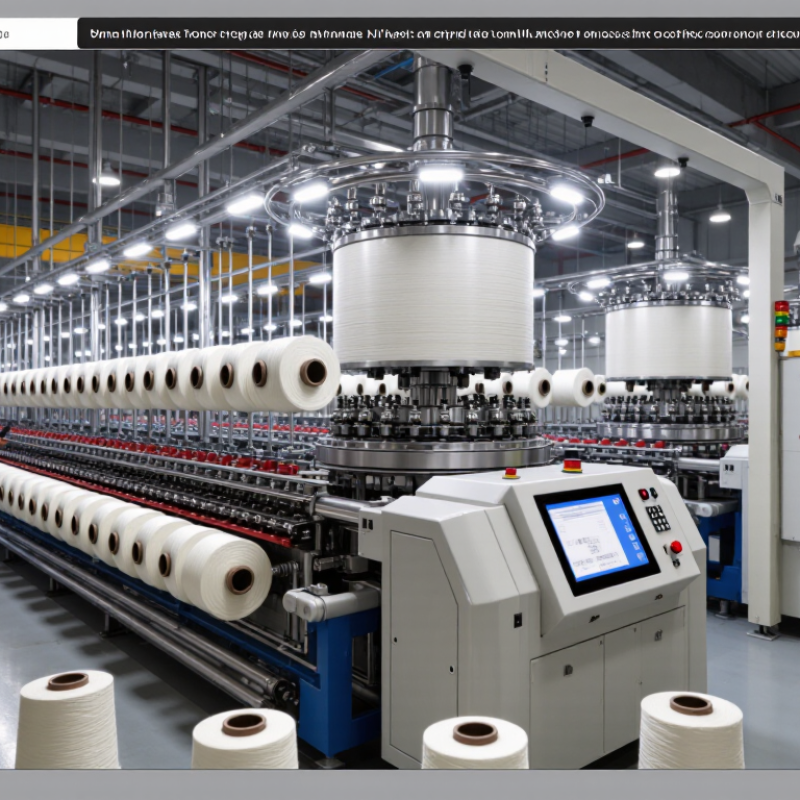
Table of Contents [Hide]
Use Textile Exchange Data: 124 Mt Fibers in 2023, 57% Polyester
Textile Exchange’s Materials Market Report 2024 records 124 million tonnes of global fiber production in 2023. Polyester represented 57%, or roughly 71 million tonnes. This scale matters when selecting a polyester yarn machine. Demand is broad, but factory conditions are never identical.
Match the machine to your yarn plan, not only its catalogue speed. Check denier range, filament count, draw ratio, texturing method, and compatible recycled inputs. A 150-denier filament line may need different tension control than a fine 75-denier line. Ask for measured energy use per kilogram, temperature stability, waste percentage, and changeover time. These figures reveal more than a maximum output claim.
Use Textile Exchange’s fiber data as a market signal, then compare it with ITMF machinery shipment statistics and your sales forecast. A machine running 24 hours daily needs reliable heat control, accessible filters, and simple maintenance points. Inspect one operating line if possible. Listen for vibration near the winding unit. Look for uneven packages.
Do not assume polyester’s 57% share guarantees easy sales. It does not. Product differentiation, recycled-content requirements, and electricity costs can change the calculation. A neat spreadsheet may still mislead. Leave capacity for trials, faults, and slower orders. That is less impressive on paper, but more realistic on the factory floor.

© Copyright - Pro Tool & Supply - Site by SVM E-Marketing Solutions - Sitemap
- Privacy policy