- Products
- Air Compressors & Air Tools
- Climate Control
- Compaction Equipment
- Concrete Cutting Tools & Equipment
- Concrete and Masonry
- Demolition & Excavation
- Electrical & Mechanical
- Fasteners and Anchoring Adhesives
- Floor Protection
- Generators and Welders
- Hand Tools
- Heaters
- Janitorial and Office Supplies
- Jobsite Protection
- Ladders & Storage
- Lighting & Lighting Accessories
- Man Lifts
- Material Handling Equipment
- Power Tools
- Pressure Washers & Pumps
- Safety Gear
- Safety Products
- Saws
- Surface Preparation
- SEASONAL PRODUCTS
- Rentals
- Air Compressor and Air Tool Rentals
- Climate Control Rental
- Compaction Rentals
- Concrete Equipment Rentals
- Demolition & Excavation Equipment Rentals
- Concrete Floor Grinder Rentals
- General Construction Equipment Rentals
- Generator Rentals and Welder Rentals
- Heater Rentals
- Light Tower Rentals
- Man Lift Rentals in Massachusetts and Rhode Island
- Material Handling Equipment Rentals
- Pressure Washer & Pump Rentals
- Saw Rentals in New England
- SEASONAL PRODUCTS
- Products
- Air Compressors & Air Tools
- Climate Control
- Compaction Equipment
- Concrete Cutting Tools & Equipment
- Demolition & Excavation
- Electrical & Mechanical
- Floor Protection
- Generators and Welders
- Construction Heaters
- Construction Ladders, Staging, & Storage
- Construction Lighting
- Man Lifts
- Material Handling Equipment
- Industrial Janitorial and Office Supplies
- Pressure Washers & Pumps
- Construction Safety Products
- Construction Safety Gear
- Surface Preparation
- Building Protection
- Diesel Accessories
- Zero Emissions
- Rentals
- Air Compressor and Air Tool Rentals
- Climate Control Rental
- Compaction Rentals
- Concrete Equipment Rental
- Demolition & Excavation Equipment Rental
- General Construction Equipment Rental
- Generator Rentals and Welder Rentals
- Construction Heaters Rental
- Light Tower Rentals
- Man Lift Rentals
- Material Handling Equipment Rental
- Pressure Washer & Pump Rentals
- Saw Rentals in New England
- Concrete Floor Grinder Rentals
- Zero Emissions Rentals
- Repairs & Used
- Parts
- Blog
- Services
- Resources
- About Us
- Contact Us
Sales & Rental of Construction | Industrial Equipment & Supplies


How to Choose a Burr Oak Fin Press in 2026?
Choosing a Burr Oak Fin Press in 2026 requires more than comparing tonnage, speed, and price. The machine must match fin material, strip thickness, pitch, louver geometry, and production volume. A press that runs smoothly on aluminum may struggle with copper or thicker stock. Small differences matter. They affect scrap, tool wear, noise, and heat-exchanger performance.
The International Energy Agency reports that global cooling demand could more than triple by 2050, increasing pressure on manufacturers to improve efficiency and production capacity. The U.S. Department of Energy also identifies advanced manufacturing and process efficiency as important paths toward industrial energy reduction. These trends give fin-press selection greater importance. However, market forecasts do not replace a factory trial. They cannot reveal burr formation at 180 strokes per minute.
Dr. Eckhard Groll, a respected refrigeration engineering authority, has emphasized the importance of balancing thermal performance with pressure-drop control: “Good heat-exchanger design requires both heat transfer and hydraulic efficiency.” That principle also guides the choice of a Burr Oak Fin Press. Accurate feeding, repeatable forming, rigid construction, and accessible maintenance directly influence the finished coil.
Look closely at the details. Check the feeder’s grip marks. Measure fin pitch after production. Listen for vibration near the die station. Ask whether spare tooling and technical support are available locally. Burr OAK Tool’s established experience is valuable, but brand reputation alone is not enough. A perfect specification sheet can still disappoint on the factory floor. This guide examines the practical criteria buyers should question before choosing a Burr Oak Fin Press for 2026.
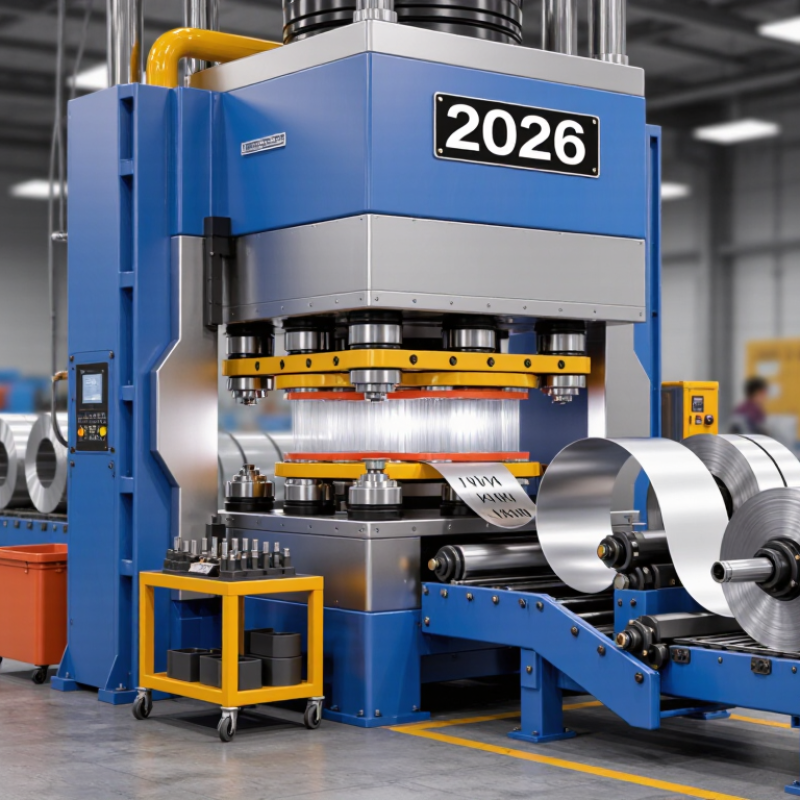
Table of Contents [Hide]
Define ASTM B209 Aluminum: 0.08–0.30 mm Stock and 1.5–3.2 mm Pitch
How to Choose a Burr Oak Fin Press in 2026?
When selecting a burr oak fin press, begin with the aluminum specification, not the machine’s appearance. ASTM B209 covers aluminum and aluminum-alloy sheet and plate requirements. It does not automatically define your fin pitch or forming results. Request the material grade, temper, thickness tolerance, and inspection records from the supplier.
For 0.08–0.30 mm stock, feeding accuracy becomes critical. Thin aluminum can wrinkle near the entry guide or stretch around a sharp forming radius. A practical press should offer stable strip control, adjustable die clearance, and precise pilot alignment. The target pitch, 1.5–3.2 mm, also needs careful tooling design. Smaller pitches demand cleaner cutting edges and tighter synchronization between feeding and forming.
Check samples under actual production conditions. Measure pitch across several fins, not just one section. Inspect burr height, fin height, flatness, and edge tearing. Keep the strip clean. Tiny particles can mark this thin material.
Do not trust a catalog number alone.
I once focused too much on maximum speed and overlooked feed variation. The first trial produced acceptable fins, but inconsistent spacing appeared after longer runs. That mistake changed my evaluation method. Ask for a sustained test, temperature records, and maintenance access. A slower press with repeatable control may produce better usable output than a faster machine with unstable feeding.

© Copyright - Pro Tool & Supply - Site by SVM E-Marketing Solutions - Sitemap
- Privacy policy