- Products
- Air Compressors & Air Tools
- Climate Control
- Compaction Equipment
- Concrete Cutting Tools & Equipment
- Concrete and Masonry
- Demolition & Excavation
- Electrical & Mechanical
- Fasteners and Anchoring Adhesives
- Floor Protection
- Generators and Welders
- Hand Tools
- Heaters
- Janitorial and Office Supplies
- Jobsite Protection
- Ladders & Storage
- Lighting & Lighting Accessories
- Man Lifts
- Material Handling Equipment
- Power Tools
- Pressure Washers & Pumps
- Safety Gear
- Safety Products
- Saws
- Surface Preparation
- SEASONAL PRODUCTS
- Rentals
- Air Compressor and Air Tool Rentals
- Climate Control Rental
- Compaction Rentals
- Concrete Equipment Rentals
- Demolition & Excavation Equipment Rentals
- Concrete Floor Grinder Rentals
- General Construction Equipment Rentals
- Generator Rentals and Welder Rentals
- Heater Rentals
- Light Tower Rentals
- Man Lift Rentals in Massachusetts and Rhode Island
- Material Handling Equipment Rentals
- Pressure Washer & Pump Rentals
- Saw Rentals in New England
- SEASONAL PRODUCTS
- Products
- Air Compressors & Air Tools
- Climate Control
- Compaction Equipment
- Concrete Cutting Tools & Equipment
- Demolition & Excavation
- Electrical & Mechanical
- Floor Protection
- Generators and Welders
- Construction Heaters
- Construction Ladders, Staging, & Storage
- Construction Lighting
- Man Lifts
- Material Handling Equipment
- Industrial Janitorial and Office Supplies
- Pressure Washers & Pumps
- Construction Safety Products
- Construction Safety Gear
- Surface Preparation
- Building Protection
- Diesel Accessories
- Zero Emissions
- Rentals
- Air Compressor and Air Tool Rentals
- Climate Control Rental
- Compaction Rentals
- Concrete Equipment Rental
- Demolition & Excavation Equipment Rental
- General Construction Equipment Rental
- Generator Rentals and Welder Rentals
- Construction Heaters Rental
- Light Tower Rentals
- Man Lift Rentals
- Material Handling Equipment Rental
- Pressure Washer & Pump Rentals
- Saw Rentals in New England
- Concrete Floor Grinder Rentals
- Zero Emissions Rentals
- Repairs & Used
- Parts
- Blog
- Services
- Resources
- About Us
- Contact Us
Sales & Rental of Construction | Industrial Equipment & Supplies


How to Choose the Best Wind Power Storage System for Your Needs?
Choosing the right wind power storage system can be a complex task. It involves understanding various factors that impact performance, cost, and efficiency. As renewable energy continues to gain traction, wind power remains a key player in the energy landscape. However, storing that energy effectively is crucial for maximizing its benefits.
When evaluating a wind power storage system, consider factors like capacity, technology, and lifespan. Each system offers unique advantages and limitations. For example, lithium-ion batteries provide high energy density but may face issues with longevity. In contrast, pumped hydro storage boasts a long lifespan but requires specific geographical conditions. Finding the balance between cost and efficiency is essential.
Reflecting on your specific needs is also important. Will you require consistent power supply or occasional use? Assessing your energy requirements can shape your decision-making process. Each choice carries implications that should be weighed carefully. By examining both qualitative and quantitative metrics, you can arrive at a solution that aligns with your goals for sustainability and energy independence.
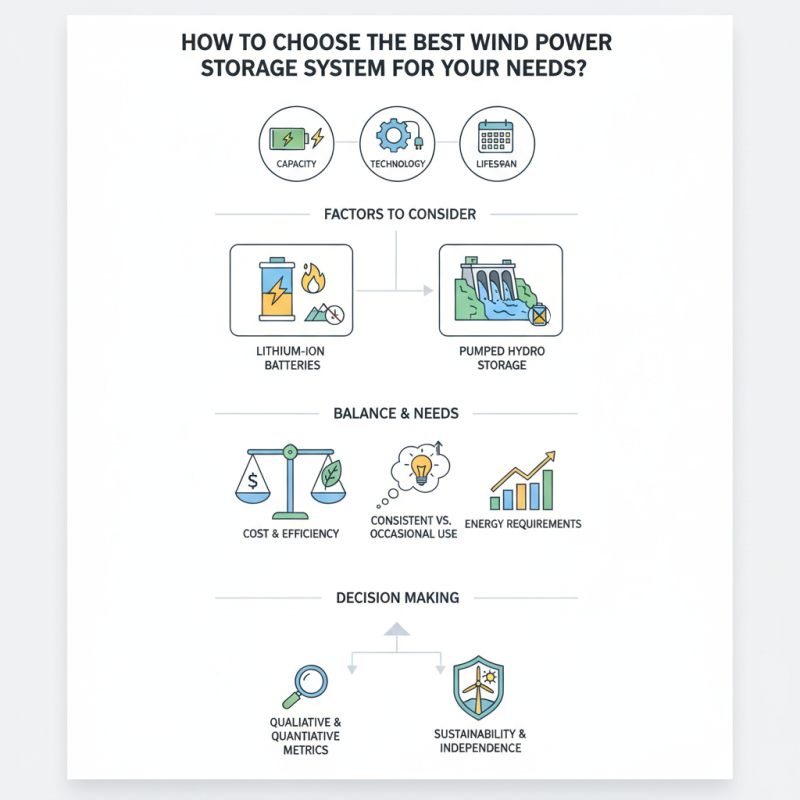
Table of Contents [Hide]
Understanding Your Energy Storage Needs
When selecting a wind power storage system, understanding your energy storage needs is crucial. Energy demands vary greatly based on usage patterns. A commercial establishment may require more capacity than a residential setup. Reports indicate that energy storage systems can reduce peak demand by 10-30%. This reduction not only lowers energy costs but also relieves stress on the grid.
Evaluating the duration of energy storage is vital. Some applications need short-term storage, suitable for daily fluctuations. Others may require longer durations for backup. The International Renewable Energy Agency (IRENA) states that battery storage will reach 1,400 GWh by 2030, indicating a growing reliance on this technology. However, the costs can vary significantly. Budget constraints may lead to tough choices between capacity and quality.
Moreover, consider the scalability of the system. Your needs today may change in five years. Systems that offer flexibility can adapt to increased demand or technological advancements. Using outdated technology may hinder performance and efficiency. Balancing your energy needs requires careful thought and a strategic approach.

© Copyright - Pro Tool & Supply - Site by SVM E-Marketing Solutions - Sitemap
- Privacy policy