- Products
- Air Compressors & Air Tools
- Climate Control
- Compaction Equipment
- Concrete Cutting Tools & Equipment
- Concrete and Masonry
- Demolition & Excavation
- Electrical & Mechanical
- Fasteners and Anchoring Adhesives
- Floor Protection
- Generators and Welders
- Hand Tools
- Heaters
- Janitorial and Office Supplies
- Jobsite Protection
- Ladders & Storage
- Lighting & Lighting Accessories
- Man Lifts
- Material Handling Equipment
- Power Tools
- Pressure Washers & Pumps
- Safety Gear
- Safety Products
- Saws
- Surface Preparation
- SEASONAL PRODUCTS
- Rentals
- Air Compressor and Air Tool Rentals
- Climate Control Rental
- Compaction Rentals
- Concrete Equipment Rentals
- Demolition & Excavation Equipment Rentals
- Concrete Floor Grinder Rentals
- General Construction Equipment Rentals
- Generator Rentals and Welder Rentals
- Heater Rentals
- Light Tower Rentals
- Man Lift Rentals in Massachusetts and Rhode Island
- Material Handling Equipment Rentals
- Pressure Washer & Pump Rentals
- Saw Rentals in New England
- SEASONAL PRODUCTS
- Products
- Air Compressors & Air Tools
- Climate Control
- Compaction Equipment
- Concrete Cutting Tools & Equipment
- Demolition & Excavation
- Electrical & Mechanical
- Floor Protection
- Generators and Welders
- Construction Heaters
- Construction Ladders, Staging, & Storage
- Construction Lighting
- Man Lifts
- Material Handling Equipment
- Industrial Janitorial and Office Supplies
- Pressure Washers & Pumps
- Construction Safety Products
- Construction Safety Gear
- Surface Preparation
- Building Protection
- Diesel Accessories
- Zero Emissions
- Rentals
- Air Compressor and Air Tool Rentals
- Climate Control Rental
- Compaction Rentals
- Concrete Equipment Rental
- Demolition & Excavation Equipment Rental
- General Construction Equipment Rental
- Generator Rentals and Welder Rentals
- Construction Heaters Rental
- Light Tower Rentals
- Man Lift Rentals
- Material Handling Equipment Rental
- Pressure Washer & Pump Rentals
- Saw Rentals in New England
- Concrete Floor Grinder Rentals
- Zero Emissions Rentals
- Repairs & Used
- Parts
- Blog
- Services
- Resources
- About Us
- Contact Us
Sales & Rental of Construction | Industrial Equipment & Supplies


China Top Pop-up Socket Suppliers for Global Buyers
China has become a major sourcing base for workplace connectivity hardware. Its supplier network covers injection molding, metal stamping, wiring, USB charging, and final assembly. That combination matters when buyers compare Pop-up Socket manufacturers for offices, kitchens, conference tables, and hospitality projects.
Market evidence supports this direction. Grand View Research valued the global office furniture market at approximately USD 54.8 billion in 2023, with workplace redesign supporting demand for integrated power access. Fortune Business Insights also identifies smart-office adoption as a long-term growth area, driven by connected devices and flexible workspaces. These reports do not measure Pop-up Socket sales directly. That limitation matters. Product-specific figures are still fragmented across regions and suppliers.
Bachmann Group executive David Steel has described the design goal clearly: “Power access should support the workspace without becoming its visual focus.” Buyers can see this principle in practical details: a brushed-metal lid, a 60-millimeter cutout, a soft-close mechanism, or a USB-C port beside an AC outlet. Small details reveal manufacturing discipline.
Reliable sourcing requires more than a low quotation. Global buyers should review load ratings, material certificates, factory audits, sample consistency, cable quality, and applicable electrical approvals. Suppliers must also explain installation depth and replacement procedures. Some listings look polished but provide weak documentation. That is where careful evaluation becomes essential.
China’s strongest suppliers can offer customization, stable production, and competitive lead times. Yet no supplier should be accepted on claims alone. This guide examines the evidence.
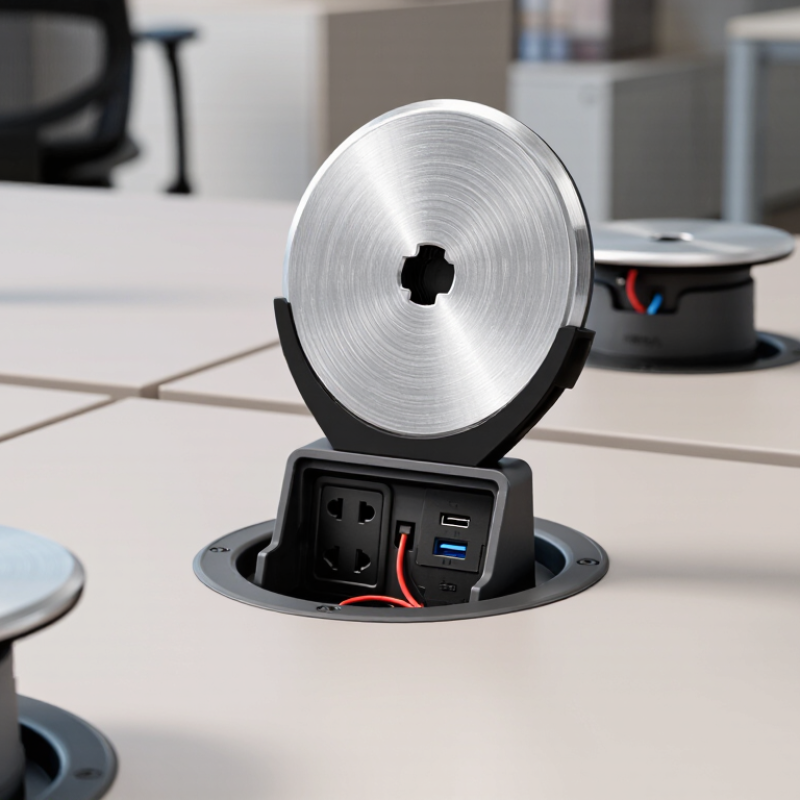
Table of Contents [Hide]
What Are Pop-up Sockets and How Do They Work?
Pop-up sockets are recessed electrical units that rise from a desk or countertop when needed. Pressing the cover usually releases a spring-assisted lifting mechanism. The socket then extends through a guided track. After use, another push lowers it below the surface. Inside, separate modules may provide power, USB charging, or data connections. The visible housing protects the unit when it is closed.
In practical installations, alignment matters more than many buyers expect. A socket needs a correctly sized cutout, stable support, and enough clearance below the surface. Professional installers should check voltage ratings, grounding, cable strain, and heat buildup. Some models resist splashes, but water resistance is not waterproof protection. The mechanism is useful, yet not foolproof. Dust, crumbs, or a poorly fitted cover can affect movement over time. I have found that simple products still need careful measurements and realistic usage checks.
Tips: Confirm the cutout size before ordering. Check the lifting height and panel thickness range. Choose certified electrical components for the target market. Test the unit several times after installation. Do not force a stiff mechanism. A small alignment error can become a daily annoyance.

© Copyright - Pro Tool & Supply - Site by SVM E-Marketing Solutions - Sitemap
- Privacy policy