- Products
- Air Compressors & Air Tools
- Climate Control
- Compaction Equipment
- Concrete Cutting Tools & Equipment
- Concrete and Masonry
- Demolition & Excavation
- Electrical & Mechanical
- Fasteners and Anchoring Adhesives
- Floor Protection
- Generators and Welders
- Hand Tools
- Heaters
- Janitorial and Office Supplies
- Jobsite Protection
- Ladders & Storage
- Lighting & Lighting Accessories
- Man Lifts
- Material Handling Equipment
- Power Tools
- Pressure Washers & Pumps
- Safety Gear
- Safety Products
- Saws
- Surface Preparation
- SEASONAL PRODUCTS
- Rentals
- Air Compressor and Air Tool Rentals
- Climate Control Rental
- Compaction Rentals
- Concrete Equipment Rentals
- Demolition & Excavation Equipment Rentals
- Concrete Floor Grinder Rentals
- General Construction Equipment Rentals
- Generator Rentals and Welder Rentals
- Heater Rentals
- Light Tower Rentals
- Man Lift Rentals in Massachusetts and Rhode Island
- Material Handling Equipment Rentals
- Pressure Washer & Pump Rentals
- Saw Rentals in New England
- SEASONAL PRODUCTS
- Products
- Air Compressors & Air Tools
- Climate Control
- Compaction Equipment
- Concrete Cutting Tools & Equipment
- Demolition & Excavation
- Electrical & Mechanical
- Floor Protection
- Generators and Welders
- Construction Heaters
- Construction Ladders, Staging, & Storage
- Construction Lighting
- Man Lifts
- Material Handling Equipment
- Industrial Janitorial and Office Supplies
- Pressure Washers & Pumps
- Construction Safety Products
- Construction Safety Gear
- Surface Preparation
- Building Protection
- Diesel Accessories
- Zero Emissions
- Rentals
- Air Compressor and Air Tool Rentals
- Climate Control Rental
- Compaction Rentals
- Concrete Equipment Rental
- Demolition & Excavation Equipment Rental
- General Construction Equipment Rental
- Generator Rentals and Welder Rentals
- Construction Heaters Rental
- Light Tower Rentals
- Man Lift Rentals
- Material Handling Equipment Rental
- Pressure Washer & Pump Rentals
- Saw Rentals in New England
- Concrete Floor Grinder Rentals
- Zero Emissions Rentals
- Repairs & Used
- Parts
- Blog
- Services
- Resources
- About Us
- Contact Us
Sales & Rental of Construction | Industrial Equipment & Supplies


China Top MCB Inspection Conveyor Manufacturer?
Choosing a reliable Mcb Inspection Conveyor manufacturer in China requires more than comparing prices. The right supplier should understand miniature circuit breaker production, electrical testing, indexing accuracy, and long-term equipment stability. A well-designed conveyor can move each MCB smoothly between assembly, inspection, marking, and packaging stations. It should also reduce manual handling without hiding quality problems.
Ethan Zhang, an industrial automation engineer specializing in circuit breaker lines, states, “An MCB Inspection Conveyor is valuable only when it makes defects visible and production decisions measurable.” His view reflects a practical issue. Speed alone does not create a dependable inspection system. Sensors must detect missing parts, incorrect positions, damaged housings, and inconsistent terminal placement. The conveyor frame should remain stable during repeated starts and stops. Even a small vibration can affect camera focus or electrical testing accuracy.
Experienced Chinese manufacturers usually provide customized layouts, PLC control, servo indexing, vision inspection integration, and after-sales support. They should also explain inspection tolerances clearly. Ask for sample testing, factory videos, reference projects, and maintenance instructions. These details reveal more than a polished website.
However, no conveyor suits every factory. Product dimensions, cycle time, testing voltage, floor space, and data requirements can change the design completely. A supplier may promise excellent performance, yet actual results depend on commissioning and operator training. That is where buyers must remain careful. The best evaluation combines technical documents, witnessed testing, and honest discussion about limitations. A China-based manufacturer becomes a strong choice when it delivers consistent accuracy, transparent communication, and a system that can be maintained years after installation.
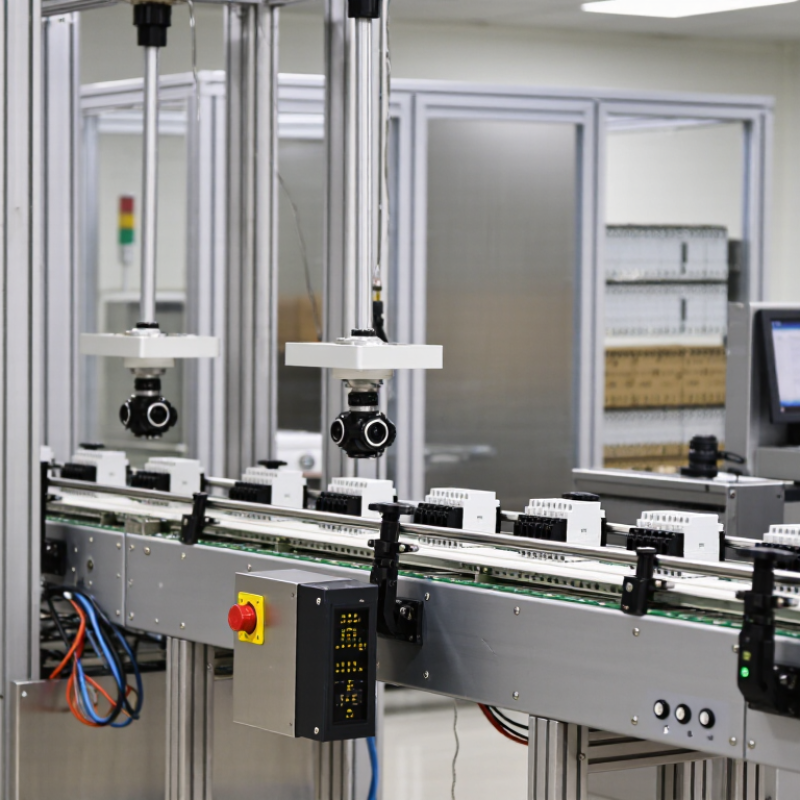
Table of Contents [Hide]
MCB Inspection Conveyors: Definition and Core Functions
MCB Inspection Conveyors: Definition and Core Functions
An MCB inspection conveyor is a controlled transport system for miniature circuit breakers. It moves each unit through visual, dimensional, electrical, and marking checks. Unlike a general belt conveyor, it manages pitch, orientation, and inspection timing. Servo indexing can pause products beneath cameras, while guides keep terminals aligned. A practical system also separates accepted and rejected units without stopping the main flow.
The International Federation of Robotics reported 541,302 industrial robots installed worldwide in 2023. This figure shows the wider shift toward automated handling and repeatable inspection. In MCB production, conveyors connect assembly, testing, labeling, and packing stations. Sensors can detect missing toggles, incorrect housings, surface damage, or unreadable codes. Data collection adds traceability, especially when each carrier receives a production timestamp.
A perfect line is a useful myth. Dust, vibration, and loose components still affect camera accuracy. Engineers should verify lighting, conveyor speed, and reject timing on the real product. The IEC 60898-1 standard defines important requirements for circuit breakers used in household and similar installations, but it does not design the conveyor itself. That distinction matters. Reliable inspection depends on both compliant products and carefully validated equipment. Small spacing errors can become large counting errors. 马会

© Copyright - Pro Tool & Supply - Site by SVM E-Marketing Solutions - Sitemap
- Privacy policy