- Products
- Air Compressors & Air Tools
- Climate Control
- Compaction Equipment
- Concrete Cutting Tools & Equipment
- Concrete and Masonry
- Demolition & Excavation
- Electrical & Mechanical
- Fasteners and Anchoring Adhesives
- Floor Protection
- Generators and Welders
- Hand Tools
- Heaters
- Janitorial and Office Supplies
- Jobsite Protection
- Ladders & Storage
- Lighting & Lighting Accessories
- Man Lifts
- Material Handling Equipment
- Power Tools
- Pressure Washers & Pumps
- Safety Gear
- Safety Products
- Saws
- Surface Preparation
- SEASONAL PRODUCTS
- Rentals
- Air Compressor and Air Tool Rentals
- Climate Control Rental
- Compaction Rentals
- Concrete Equipment Rentals
- Demolition & Excavation Equipment Rentals
- Concrete Floor Grinder Rentals
- General Construction Equipment Rentals
- Generator Rentals and Welder Rentals
- Heater Rentals
- Light Tower Rentals
- Man Lift Rentals in Massachusetts and Rhode Island
- Material Handling Equipment Rentals
- Pressure Washer & Pump Rentals
- Saw Rentals in New England
- SEASONAL PRODUCTS
- Products
- Air Compressors & Air Tools
- Climate Control
- Compaction Equipment
- Concrete Cutting Tools & Equipment
- Demolition & Excavation
- Electrical & Mechanical
- Floor Protection
- Generators and Welders
- Construction Heaters
- Construction Ladders, Staging, & Storage
- Construction Lighting
- Man Lifts
- Material Handling Equipment
- Industrial Janitorial and Office Supplies
- Pressure Washers & Pumps
- Construction Safety Products
- Construction Safety Gear
- Surface Preparation
- Building Protection
- Diesel Accessories
- Zero Emissions
- Rentals
- Air Compressor and Air Tool Rentals
- Climate Control Rental
- Compaction Rentals
- Concrete Equipment Rental
- Demolition & Excavation Equipment Rental
- General Construction Equipment Rental
- Generator Rentals and Welder Rentals
- Construction Heaters Rental
- Light Tower Rentals
- Man Lift Rentals
- Material Handling Equipment Rental
- Pressure Washer & Pump Rentals
- Saw Rentals in New England
- Concrete Floor Grinder Rentals
- Zero Emissions Rentals
- Repairs & Used
- Parts
- Blog
- Services
- Resources
- About Us
- Contact Us
Sales & Rental of Construction | Industrial Equipment & Supplies


China Top Black UHMW Plastic Sheet Manufacturer?
Choosing a reliable China manufacturer for Black Uhmw Plastic requires more than comparing prices and surface appearance. Buyers must examine material grade, compression molding methods, dimensional control, and practical service experience. A sheet may look smooth under warehouse lighting, yet warp after cutting or wear quickly under repeated impact.
Dr. Steven M. Kurtz, a recognized UHMWPE researcher and author, has emphasized, “The performance of UHMWPE depends strongly on its molecular weight and processing history.” This principle matters when evaluating Black Uhmw Plastic. Carbon black can improve light resistance and create a consistent dark finish, but it cannot correct poor resin quality or unstable production. Manufacturing evidence matters more than attractive catalog language.
A dependable Chinese supplier should provide technical data, tolerance ranges, sample pieces, and traceable quality records. Ask how the sheets are pressed, cooled, inspected, and packed. Check thickness across several points, especially near the edges. A 10 mm sheet that varies noticeably may create problems during machining or assembly. Real factory photos help, but they are not enough. An on-site audit or independent inspection is better.
The best manufacturer is not always the cheapest. This sounds obvious, but purchasing teams still overlook it. Delivery consistency, communication, and technical support can protect a project from costly rework. Some specifications remain unclear until testing begins. That is where a careful supplier should listen, revise, and document changes. This guide compares leading China-based manufacturers through material performance, production capability, customization, certifications, and customer reliability. Mistakes are possible. Transparent evidence makes them easier to identify before production starts.
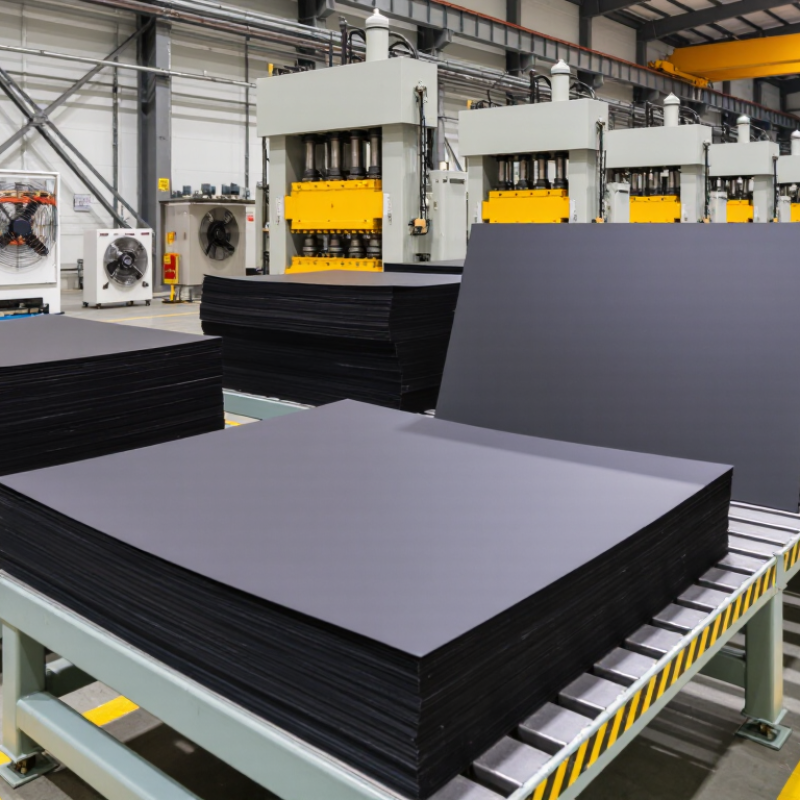
Table of Contents [Hide]
What Is Black UHMW Plastic Sheet?
What Is Black UHMW Plastic Sheet?
Black UHMW plastic sheet is made from ultra-high molecular weight polyethylene. Its long molecular chains create strong resistance to abrasion, impact, and sliding wear. The black color usually comes from carbon-based pigment added during production. Some grades also include additives for improved outdoor stability, but this should be verified with the technical data sheet.
In practical use, the sheet feels smooth and wax-like. It can reduce noise when used as a chute liner, guide rail, wear strip, or hopper lining. Moisture does not easily penetrate its surface. Many workshops machine it with standard carbide tools, although sharp tooling improves the finish. Proper cutting also reduces heat buildup and edge distortion.
UHMW plastic is not a perfect replacement for metal. It can expand with temperature changes and may creep under constant heavy loads. It also has limited resistance to high heat. These points are easy to overlook. When selecting a sheet, check thickness tolerance, flatness, impact performance, operating temperature, and material certification. A reliable manufacturer should provide inspection records and clear testing methods. Small differences in formulation can affect service life. That deserves careful review.

© Copyright - Pro Tool & Supply - Site by SVM E-Marketing Solutions - Sitemap
- Privacy policy