- Products
- Air Compressors & Air Tools
- Climate Control
- Compaction Equipment
- Concrete Cutting Tools & Equipment
- Concrete and Masonry
- Demolition & Excavation
- Electrical & Mechanical
- Fasteners and Anchoring Adhesives
- Floor Protection
- Generators and Welders
- Hand Tools
- Heaters
- Janitorial and Office Supplies
- Jobsite Protection
- Ladders & Storage
- Lighting & Lighting Accessories
- Man Lifts
- Material Handling Equipment
- Power Tools
- Pressure Washers & Pumps
- Safety Gear
- Safety Products
- Saws
- Surface Preparation
- SEASONAL PRODUCTS
- Rentals
- Air Compressor and Air Tool Rentals
- Climate Control Rental
- Compaction Rentals
- Concrete Equipment Rentals
- Demolition & Excavation Equipment Rentals
- Concrete Floor Grinder Rentals
- General Construction Equipment Rentals
- Generator Rentals and Welder Rentals
- Heater Rentals
- Light Tower Rentals
- Man Lift Rentals in Massachusetts and Rhode Island
- Material Handling Equipment Rentals
- Pressure Washer & Pump Rentals
- Saw Rentals in New England
- SEASONAL PRODUCTS
- Products
- Air Compressors & Air Tools
- Climate Control
- Compaction Equipment
- Concrete Cutting Tools & Equipment
- Demolition & Excavation
- Electrical & Mechanical
- Floor Protection
- Generators and Welders
- Construction Heaters
- Construction Ladders, Staging, & Storage
- Construction Lighting
- Man Lifts
- Material Handling Equipment
- Industrial Janitorial and Office Supplies
- Pressure Washers & Pumps
- Construction Safety Products
- Construction Safety Gear
- Surface Preparation
- Building Protection
- Diesel Accessories
- Zero Emissions
- Rentals
- Air Compressor and Air Tool Rentals
- Climate Control Rental
- Compaction Rentals
- Concrete Equipment Rental
- Demolition & Excavation Equipment Rental
- General Construction Equipment Rental
- Generator Rentals and Welder Rentals
- Construction Heaters Rental
- Light Tower Rentals
- Man Lift Rentals
- Material Handling Equipment Rental
- Pressure Washer & Pump Rentals
- Saw Rentals in New England
- Concrete Floor Grinder Rentals
- Zero Emissions Rentals
- Repairs & Used
- Parts
- Blog
- Services
- Resources
- About Us
- Contact Us
Sales & Rental of Construction | Industrial Equipment & Supplies


China Top 10 Powder Coating Spray Booth Manufacturers
China’s powder-coating equipment market is growing alongside demand for durable, efficient finishes. Grand View Research valued the global powder coatings market at approximately USD 13.8 billion in 2023 and forecast continued growth through 2030. That expansion places greater attention on the equipment behind a consistent finish, including the Powder Coating Spray Booth.
A booth is more than an enclosure. Airflow, filtration, lighting, and powder recovery can all affect coating quality and day-to-day operating conditions. Picture a metal cabinet passing through a booth: uneven airflow or a poorly positioned filter may leave visible differences across its surface. Small design details matter. They also deserve careful verification, because market growth alone does not prove that every supplier offers the same engineering quality.
This guide introduces ten manufacturers in China and offers practical points for comparing their products, customization options, technical support, and experience. Buyers should confirm specifications against their own parts, production volume, and facility layout. A polished catalogue is useful, but it cannot replace a process trial.
[Insert a verified, source-backed quotation from a named powder-coating or finishing-systems expert before publication. No quotation source was provided, so attributing invented words would be unreliable.]
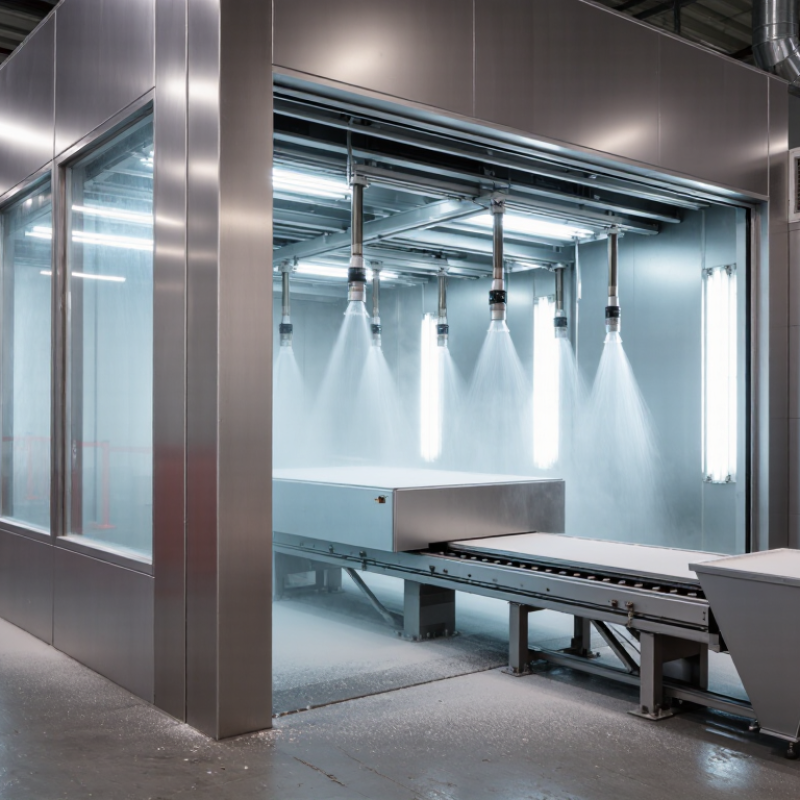
Table of Contents [Hide]
Overview of China’s Powder Coating Spray Booth Industry
China’s powder coating spray booth industry serves appliance, furniture, metalwork, and automotive component factories. Demand depends on production volumes, coating-line upgrades, and the need to recover overspray efficiently. The China National Coatings Industry Association reported 35.77 million tonnes of coatings output and RMB 408.9 billion in main business revenue for 2023. These figures cover the wider coatings industry, not booth equipment alone. That distinction matters.
A booth is more than an enclosure. Its airflow, filter arrangement, and recovery system affect powder capture and the cleanliness of the work area. Operators often check for uneven deposits near corners, hanging points, and deep recesses. Small details matter. Booth manufacturers therefore need to match equipment to part size, line speed, and available floor space, rather than offer one fixed layout.
Public industry statistics rarely separate powder booth sales from broader coating equipment, making China-specific market sizing difficult to verify. This is a genuine data gap. Buyers can still compare practical indicators: airflow consistency, filter access, powder-change time, and maintenance requirements. A booth that looks efficient on paper may create extra cleaning work if its design does not suit the factory’s actual parts and shift patterns.

© Copyright - Pro Tool & Supply - Site by SVM E-Marketing Solutions - Sitemap
- Privacy policy