- Products
- Air Compressors & Air Tools
- Climate Control
- Compaction Equipment
- Concrete Cutting Tools & Equipment
- Concrete and Masonry
- Demolition & Excavation
- Electrical & Mechanical
- Fasteners and Anchoring Adhesives
- Floor Protection
- Generators and Welders
- Hand Tools
- Heaters
- Janitorial and Office Supplies
- Jobsite Protection
- Ladders & Storage
- Lighting & Lighting Accessories
- Man Lifts
- Material Handling Equipment
- Power Tools
- Pressure Washers & Pumps
- Safety Gear
- Safety Products
- Saws
- Surface Preparation
- SEASONAL PRODUCTS
- Rentals
- Air Compressor and Air Tool Rentals
- Climate Control Rental
- Compaction Rentals
- Concrete Equipment Rentals
- Demolition & Excavation Equipment Rentals
- Concrete Floor Grinder Rentals
- General Construction Equipment Rentals
- Generator Rentals and Welder Rentals
- Heater Rentals
- Light Tower Rentals
- Man Lift Rentals in Massachusetts and Rhode Island
- Material Handling Equipment Rentals
- Pressure Washer & Pump Rentals
- Saw Rentals in New England
- SEASONAL PRODUCTS
- Products
- Air Compressors & Air Tools
- Climate Control
- Compaction Equipment
- Concrete Cutting Tools & Equipment
- Demolition & Excavation
- Electrical & Mechanical
- Floor Protection
- Generators and Welders
- Construction Heaters
- Construction Ladders, Staging, & Storage
- Construction Lighting
- Man Lifts
- Material Handling Equipment
- Industrial Janitorial and Office Supplies
- Pressure Washers & Pumps
- Construction Safety Products
- Construction Safety Gear
- Surface Preparation
- Building Protection
- Diesel Accessories
- Zero Emissions
- Rentals
- Air Compressor and Air Tool Rentals
- Climate Control Rental
- Compaction Rentals
- Concrete Equipment Rental
- Demolition & Excavation Equipment Rental
- General Construction Equipment Rental
- Generator Rentals and Welder Rentals
- Construction Heaters Rental
- Light Tower Rentals
- Man Lift Rentals
- Material Handling Equipment Rental
- Pressure Washer & Pump Rentals
- Saw Rentals in New England
- Concrete Floor Grinder Rentals
- Zero Emissions Rentals
- Repairs & Used
- Parts
- Blog
- Services
- Resources
- About Us
- Contact Us
Sales & Rental of Construction | Industrial Equipment & Supplies


China Best Aeration Diffuser Manufacturer Supplier?
Choosing a China Best Aeration Diffuser Manufacturer Supplier requires more than comparing catalog prices. It requires evidence. According to Grand View Research, the global wastewater treatment equipment market reached approximately USD 32.7 billion in 2023. The report also projects continued growth through 2030. This expansion increases demand for reliable oxygen-transfer equipment, especially in municipal plants, food factories, and industrial parks.
Aeration Diffuser performance affects oxygen transfer, blower power, maintenance, and biological stability. Fine-bubble membranes can produce smaller bubbles, like a steady stream of glass beads rising through a clear tank. However, fouling, uneven air distribution, and premature membrane aging remain practical problems. The U.S. Environmental Protection Agency identifies fine-pore aeration as an efficient option, while also stressing proper cleaning and operating control. Real conditions are less perfect than laboratory figures.
Wastewater researcher Bruce Rittmann has repeatedly promoted a resource-recovery mindset, stating, “Wastewater treatment should be viewed as resource recovery.” That idea matters when evaluating an Aeration Diffuser supplier. A dependable manufacturer should provide oxygen-transfer testing, membrane material details, air-flow ranges, and installation guidance. Third-party test records are valuable. Factory photographs alone are not enough.
China has a broad manufacturing base, but supplier quality varies significantly. Some factories optimize for low quotations. Others invest in EPDM or silicone membranes, laser-perforated sheets, corrosion-resistant frames, and traceable production records. Buyers should compare standard airflow, pressure loss, clean-water oxygen-transfer efficiency, warranty terms, and replacement availability. The numbers may not align perfectly between laboratories. That is worth questioning, not hiding. A thoughtful supplier selection process connects published data with tank performance, energy consumption, and long-term maintenance realities.
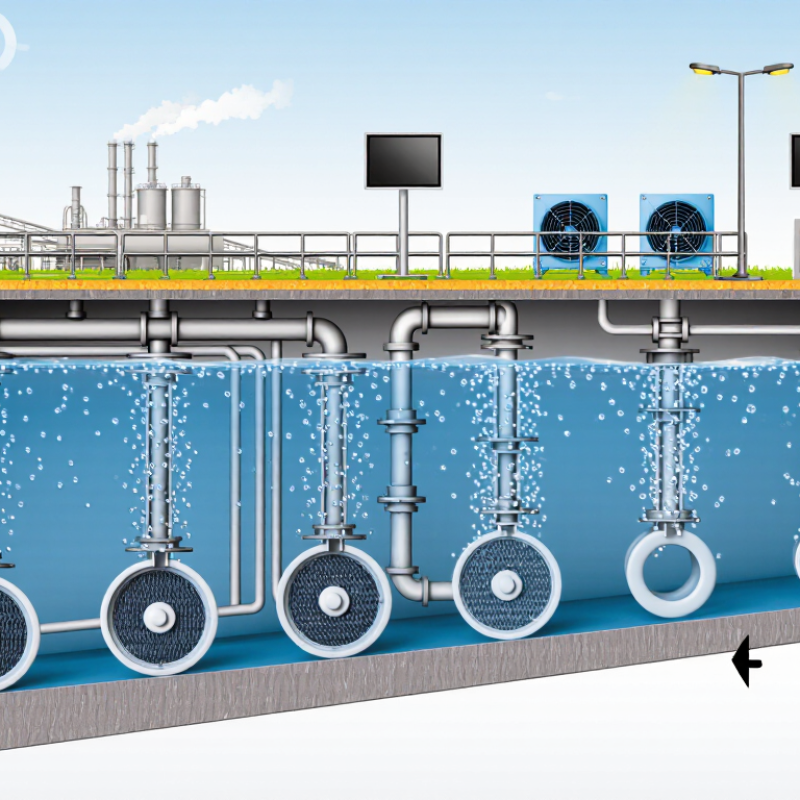
Table of Contents [Hide]
What Makes a Fine-Bubble Diffuser Achieve 20–35% Standard Oxygen Transfer Efficiency?
A fine-bubble diffuser can reach 20–35% standard oxygen transfer efficiency under controlled conditions. The result depends on pore structure, membrane elasticity, airflow, water depth, and oxygen demand. Smaller bubbles expose more surface area to water. They also rise more slowly, allowing longer contact time.
In field inspections, membrane quality often separates a capable supplier from a weak one. Uniform pores create stable bubbles across the diffuser surface. Uneven pores produce large bubbles and waste blower energy. A dependable manufacturer should verify SOTE through recognized clean-water testing, then provide airflow, pressure-loss, and fouling data. Test depth matters. So does temperature.
Real wastewater rarely matches laboratory water. Grease, suspended solids, iron, and biological growth can block fine pores. The diffuser may still operate, but efficiency will fall. Regular cleaning and suitable airflow help control this decline. I have seen systems lose performance when operators chase maximum airflow. More air is not always better. Excessive airflow can enlarge bubbles and increase power use.
A serious supplier should discuss the complete aeration system, not only membrane pore size. Ask for material aging data, operating limits, replacement guidance, and test conditions. The 20–35% figure is useful, but incomplete. A design should compare oxygen transfer with energy consumption over time. That is where practical value becomes visible.

© Copyright - Pro Tool & Supply - Site by SVM E-Marketing Solutions - Sitemap
- Privacy policy