Sales & Rental of Construction | Industrial Equipment & Supplies

China Best Oilless Reciprocating Compressor?

Choosing the China Best Oilless Reciprocating Compressor requires more than comparing prices or browsing attractive product photos. An Oilless Reciprocating Compressor must deliver clean, stable air without oil contamination. That matters in laboratories, food packaging, electronics, medical equipment, and precision workshops. A reliable model should provide consistent pressure, low moisture carryover, manageable noise, and dependable thermal control. Small details often reveal quality. Check the cylinder material, piston-ring design, cooling fan, air receiver, and drainage arrangement. These parts affect service life during long operating cycles.

This guide examines Chinese compressor manufacturers through practical performance, engineering evidence, and customer support. We consider airflow, pressure stability, energy consumption, vibration, maintenance intervals, and replacement-part availability. Factory testing records and recognized quality certifications can strengthen confidence, but documents alone cannot prove every claim. Ask for test data under realistic working conditions. Better evidence comes from running the compressor at the required duty cycle, not only at a showroom setting. Some suppliers offer excellent customization, while others provide weaker after-sales service. That difference can become expensive.

The best choice depends on your application.

A thoughtful review should also admit uncertainty. Published noise levels may change after installation, and laboratory efficiency may differ from workshop performance. We therefore focus on transparent specifications, verified experience, and clear technical communication. Whether you need a compact unit for dental equipment or a larger system for automated production, this comparison aims to help you select with confidence. The answer may not be the cheapest compressor. It should be the one that remains dependable when production cannot stop.
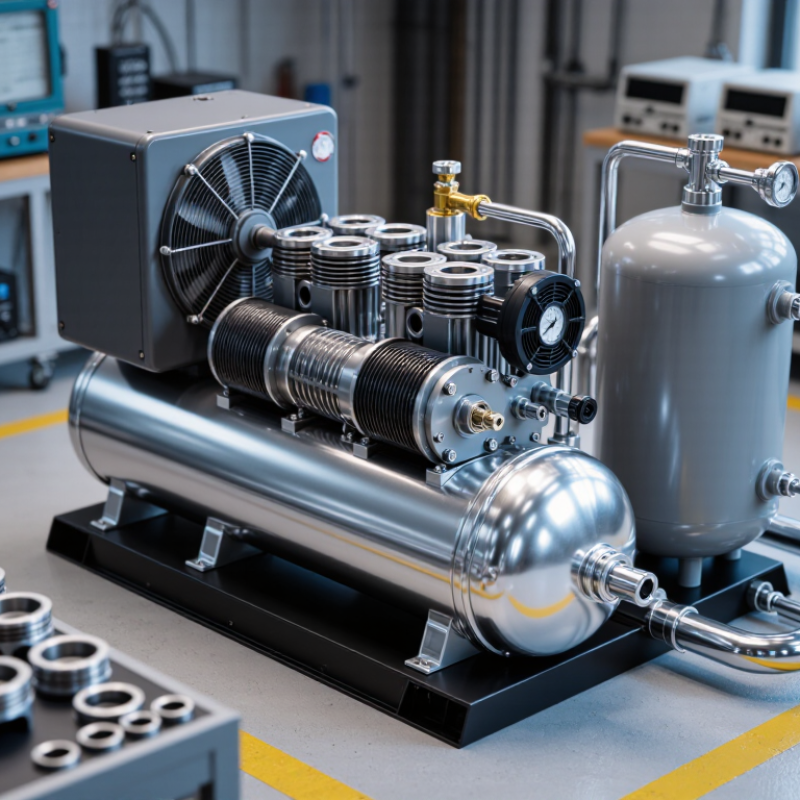
China Best Oilless Reciprocating Compressor?

Oilless Reciprocating Compressors: ISO 8573-1 Class 0 Air Quality

China Best Oilless Reciprocating Compressor?

Oilless reciprocating compressors can supply clean air for pharmaceuticals, electronics, food packaging, and laboratory equipment. ISO 8573-1 Class 0 requires oil concentration below the Class 1 limit, under defined test conditions. It does not simply mean “zero oil.” Users and suppliers must specify the required concentration and verification method. That detail matters.

The U.S. Department of Energy reports that compressed air can consume about 10% of industrial electricity, reaching 30% in some facilities. An oilless compressor may reduce oil-related filtration and disposal needs, but it can still waste energy through leakage, poor control, or excessive pressure. A practical assessment checks air demand, duty cycle, discharge temperature, and pressure stability. Listen near pipe joints. Small leaks become expensive quickly.

Maintenance experience also shows a weak point: clean compression does not guarantee clean delivery. Moisture, worn seals, pipe scale, and intake contamination can still reach the process line. ISO 8573-1 testing should therefore include oil, particles, and water, not oil alone. The compressor room should have suitable ventilation and accessible inspection points. Class 0 is a specification, not a marketing shortcut. One imperfect assumption can undermine the entire system. I would question any certificate that lacks sampling conditions, laboratory details, and a clear test date.

How China’s Models Compare by Pressure, Flow Rate, and 100% Oil-Free Design

Choosing a China-made oilless reciprocating compressor requires more than checking the advertised horsepower. Pressure, flow rate, and oil-free construction decide whether the machine fits real work.

The useful pressure range varies across Chinese models. Some compact units serve low-pressure laboratory tools and pneumatic controls. Others support higher-pressure applications with reinforced cylinders and improved cooling. I check working pressure, maximum pressure, and duty cycle separately. They are not interchangeable. A higher pressure rating may reduce available flow. My earlier comparisons were too simple. I focused on pressure and missed heat buildup during long operating cycles.

Flow rate also needs careful verification. Manufacturers may list piston displacement instead of free air delivery. I prefer FAD figures measured under stated conditions, such as pressure, temperature, and altitude. At the same pressure, one model may deliver noticeably less air than another. Receiver size can temporarily hide that difference. Ask for test data, not only a catalog number. Small detail, big effect.

A 100% oil-free design keeps lubricating oil away from the compression chamber and discharge air. This suits medical, dental, laboratory, and sensitive manufacturing environments. However, oil-free does not mean maintenance-free. Piston rings, valves, seals, cooling fans, and intake filters still wear. Reliable suppliers should provide service intervals, noise data, and replacement-part guidance. I would also inspect condensate handling, because moisture can damage downstream equipment even when oil is absent.

Key Standards: API 618, ISO 1217, and GB/T 13279 Compliance

China Best Oilless Reciprocating Compressor?

“Best” should mean verified performance, not the lowest quotation. For oilless reciprocating compressors, API 618 sets detailed requirements for design, materials, pulsation control, testing, and reliability in demanding process service. ISO 1217 provides methods for measuring capacity, power, and specific energy. In practice, buyers should request test curves at actual suction and discharge conditions, not only catalog values. Small errors here can become expensive operating losses.

GB/T 13279 adds a China-specific reference for fixed reciprocating air compressors. A compliant unit should show pressure stability, cooling performance, vibration limits, and documented factory testing. The U.S. Department of Energy reports that compressed air can consume about 10% of industrial electricity, while leakage may waste 20% to 30% of system output. That makes efficiency evidence important. Very important.

During evaluation, inspect cylinder materials, piston-ring wear data, oil-free sealing design, and the cleanliness of delivered air. API 618 documentation should match the compressor’s actual configuration. ISO 1217 results should identify test conditions clearly. GB/T 13279 records should not replace project-specific acceptance criteria. A certificate alone is not enough. Field experience also shows that cooling-water quality and maintenance discipline can change performance dramatically. This point is often underestimated. Standards guide the purchase, but operating records reveal the real machine.

Evaluating Piston Materials, Cooling Systems, Noise, and Service Life

China Best Oilless Reciprocating Compressor?

Selecting an oilless reciprocating compressor requires more than checking airflow and pressure. Piston material directly affects friction, heat, and service life. PTFE-based materials offer low friction and quiet movement. Carbon-filled compounds can improve wear resistance under heavy cycles. PEEK may tolerate higher temperatures, but it often increases cost. Material choice should match duty cycle, humidity, and cleaning conditions. One material cannot fit every workshop.

Cooling design deserves equal attention. Air-cooled units need clean airflow around the cylinder and valves. Blocked vents can raise temperatures quickly. Water-cooled systems may control heat better, but they add pumps, seals, and maintenance points. Noise also comes from vibration, valve impact, and loose mounting, not only the motor. In field inspections, rubber feet and accurate alignment often reduce harsh sound. Still, some vibration remains. That is normal.

Tips: Check piston wear every 1,000 to 2,000 operating hours. Record discharge temperature and sound changes. Replace filters before airflow drops. Do not judge service life from one test. Real life depends on loading, ambient heat, duty cycles, and maintenance quality. A longer warranty cannot correct poor installation. I would also leave room for uncertainty, because actual conditions often differ from factory measurements.

China Best Oilless Reciprocating Compressor? - Evaluating Piston Materials, Cooling Systems, Noise, and Service Life

Configuration Typical Discharge Pressure Typical Free Air Delivery Piston and Ring Materials Cooling System Typical Sound Pressure Expected Service Life Best-Fit Application
Compact air-cooled unit 0.7–1.0 MPa
100–145 psi
0.10–0.35 m³/min
3.5–12.4 cfm
Aluminium or coated-alloy piston; PTFE or reinforced PTFE rings Forced-air cooling with finned cylinder and flywheel fan 65–75 dB(A) at 1 m Approximately 5,000–10,000 operating hours with correct duty cycle Dental equipment, laboratory instruments, light automation, and intermittent pneumatic tools
Heavy-duty air-cooled unit 0.8–1.0 MPa
115–145 psi
0.30–0.90 m³/min
10.6–31.8 cfm
Hard-anodized aluminium piston or engineering polymer piston; filled PTFE or carbon-filled PTFE rings High-volume forced-air cooling; temperature switch recommended 70–82 dB(A) at 1 m Approximately 8,000–15,000 operating hours when operated below the rated duty cycle General factory air, packaging equipment, pneumatic controls, and workshop use
Low-noise enclosed unit 0.7–0.9 MPa
100–130 psi
0.15–0.50 m³/min
5.3–17.7 cfm
Lightweight alloy piston; low-friction PTFE, PEEK, or composite sealing rings Forced-air cooling inside an acoustic enclosure; ventilation clearance is essential 55–68 dB(A) at 1 m Approximately 6,000–12,000 operating hours, depending on enclosure temperature Medical rooms, offices, laboratories, classrooms, and noise-sensitive installations
Water-cooled industrial unit 0.8–1.2 MPa
115–175 psi
0.50–2.00 m³/min
17.7–70.6 cfm
Aluminium or ductile-alloy piston; filled PTFE, carbon, or high-temperature composite rings Water jacket or water-cooled cylinder head with temperature-controlled cooling circuit 62–75 dB(A) at 1 m Approximately 15,000–25,000 operating hours with clean cooling water and scheduled inspection Continuous-duty production lines, process air, food packaging, and high-utilization plants
Multi-stage high-pressure unit 1.5–4.0 MPa
220–580 psi
0.05–0.40 m³/min
1.8–14.1 cfm
Aluminium-alloy piston with graphite-filled PTFE or high-temperature composite rings Interstage air coolers plus forced-air or water cooling; aftercooler required 70–85 dB(A) at 1 m Approximately 10,000–20,000 operating hours, subject to pressure ratio and thermal control Gas boosting, PET preform systems, testing equipment, and specialized high-pressure air service
Evaluation notes: Values are representative engineering ranges for oil-less reciprocating compressors and are not brand-specific test results. Sound pressure depends on distance, installation, enclosure design, and measurement conditions. Service life is strongly affected by duty cycle, inlet filtration, ambient temperature, condensate management, and replacement of wear rings and valves.
Selection priority: For continuous operation, water-cooled designs generally provide better thermal stability. For compact and intermittent applications, air-cooled designs are simpler to install. Filled PTFE or composite rings usually offer a practical balance between low friction, chemical resistance, and maintenance cost.

Selecting China’s Best Model by 0.5–30 bar Duty and Energy Efficiency

China’s Best Oilless Reciprocating Compressor?
Selecting China’s best model requires matching the duty, not chasing the highest motor rating. For 0.5–30 bar applications, confirm whether pressure means bar(g) or absolute pressure. This small detail can change the specification. Low-pressure air may suit packaging or instrumentation, while 30 bar duty often requires staged compression, cooling, and stronger valves. ISO 1217 testing should support the stated free air delivery and power figures.
Energy efficiency needs field-based measurement. The U.S. Department of Energy reports that compressed air can consume 10–15% of industrial electricity, while leakage may waste 20–30% of compressor output. Therefore, compare specific power in kW per m³/min, measured at the required pressure. A larger motor is not automatically better. It may run unloaded too often. Variable-speed control can help, but only when demand changes frequently.
Oil-free compression also needs careful verification. “Oilless” should describe the compression chamber, not imply a completely filter-free system. Check ISO 8573-1 air-quality targets, cooling performance, noise, valve life, and maintenance access. My first shortlist would prioritize test records, service response, and a witnessed performance test. Catalog figures can look perfect. Site conditions are rarely perfect. A practical weakness remains: low-price models may hide higher lifetime energy costs. Reviewers should request three-year operating estimates, not only purchase prices.
© Copyright - Pro Tool & Supply - Site by SVM E-Marketing Solutions - Sitemap - Privacy policy
