- Products
- Air Compressors & Air Tools
- Climate Control
- Compaction Equipment
- Concrete Cutting Tools & Equipment
- Concrete and Masonry
- Demolition & Excavation
- Electrical & Mechanical
- Fasteners and Anchoring Adhesives
- Floor Protection
- Generators and Welders
- Hand Tools
- Heaters
- Janitorial and Office Supplies
- Jobsite Protection
- Ladders & Storage
- Lighting & Lighting Accessories
- Man Lifts
- Material Handling Equipment
- Power Tools
- Pressure Washers & Pumps
- Safety Gear
- Safety Products
- Saws
- Surface Preparation
- SEASONAL PRODUCTS
- Rentals
- Air Compressor and Air Tool Rentals
- Climate Control Rental
- Compaction Rentals
- Concrete Equipment Rentals
- Demolition & Excavation Equipment Rentals
- Concrete Floor Grinder Rentals
- General Construction Equipment Rentals
- Generator Rentals and Welder Rentals
- Heater Rentals
- Light Tower Rentals
- Man Lift Rentals in Massachusetts and Rhode Island
- Material Handling Equipment Rentals
- Pressure Washer & Pump Rentals
- Saw Rentals in New England
- SEASONAL PRODUCTS
- Products
- Air Compressors & Air Tools
- Climate Control
- Compaction Equipment
- Concrete Cutting Tools & Equipment
- Demolition & Excavation
- Electrical & Mechanical
- Floor Protection
- Generators and Welders
- Construction Heaters
- Construction Ladders, Staging, & Storage
- Construction Lighting
- Man Lifts
- Material Handling Equipment
- Industrial Janitorial and Office Supplies
- Pressure Washers & Pumps
- Construction Safety Products
- Construction Safety Gear
- Surface Preparation
- Building Protection
- Diesel Accessories
- Zero Emissions
- Rentals
- Air Compressor and Air Tool Rentals
- Climate Control Rental
- Compaction Rentals
- Concrete Equipment Rental
- Demolition & Excavation Equipment Rental
- General Construction Equipment Rental
- Generator Rentals and Welder Rentals
- Construction Heaters Rental
- Light Tower Rentals
- Man Lift Rentals
- Material Handling Equipment Rental
- Pressure Washer & Pump Rentals
- Saw Rentals in New England
- Concrete Floor Grinder Rentals
- Zero Emissions Rentals
- Repairs & Used
- Parts
- Blog
- Services
- Resources
- About Us
- Contact Us
Sales & Rental of Construction | Industrial Equipment & Supplies


China Best Mud Pump Pulsation Dampener Manufacturer?
Choosing the China Best Mud Pump Pulsation Dampener Manufacturer requires more than comparing prices or catalog photographs. It demands practical knowledge of drilling hydraulics, diaphragm behavior, pressure ratings, and long-term field service. A reliable manufacturer should explain how its dampener handles stroke frequency, discharge pressure, fluid temperature, and abrasive drilling mud.
Dr. Howard B. Bradley, a respected petroleum engineering author and drilling specialist, offered a useful principle: “Pressure control is never a single-component problem.” That insight applies directly to every Mud Pump Pulsation Dampener selection. The pump, discharge line, charging system, valves, and dampener must work together. Ignoring one connection can produce vibration, gauge fluctuations, premature diaphragm failure, or unstable flow.
Look for manufacturers with documented testing procedures, traceable materials, and clear maintenance instructions. Ask for pressure-cycle data, bladder or diaphragm specifications, charging recommendations, and inspection intervals. A serious supplier should also describe performance under real drilling conditions, not only laboratory settings. Check the details.
A visual example helps. During operation, the discharge gauge should remain steady instead of swinging sharply with each pump stroke. The dampener body should show no abnormal heat, leakage, or connection movement. Yet no manufacturer is perfect, and product claims still deserve verification. Some buyers overlook installation quality and later blame the equipment. That mistake is common.
This guide compares Chinese manufacturers through engineering capability, manufacturing consistency, customization support, quality control, and after-sales responsiveness. The best choice may not be the cheapest option. It should be the supplier that can prove dependable pulsation control, communicate clearly, and support the dampener throughout its working life.
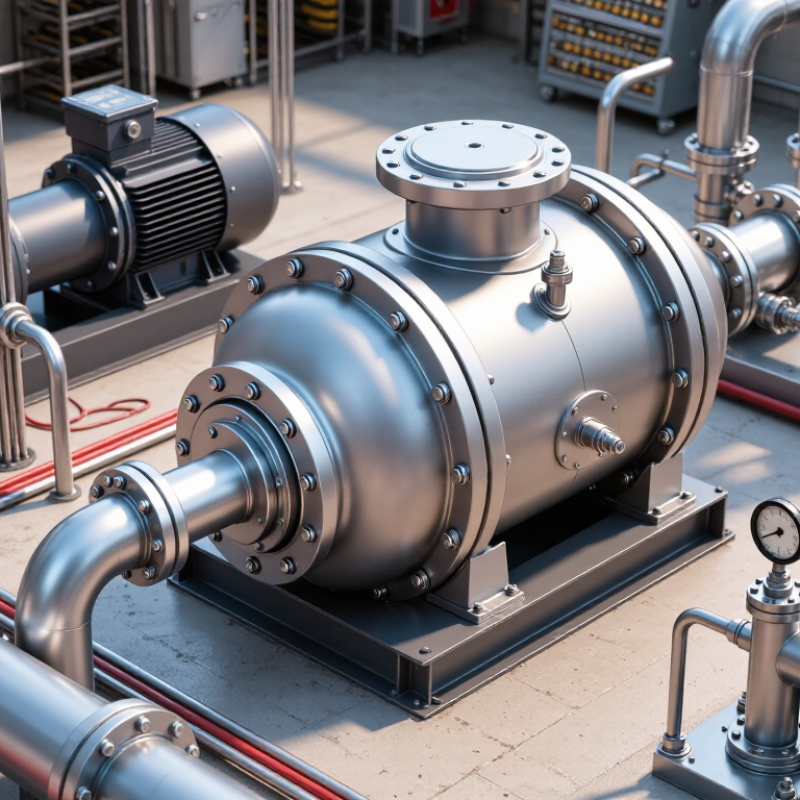
Table of Contents [Hide]
Understanding Mud Pump Pulsation Dampeners and Their Role
Understanding Mud Pump Pulsation Dampeners and Their Role
A mud pump pulsation dampener reduces pressure fluctuations created during fluid discharge. Without proper damping, the discharge line may shake, vibrate, and fatigue prematurely. In field operation, these pulses can also disturb measurement accuracy and increase stress on valves, fittings, and hoses. The dampener stores energy during pressure peaks, then releases it between strokes. This creates a steadier flow.
Correct sizing requires more than checking pump horsepower. Engineers should review pump displacement, stroke rate, operating pressure, mud density, and gas pre-charge conditions. A nitrogen-charged bladder or diaphragm must match the working environment and fluid demands. The shell, flange, and internal components also need suitable material selection. Inspection records matter. So does testing.
Small details can change performance. A low pre-charge may reduce damping, while excessive pre-charge can limit useful volume. Temperature changes can alter gas pressure during long drilling cycles. Technicians should check for leaks, unusual vibration, and pressure instability during commissioning. Do not rely on appearance alone. A clean housing may still contain a weakened bladder.
From a manufacturing perspective, reliable production includes dimensional inspection, pressure testing, weld checks, and traceable documentation. Experienced suppliers should explain test methods instead of offering vague promises. The “best” dampener is not universal. It is the one properly matched to the pump, fluid, and operating conditions. Field feedback should guide later adjustments, because the first setting is not always perfect.
China Best Mud Pump Pulsation Dampener Manufacturer? - Understanding Mud Pump Pulsation Dampeners and Their Role
| Evaluation Dimension | Typical Data or Engineering Guidance | Why It Matters |
|---|---|---|
| Primary Function | Reduces pressure and flow pulsations generated by reciprocating mud pumps. | Helps protect the discharge line, valves, fittings, pressure gauges, MWD/LWD equipment, and other downstream components. |
| Pump Compatibility | Commonly installed on triplex and quintuplex reciprocating mud pumps. | The number of pistons affects pulsation frequency and should be considered when sizing the dampener and discharge piping. |
| Triplex Pump Pulsation Frequency | Approximately three pressure pulses per crankshaft revolution under normal operating conditions. | The dampener must respond effectively to the pump’s operating speed and pulsation pattern. |
| Quintuplex Pump Pulsation Frequency | Approximately five pressure pulses per crankshaft revolution under normal operating conditions. | Higher pulse frequency can require different hydraulic analysis and dampener tuning than a triplex pump. |
| Common Dampener Type | Gas-charged diaphragm or bladder dampener, typically using nitrogen as the compressible medium. | The gas cushion absorbs part of the pressure fluctuation while the flexible element separates gas from drilling fluid. |
| Discharge Dampener Location | Installed on or close to the pump discharge manifold, before the main high-pressure discharge line. | A location close to the pulsation source generally improves pressure stabilization and reduces piping vibration. |
| Suction Dampener Location | Installed on the suction manifold or suction line when required by the pump and system design. | It can help reduce suction-side pressure variation and support smoother fluid intake, especially at demanding flow rates. |
| Pressure Rating | Must be equal to or higher than the maximum allowable working pressure of the connected mud pump system. | The pressure rating should be verified against the pump liner size, relief-valve setting, discharge manifold, and complete pressure envelope. |
| Precharge Medium | Dry nitrogen is commonly specified for gas precharging. | Oxygen and other unsuitable gases can create serious fire, explosion, compatibility, and safety risks and should not be used. |
| Precharge Setting | Determined by the dampener design, operating pressure, fluid service, temperature, and manufacturer’s technical instructions. | There is no single universal precharge value; an incorrect setting may reduce damping performance or damage the flexible element. |
| Pressure Measurement | Use a calibrated pressure gauge or approved charging and testing assembly suitable for the gas service. | Accurate measurement is essential for safe precharging, troubleshooting, and preventive maintenance. |
| Diaphragm or Bladder Material | Elastomer selection depends on drilling-fluid chemistry, temperature, pressure, abrasion, and compatibility requirements. | Material compatibility affects service life, leakage resistance, and resistance to swelling, hardening, or cracking. |
| Pressure Shell Material | Typically a forged or machined steel pressure-containing body selected for the specified pressure and temperature range. | The shell must withstand cyclic loading, pressure surges, corrosive exposure, and mechanical stresses from connected piping. |
| Connection Standard | Common connections include flanged, threaded, or studded arrangements selected to match the mud pump manifold and discharge piping. | Correct connection dimensions, pressure class, sealing method, and bolt specification are necessary for safe installation. |
| Fluid Compatibility | The wetted parts should be suitable for water-based mud, oil-based mud, synthetic-based mud, brine, cementing fluids, or other specified fluids. | Fluid chemistry can affect elastomers, metallic surfaces, seals, and the expected maintenance interval. |
| Temperature Range | Specified according to the elastomer, pressure shell, gas service, drilling fluid, ambient conditions, and operating environment. | Temperature changes alter gas behavior and elastomer properties, which can influence damping performance and service life. |
| Pulsation Reduction Objective | The objective is to reduce harmful pressure fluctuation, not necessarily to eliminate all pulsation. | Actual reduction depends on pump speed, flow rate, liner size, dampener volume, precharge, piping layout, and system resonance. |
| Safety Relief Arrangement | The dampener should be integrated into a pressure-protection system with an appropriately selected relief device and safe discharge route. | A pulsation dampener is not a substitute for a correctly sized and maintained relief valve or other overpressure protection. |
| Inspection Requirements | Check for gas-pressure loss, external leakage, abnormal vibration, damaged fittings, corrosion, and signs of diaphragm or bladder deterioration. | Early inspection can identify loss of damping performance before it causes excessive vibration or equipment damage. |
| Maintenance Interval | Established from the equipment manual, operating hours, pressure cycles, fluid conditions, inspection results, and maintenance history. | A fixed interval without considering actual service conditions may lead to premature replacement or missed failures. |
| Common Failure Symptoms | Increased discharge-pressure fluctuation, visible piping vibration, unusual noise, unstable gauge readings, gas-pressure loss, or fluid leakage. | These symptoms may indicate incorrect precharge, a damaged flexible element, blocked passages, loose connections, or unsuitable sizing. |
| Selection Data Required | Pump type, maximum flow rate, operating pressure, maximum allowable working pressure, pump speed, fluid type, temperature, connection size, and installation orientation. | Complete operating data is required to select a dampener that is hydraulically effective and mechanically compatible. |
| Quality Verification | Review material certificates, pressure-test records, dimensional inspection, non-destructive examination where specified, and traceability documentation. | Documented inspection helps verify pressure integrity, manufacturing consistency, and suitability for drilling-service applications. |
| Applicable Standards | The applicable design and inspection requirements may include API 7K, ASME Section VIII, regional pressure-equipment regulations, and project-specific specifications. | The required standard depends on the equipment classification, jurisdiction, purchaser requirements, and certification scope. |
Note: The values and guidance above are general engineering information. Final dampener sizing, pressure rating, precharge, materials, inspection procedure, and installation method must be confirmed from the specific pump and dampener design documentation.

© Copyright - Pro Tool & Supply - Site by SVM E-Marketing Solutions - Sitemap
- Privacy policy