Sales & Rental of Construction | Industrial Equipment & Supplies

China Best Modular Container House Manufacturer?

Choosing the China Best Modular Container House Manufacturer? requires more than comparing catalog prices. The right supplier must prove design capability, factory experience, material control, and dependable delivery. A reliable Modular Container House should withstand transport, repeated handling, rain, heat, and daily use. Its steel frame, insulation, electrical system, doors, and fire-resistant finishes deserve close review.

Architect Adam Kalkin, known for pioneering container architecture, said, “I like the idea of taking something that is considered disposable and making it useful.” That idea still matters. However, reuse alone does not guarantee quality. A container shell can look impressive while hiding weak welding, poor insulation, or careless moisture protection. Small details matter. Check the corners.

China offers a deep manufacturing base, flexible customization, and efficient production for modular buildings. Yet experience varies sharply between factories. Buyers should request project photographs, material specifications, factory inspection records, and clear warranty terms. They should also confirm compliance with the destination’s building, electrical, fire, and energy requirements. A professional manufacturer will explain these limits instead of promising everything.

The best comparison includes more than the lowest quotation. Examine engineering drawings, production checkpoints, packaging methods, installation guidance, and after-sales support. Ask how the company handles damaged panels or delayed components. No supplier is perfect. A thoughtful choice recognizes that weakness early, then builds practical safeguards into the contract. This guide examines the qualities that separate a dependable Chinese Modular Container House manufacturer from a merely attractive seller.
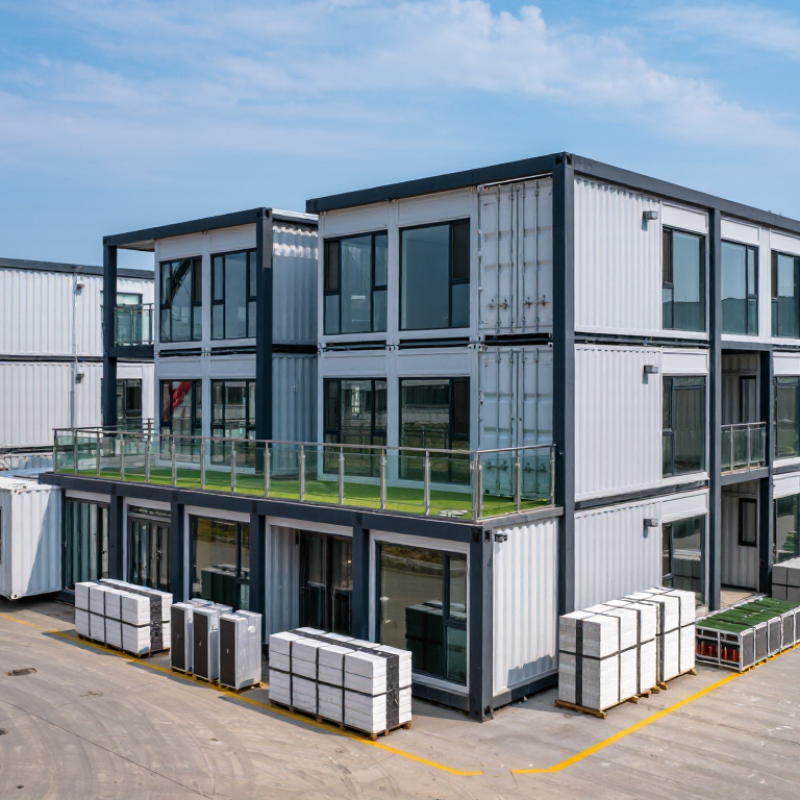
China Best Modular Container House Manufacturer?

What Defines a Leading Modular Container House Manufacturer in China?

A leading modular container house manufacturer in China is defined by more than factory size or attractive pricing. Practical experience appears in small details, such as accurate corner casting, clean welds, sealed roof joints, and doors that remain square after transport. Engineers should understand regional wind, snow, seismic, insulation, and fire requirements. They should also provide clear structural drawings and material specifications before production begins.

Quality control must be visible, not promised vaguely. Reliable manufacturers inspect steel thickness, coating coverage, welding points, electrical systems, plumbing connections, and insulation density. Factory records, sample approvals, and loading photographs help buyers trace each stage. Independent testing can verify fire performance, thermal resistance, and structural safety. A capable technical team also explains what can be customized without weakening the frame.

Transparency matters most when a project becomes difficult. A responsible manufacturer reports delays, material substitutions, and design limits early. No supplier is perfect. A prototype may reveal condensation near a bathroom wall or unexpected transport damage. That is not failure alone; ignoring the lesson is worse. Manufacturers that revise ventilation, drainage, packaging, or installation instructions show genuine professionalism. After-sales support should include replacement procedures, assembly guidance, and practical responses from people who understand the product. Cost still matters, but dependable performance is usually measured after the first storm, not during the quotation stage.

Core Manufacturing Capabilities and Quality Standards

China Best Modular Container House Manufacturer?

Core Manufacturing Capabilities and Quality Standards

A reliable modular container house manufacturer needs more than fast welding. It needs controlled steel preparation, accurate cutting, certified welding, and repeatable assembly. A modern factory should track material heat numbers from arrival to shipment. This creates traceability when a wall panel or corner joint fails inspection.

McKinsey Global Institute reports that modular construction can reduce project schedules by 20–50% under suitable conditions. That advantage depends on factory discipline, not advertising. Quality teams should verify structural steel against approved drawings and inspect welds through visual testing, ultrasonic testing, or magnetic-particle testing when required. ISO 9001:2015 supports documented processes, corrective actions, and continual improvement. Fire, insulation, electrical, and lifting tests should also follow applicable national standards, such as Chinese GB requirements, EN standards, or local building codes. Certificates alone are not enough.

Tips: Ask for a sample inspection record, weld procedure qualification, steel mill certificate, and water-resistance test. Visit the production line if possible. Check floor flatness with a laser, not a quick visual glance. Small gaps matter.

The Modular Building Institute’s industry reports show continued use of modular systems in housing, education, healthcare, and workforce accommodation. Yet factory experience is still uneven. A supplier may produce a clean prototype but struggle with batch consistency. That is a real concern. Independent pre-shipment inspection, photographic records, and a clearly defined acceptance checklist can reduce uncertainty. Do not ignore packaging and transport restraints. A well-built unit can still arrive damaged.

China Best Modular Container House Manufacturer? Core Manufacturing Capabilities and Quality Standards

ISO container reference dimensions commonly used when planning modular container-based housing units.

The 20-foot and 40-foot formats share a nominal external width of 2.438 m, while the 40-foot High Cube format provides additional external height of approximately 2.896 m. These figures are planning references based on ISO container dimensions; actual internal usable space, structural modifications, insulation, doors, windows, and building-code requirements must be confirmed in the manufacturer’s technical documentation.

Reference: ISO 668 freight container classification and dimensions. Values shown are nominal external dimensions.

Product Types, Materials, and Customization Options

China Best Modular Container House Manufacturer?

Product Types, Materials, and Customization Options

A reliable modular container house manufacturer should offer more than attractive drawings. Common options include flat-pack units, expandable houses, detachable containers, and welded modular buildings. Flat-pack models suit temporary offices and worker accommodation. Expandable units create wider living areas after installation. Detachable designs work better for projects requiring relocation.

Material selection directly affects comfort, service life, and safety. Galvanized steel frames resist moisture when protective coatings are properly applied. Wall panels may use EPS, rock wool, or PIR insulation. Rock wool generally provides stronger fire resistance, while PIR can improve thermal performance with thinner walls. Floors often combine cement boards, vinyl surfaces, and steel supports. Details matter.

Customization should begin with the site, not a catalog. Engineers should review wind speed, snow loads, soil conditions, transport access, and local electrical requirements. Buyers can request different layouts, window sizes, bathrooms, kitchens, stairs, and exterior finishes. A dependable supplier provides structural calculations, material specifications, installation drawings, and inspection records. Factory quality checks should include welds, panel joints, door alignment, and water sealing.

Small mistakes remain possible. A beautiful layout may fail when furniture blocks a doorway. A cheaper insulation panel may increase future energy costs. I would also question any supplier promising identical performance in every climate. Good customization requires discussion, testing, and sometimes changing the original plan.

How to Evaluate Suppliers and Verify Industry Compliance

China Best Modular Container House Manufacturer?

Choosing a modular container house supplier requires more than comparing prices or viewing polished factory photos. Define the project first, including location, climate, occupancy, transport limits, and installation conditions. A capable supplier should explain how its design meets local structural, fire, electrical, sanitation, and energy requirements. Ask for drawings, material specifications, load calculations, and revision records. Verify every claim.

Factory evaluation should combine documents with physical checks. Review the supplier’s quality management procedures, production capacity, inspection points, and corrective-action records. Relevant certifications, such as ISO 9001, can support credibility, but certificates must match the legal company name and current production scope. Confirm them through the issuing organization. Photos are not proof. Visit the workshop when possible. Inspect welds, corner fittings, insulation thickness, door seals, drainage details, and corrosion protection. Request independent test reports for fire performance, structural strength, and electrical safety.

Traceability separates dependable suppliers from attractive sellers. Each major material should have supplier records, batch information, and incoming inspection evidence. A pre-shipment inspection should check dimensions, finishes, plumbing connections, and packaging protection. Contract terms should define tolerances, delivery stages, warranty duties, spare parts, and dispute procedures. Do not accept vague compliance language. One weakness remains easy to overlook: a compliant factory may still produce a poor project when drawings, site conditions, or installation teams are unclear. Require a sample unit or mock-up, then compare it against the approved specifications before mass production.

China Best Modular Container House Manufacturer? - How to Evaluate Suppliers and Verify Industry Compliance

Evaluation Dimension What to Verify Relevant Standard or Reference Required Evidence Practical Acceptance Indicator Priority Score
Legal and Export Eligibility Confirm that the supplier is a legally registered manufacturing entity and is authorized to conduct international trade when export is required. Applicable company-registration, customs, tax, and export regulations in the supplier’s jurisdiction. Current business registration, registered business scope, export documentation, tax registration details, and verifiable factory address. Legal information is consistent across official records, contracts, invoices, and shipping documents. Critical 10
Quality Management System Assess whether production, inspection, nonconformity handling, corrective action, and document control are managed systematically. ISO 9001:2015 Valid certificate, certification-body details, certificate scope, audit status, quality manual, inspection records, and corrective-action reports. Certificate scope covers the relevant products or manufacturing activities and can be verified with the issuing certification body. High 9
Structural Design and Load Safety Verify design calculations for dead load, live load, wind, snow, seismic conditions, lifting, stacking, transport, and connection forces. Applicable national building codes; project-specific structural design criteria; ISO 1496-1 where freight-container structural requirements apply. Stamped structural calculations, design drawings, material specifications, connection details, load assumptions, and independent review records. Design is based on the project site’s wind, snow, seismic, soil, occupancy, and transport conditions rather than a generic layout. Critical 10
Container Dimensions and Corner Fittings Determine whether the product is a true shipping-container-based unit or a modular building using a different frame system. ISO 668 for freight-container classification and dimensions; ISO 1161 for container corner fittings, when applicable. Dimension drawings, corner-fitting specifications, dimensional inspection reports, welding records, and compatibility information for handling equipment. Declared dimensions and lifting points match the selected design standard and the intended transport method. High 8
Material Traceability Check the origin, grade, thickness, and batch traceability of structural steel, panels, insulation, flooring, windows, doors, and electrical components. Applicable material standards and project specifications; ISO 9001 document-control principles. Mill certificates, batch numbers, incoming-inspection reports, approved material lists, coating records, and supplier declarations. Key structural and fire-related materials can be traced from purchase order through production and final inspection. Critical 10
Welding and Fabrication Control Review weld procedures, welder qualifications, visual inspection, dimensional control, and repair procedures for the steel frame. Applicable welding qualification and inspection requirements in the project jurisdiction; ISO 3834 may be used as a quality framework for fusion welding. Welding procedure specifications, welder qualification records, weld maps, inspection reports, repair logs, and equipment-calibration records. Weld quality is controlled through documented procedures and inspection rather than appearance-only checks. Critical 10
Fire Performance Evaluate reaction-to-fire, fire resistance, compartmentation, escape routes, fire stopping, smoke control, and installed fire-safety equipment. Local building and fire codes; ISO 834-1 for standard fire-resistance testing principles where relevant; destination-country requirements take precedence. Product fire-test reports, certificates, tested wall and floor assemblies, fire-stopping details, escape plan, and equipment inspection records. Evidence applies to the complete installed wall, floor, roof, and penetration assemblies—not only to individual materials. Critical 10
Thermal and Moisture Performance Verify insulation continuity, thermal-bridge treatment, vapor control, waterproofing, condensation risk, roof drainage, and sealant durability. Destination-country energy and building-envelope requirements; project-specific U-value and condensation criteria. Thermal calculations, insulation product data, joint details, water-spray or airtightness test records, drainage drawings, and maintenance instructions. Performance is demonstrated for the destination climate, including interfaces between modules and service penetrations. High 9
Electrical and Plumbing Safety Check cable sizing, earthing, circuit protection, distribution boards, ingress protection, water-pressure testing, drainage slopes, and fixture compatibility. Destination-country electrical, plumbing, and construction codes; IEC standards may apply to selected electrical equipment. Single-line diagrams, circuit schedules, component certificates, insulation-resistance tests, earth-continuity tests, pressure-test reports, and commissioning records. Systems are designed for the destination voltage, frequency, socket configuration, water pressure, and drainage requirements. Critical 10
Environmental and Occupational Controls Assess environmental management, worker safety, chemical handling, waste control, and incident-management practices at the factory. ISO 14001:2015 and ISO 45001:2018 Valid certificates, environmental permits, hazardous-material procedures, safety training records, incident statistics, and waste-disposal records. Certificates are current, correctly scoped, and supported by observable factory practices during an audit. High 8
Factory Capacity and Process Control Confirm that the factory has sufficient space, equipment, labor, tooling, inspection capacity, and production planning for the proposed order. Project production plan and agreed technical specification. Factory audit, process-flow diagram, equipment list, production schedule, capacity statement, quality-control checkpoints, and subcontractor register. Capacity is supported by production records and an achievable schedule, not only by a stated annual output figure. High 8
Prototype and Pre-Shipment Inspection Require approval of a representative prototype or first article before volume production and shipping. Contract inspection and acceptance plan; destination-country regulatory requirements. Approved drawings, inspection checklist, dimensional report, photographic records, functional tests, punch list, and signed release document. Production starts only after the prototype, materials, finishes, interfaces, and test results are formally approved. Critical 10
Packaging, Lifting, and Transport Evaluate lifting points, center of gravity, tie-down arrangements, corrosion protection, weatherproof packaging, and loading procedures. ISO 668 and ISO 1161 where container transport features apply; carrier and destination-port requirements. Lifting plan, load-distribution drawing, packing list, transport dimensions, tie-down method, moisture protection plan, and loading photographs. Handling instructions are clear and verified for the actual module weight, dimensions, lifting equipment, and route restrictions. High 8
Documentation and Change Control Verify that drawings, specifications, bills of materials, revisions, inspection records, manuals, and as-built documents are controlled. ISO 9001 document-control principles; contractual document-submittal requirements. Document register, revision history, approved shop drawings, bill of materials, installation manuals, maintenance manuals, and as-built package. Only approved revisions are used in production, and the delivered unit matches the final approved documentation. High 9
Warranty and After-Sales Support Review warranty coverage, exclusions, response times, spare-parts availability, installation support, and defect-resolution procedures. Written commercial contract and destination-country consumer or construction law, where applicable. Warranty terms, service-level commitments, spare-parts list, escalation process, maintenance schedule, and claims procedure. Warranty terms identify covered components, duration, responsibilities, evidence requirements, and cross-border service arrangements. High 8
Independent Verification Use an independent inspection body or qualified engineer to review documents, inspect production, witness tests, and verify shipment condition. Inspection scope defined by contract; applicable conformity-assessment requirements in the destination market. Factory-audit report, inspection release note, witnessed test records, nonconformity log, closure evidence, and final photographic record. High-risk items are independently checked before shipment, with unresolved critical nonconformities preventing release. Critical 10
Overall Supplier Decision Combine technical compliance, factory capability, documented quality, total cost, delivery risk, communication, and after-sales support. Project-specific weighted evaluation matrix. Completed scorecard, risk register, approved deviations, commercial comparison, audit findings, and management approval. Recommended approval only when critical safety and compliance items are verified and all major open risks have an owner and deadline. Critical 10
Scoring guidance: Use the score column as a weighting factor. A supplier should not be approved solely on price or catalog appearance. Critical safety, structural, fire, electrical, documentation, and independent-verification requirements should be treated as pass/fail conditions in addition to the weighted score.

Ordering, Delivery, Installation, and After-Sales Support

China Best Modular Container House Manufacturer?

Ordering, Delivery, Installation, and After-Sales Support

A reliable modular container house project starts with clear requirements. Share site location, room use, dimensions, local wind and snow loads, and utility expectations. The manufacturer should provide drawings, material specifications, a detailed quotation, and a realistic production schedule. Do not accept vague promises. Confirm insulation thickness, fire performance, electrical standards, and included accessories before paying a deposit.

Production updates should include photographs, inspection records, and packing details. Before shipment, check the container numbers, loading list, shipping documents, and destination port requirements. Delivery planning must consider road limits, crane access, customs procedures, and possible weather delays. A perfect schedule is rarely realistic. Small delays can happen, but unexplained delays are a warning sign.

Installation needs a level foundation, accurate anchors, safe lifting equipment, and trained workers. Ask for assembly drawings, connection details, and video guidance when local labor completes the work. After installation, inspect doors, windows, drainage, wiring, and waterproof joints under real conditions. After-sales support should include a written warranty, spare-part availability, remote troubleshooting, and a defined response time. Keep records of photos and maintenance requests. One weakness remains common: some suppliers sell quickly but explain maintenance poorly. That gap can create avoidable repair costs.

© Copyright - Pro Tool & Supply - Site by SVM E-Marketing Solutions - Sitemap - Privacy policy
