- Products
- Air Compressors & Air Tools
- Climate Control
- Compaction Equipment
- Concrete Cutting Tools & Equipment
- Concrete and Masonry
- Demolition & Excavation
- Electrical & Mechanical
- Fasteners and Anchoring Adhesives
- Floor Protection
- Generators and Welders
- Hand Tools
- Heaters
- Janitorial and Office Supplies
- Jobsite Protection
- Ladders & Storage
- Lighting & Lighting Accessories
- Man Lifts
- Material Handling Equipment
- Power Tools
- Pressure Washers & Pumps
- Safety Gear
- Safety Products
- Saws
- Surface Preparation
- SEASONAL PRODUCTS
- Rentals
- Air Compressor and Air Tool Rentals
- Climate Control Rental
- Compaction Rentals
- Concrete Equipment Rentals
- Demolition & Excavation Equipment Rentals
- Concrete Floor Grinder Rentals
- General Construction Equipment Rentals
- Generator Rentals and Welder Rentals
- Heater Rentals
- Light Tower Rentals
- Man Lift Rentals in Massachusetts and Rhode Island
- Material Handling Equipment Rentals
- Pressure Washer & Pump Rentals
- Saw Rentals in New England
- SEASONAL PRODUCTS
- Products
- Air Compressors & Air Tools
- Climate Control
- Compaction Equipment
- Concrete Cutting Tools & Equipment
- Demolition & Excavation
- Electrical & Mechanical
- Floor Protection
- Generators and Welders
- Construction Heaters
- Construction Ladders, Staging, & Storage
- Construction Lighting
- Man Lifts
- Material Handling Equipment
- Industrial Janitorial and Office Supplies
- Pressure Washers & Pumps
- Construction Safety Products
- Construction Safety Gear
- Surface Preparation
- Building Protection
- Diesel Accessories
- Zero Emissions
- Rentals
- Air Compressor and Air Tool Rentals
- Climate Control Rental
- Compaction Rentals
- Concrete Equipment Rental
- Demolition & Excavation Equipment Rental
- General Construction Equipment Rental
- Generator Rentals and Welder Rentals
- Construction Heaters Rental
- Light Tower Rentals
- Man Lift Rentals
- Material Handling Equipment Rental
- Pressure Washer & Pump Rentals
- Saw Rentals in New England
- Concrete Floor Grinder Rentals
- Zero Emissions Rentals
- Repairs & Used
- Parts
- Blog
- Services
- Resources
- About Us
- Contact Us
Sales & Rental of Construction | Industrial Equipment & Supplies


2026 Best China Flat Washer Types for Global Buyers
Global buyers rarely need the same flat washer for every joint. A thin plain washer can spread load beneath a small machine screw. A larger outside diameter may better protect a softer panel. Hardened washers suit demanding clamping conditions, while sealing designs address moisture around a fastener. Small details matter. A few millimeters can change fit, load distribution, and assembly speed.
This guide compares China Flat Washer types through practical sourcing questions: What material matches the mating parts? Which dimensions and tolerances does the drawing require? Does the finish suit the working environment? Buyers should verify specifications, samples, inspection records, and applicable standards before placing volume orders. ISO 7089 and ISO 7090 are useful references for certain metric flat washers, but they do not cover every design. Check the exact product scope. That step is easy to overlook.
A proposed expert line for a named specialist to review before publication is: “Choose the washer for the joint, not just the price per piece.” The attribution to Lin Wei should be verified before use. That caution is intentional. This article aims to help buyers compare common washer types, ask clearer questions, and spot mismatches before cartons reach the production floor. Not every catalog label tells the whole story.
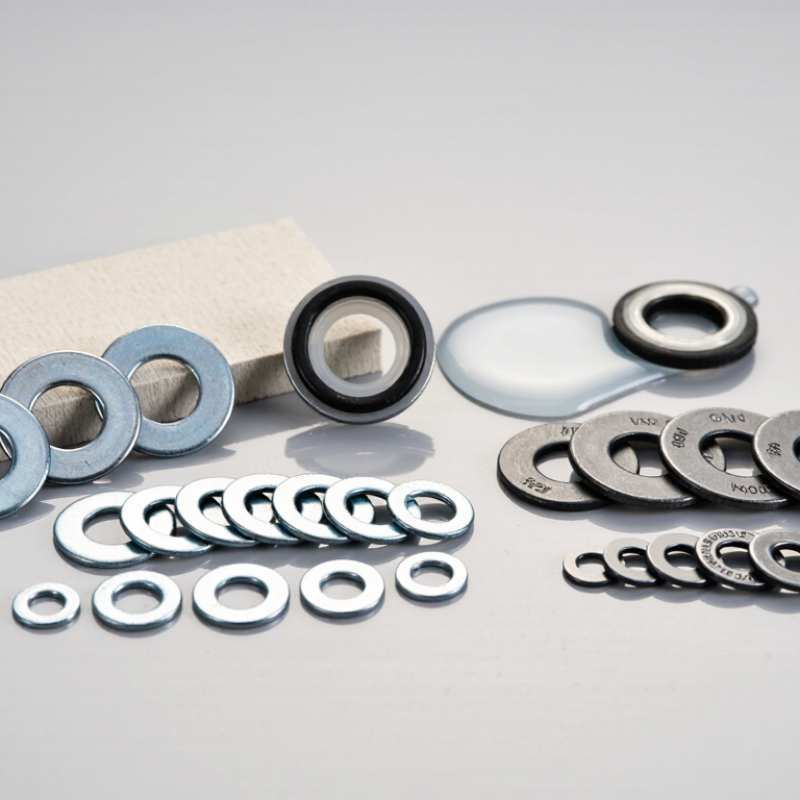
Table of Contents [Hide]
What Flat Washers Are and How They Work
A flat washer is a thin, flat ring placed beneath a bolt head or nut. It creates a wider bearing surface against the joined material. As the fastener tightens, the washer helps spread clamping force across that surface. This can reduce indentation in softer materials, such as painted sheet metal or wood. A small part, but an important one. It can also help protect a component’s finish during assembly. However, a flat washer does not lock a fastener or correct damaged threads.
For global buyers comparing washer types, fit matters as much as appearance. The inner diameter should clear the bolt without excessive movement, while the outer diameter should support the contact area. Thickness and material also affect performance. A washer that is too thin may deform under load; one that is poorly matched to the assembly may corrode or mark the surface. Check the intended load, mating materials, and working environment before choosing. In practice, even a correctly sized washer cannot compensate for uneven surfaces or inconsistent tightening.
Tips: Inspect the washer for burrs, distortion, and coating damage before installation. Keep it flat against the surface, and avoid stacking washers unless the design calls for it. A quick visual check helps, though it is not a substitute for verifying the joint’s fit and tightening requirements.

© Copyright - Pro Tool & Supply - Site by SVM E-Marketing Solutions - Sitemap
- Privacy policy