- Products
- Air Compressors & Air Tools
- Climate Control
- Compaction Equipment
- Concrete Cutting Tools & Equipment
- Concrete and Masonry
- Demolition & Excavation
- Electrical & Mechanical
- Fasteners and Anchoring Adhesives
- Floor Protection
- Generators and Welders
- Hand Tools
- Heaters
- Janitorial and Office Supplies
- Jobsite Protection
- Ladders & Storage
- Lighting & Lighting Accessories
- Man Lifts
- Material Handling Equipment
- Power Tools
- Pressure Washers & Pumps
- Safety Gear
- Safety Products
- Saws
- Surface Preparation
- SEASONAL PRODUCTS
- Rentals
- Air Compressor and Air Tool Rentals
- Climate Control Rental
- Compaction Rentals
- Concrete Equipment Rentals
- Demolition & Excavation Equipment Rentals
- Concrete Floor Grinder Rentals
- General Construction Equipment Rentals
- Generator Rentals and Welder Rentals
- Heater Rentals
- Light Tower Rentals
- Man Lift Rentals in Massachusetts and Rhode Island
- Material Handling Equipment Rentals
- Pressure Washer & Pump Rentals
- Saw Rentals in New England
- SEASONAL PRODUCTS
- Products
- Air Compressors & Air Tools
- Climate Control
- Compaction Equipment
- Concrete Cutting Tools & Equipment
- Demolition & Excavation
- Electrical & Mechanical
- Floor Protection
- Generators and Welders
- Construction Heaters
- Construction Ladders, Staging, & Storage
- Construction Lighting
- Man Lifts
- Material Handling Equipment
- Industrial Janitorial and Office Supplies
- Pressure Washers & Pumps
- Construction Safety Products
- Construction Safety Gear
- Surface Preparation
- Building Protection
- Diesel Accessories
- Zero Emissions
- Rentals
- Air Compressor and Air Tool Rentals
- Climate Control Rental
- Compaction Rentals
- Concrete Equipment Rental
- Demolition & Excavation Equipment Rental
- General Construction Equipment Rental
- Generator Rentals and Welder Rentals
- Construction Heaters Rental
- Light Tower Rentals
- Man Lift Rentals
- Material Handling Equipment Rental
- Pressure Washer & Pump Rentals
- Saw Rentals in New England
- Concrete Floor Grinder Rentals
- Zero Emissions Rentals
- Repairs & Used
- Parts
- Blog
- Services
- Resources
- About Us
- Contact Us
Sales & Rental of Construction | Industrial Equipment & Supplies


How to Buy a Used Spectrum Analyzer in 2026
Buying a Used Spectrum Analyzer in 2026 can be a sensible way to get capable test equipment without paying new-instrument prices. But a low price alone tells you very little. The right choice depends on the signals you need to measure, the instrument’s condition, and the support available if something goes wrong. A unit suited to checking cellular interference may not meet the needs of a microwave design bench. Define your required frequency range, resolution bandwidth, sensitivity, and analysis features before comparing listings. Small details matter.
Ask for the exact model, installed options, firmware version, service history, and calibration records. A recent calibration certificate is useful, but it does not guarantee that the analyzer still performs correctly today. Request a live demonstration using a known signal source, and inspect the display, input connector, buttons, cooling fan, and trace stability. Check whether the noise floor and displayed signal levels behave as expected across the settings you will use. It is easy to overvalue a clean front panel; appearance is not a performance test. Also confirm what accessories, software, warranty, and return terms are included. If you cannot test the unit yourself, budget for an independent inspection or verification by a qualified technician. Some uncertainty remains, especially with older equipment. A careful purchase is not risk-free, but a clear checklist can help you avoid paying for features you do not need—or inheriting problems you could have spotted.
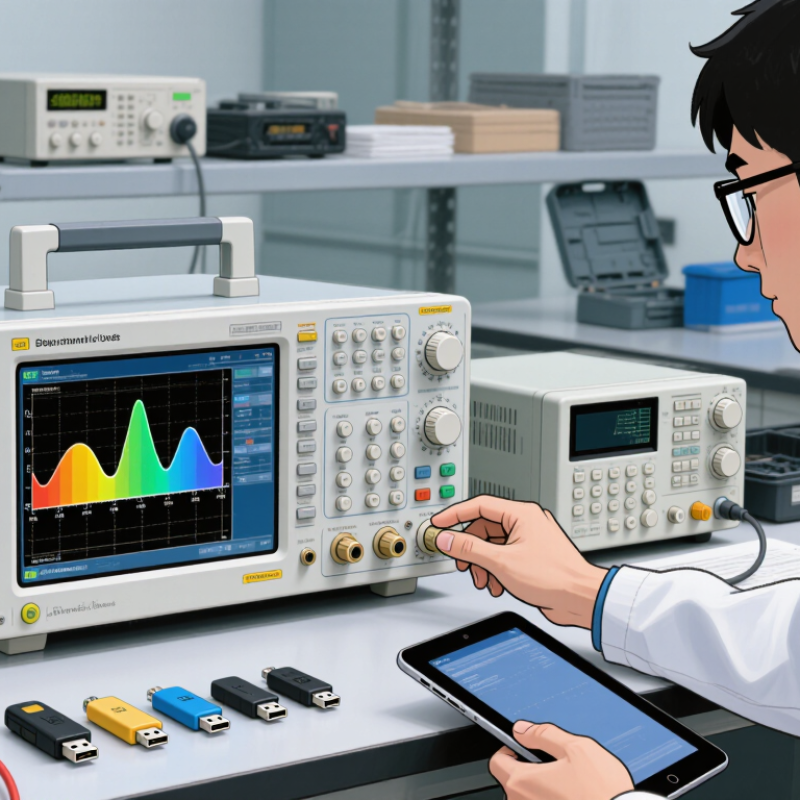
Table of Contents [Hide]
Define Your Measurement Needs and Required Specifications
Before comparing used spectrum analyzers, write down the signals you actually need to measure. Note the highest frequency, expected signal level, and whether signals are continuous or brief. For example, checking a low-power wireless transmitter may require a lower displayed noise floor than inspecting a strong oscillator. Choose a frequency range with some headroom, rather than paying for range you will never use. Small details matter.
Set a minimum resolution bandwidth based on the spacing between signals you need to distinguish. If two tones sit close together, a wide bandwidth can merge them into one peak. Check phase-noise performance for measurements near strong carriers, and confirm that the input attenuation and maximum safe input level suit your sources. You may also need a tracking generator, preamplifier, or additional input channel. Don’t assume accessories are included; verify each item and test its operation.
A specification sheet is only part of the decision. Ask for the unit’s calibration date, service history, and results from a recent functional check. A dusty case is not proof of poor performance, but damaged connectors or an unstable display deserve attention. I would prioritize the specifications tied to real measurements, then leave room in the budget for verification. It is easy to overlook setup time. Make a short test plan before purchase, even if it feels overly cautious.
How to Buy a Used Spectrum Analyzer in 2026 - Define Your Measurement Needs and Required Specifications
| Measurement Need | Useful Specification Target | Why It Matters | What to Check Before Buying |
|---|---|---|---|
| General RF troubleshooting | Frequency coverage from at least 9 kHz to 3 GHz; choose a higher upper limit if your work includes newer wireless bands or microwave signals. | Coverage must include the signals, harmonics, and spurious emissions you expect to inspect. | Confirm the full frequency range is included and operates correctly; check for frequency gaps or options that are not installed. |
| Cellular and wireless-device testing | Typically 6 GHz or higher for broad sub-6 GHz work; assess the exact bands and channel bandwidths used by your devices. | Some systems operate above 3 GHz, and wide channels may require suitable analysis bandwidth or dedicated analysis functions. | Verify supported analysis bandwidth, demodulation features, and measurement options against your test requirements. |
| Microwave measurements | Set the upper frequency limit to cover the highest signal and relevant harmonics; common instrument ranges extend to 18 GHz, 26.5 GHz, or higher. | Operating near the analyzer’s maximum frequency can affect sensitivity and may require suitable cables, adapters, and calibration. | Inspect the input connector, check for wear or damage, and confirm specified performance at the frequencies you need. |
| Resolving closely spaced signals | Resolution bandwidth (RBW) should reach 1 kHz or below for many general tasks; narrower RBW may be needed for closely spaced carriers or low-level spurs. | Narrower RBW can separate nearby signals and reduce displayed noise, but usually increases sweep time. | Test several RBW settings and confirm the analyzer completes a sweep without errors or abnormal traces. |
| Finding weak signals | Compare displayed average noise level (DANL) at the frequencies and RBW settings you will use. A lower DANL indicates better ability to see weak signals. | Noise floor varies with frequency, attenuation, preamplifier use, and RBW, so one headline value may not describe real performance. | Check noise-floor plots or perform a terminated-input measurement; verify any preamplifier option is present and functional. |
| Accurate signal-level measurements | Look for stated absolute amplitude accuracy appropriate to the work; around ±1 dB is a useful target for many general-purpose measurements. | Amplitude accuracy affects comparisons, compliance checks, and power estimates. | Review the calibration status and uncertainty information. If possible, compare readings at multiple levels with a calibrated source or power sensor. |
| Close-in noise and oscillator testing | Check phase-noise performance at the offset frequencies relevant to the device under test; do not rely on a single offset figure. | Phase noise can mask nearby low-level signals and limit oscillator or transmitter measurements. | Confirm the required phase-noise measurement function or option is installed, and review performance across relevant offsets. |
| Filter, amplifier, and cable testing | A tracking generator covering the required frequency range is useful; verify its output range and level-control capability. | A tracking generator enables swept-response measurements when used with suitable connections and calibration. | Confirm the generator is included, check its output across the intended range, and budget for any required adapters or test accessories. |
| EMC pre-compliance investigations | Choose frequency coverage for the applicable test range and check for quasi-peak, average, or other required detector functions. | A general spectrum analyzer may help locate emissions, but it may not provide all detectors, bandwidths, or procedures required for formal compliance testing. | Match the instrument’s detector functions, input protection, and measurement bandwidths to the relevant test method; confirm whether external preselection is needed. |
| Used-instrument condition and support | Prefer a unit with traceable calibration records, documented self-test results, and available service information. | Age, storage, heavy use, and missing options can affect performance and total ownership cost. | Check startup and self-test, display, keys, connectors, fan noise, included accessories, calibration date, return terms, and the cost of recalibration. |
Selection note: These targets are starting points, not universal requirements. Define the signals, frequency bands, signal levels, and measurement uncertainty you need before comparing used instruments.

© Copyright - Pro Tool & Supply - Site by SVM E-Marketing Solutions - Sitemap
- Privacy policy