- Products
- Air Compressors & Air Tools
- Climate Control
- Compaction Equipment
- Concrete Cutting Tools & Equipment
- Concrete and Masonry
- Demolition & Excavation
- Electrical & Mechanical
- Fasteners and Anchoring Adhesives
- Floor Protection
- Generators and Welders
- Hand Tools
- Heaters
- Janitorial and Office Supplies
- Jobsite Protection
- Ladders & Storage
- Lighting & Lighting Accessories
- Man Lifts
- Material Handling Equipment
- Power Tools
- Pressure Washers & Pumps
- Safety Gear
- Safety Products
- Saws
- Surface Preparation
- SEASONAL PRODUCTS
- Rentals
- Air Compressor and Air Tool Rentals
- Climate Control Rental
- Compaction Rentals
- Concrete Equipment Rentals
- Demolition & Excavation Equipment Rentals
- Concrete Floor Grinder Rentals
- General Construction Equipment Rentals
- Generator Rentals and Welder Rentals
- Heater Rentals
- Light Tower Rentals
- Man Lift Rentals in Massachusetts and Rhode Island
- Material Handling Equipment Rentals
- Pressure Washer & Pump Rentals
- Saw Rentals in New England
- SEASONAL PRODUCTS
- Products
- Air Compressors & Air Tools
- Climate Control
- Compaction Equipment
- Concrete Cutting Tools & Equipment
- Demolition & Excavation
- Electrical & Mechanical
- Floor Protection
- Generators and Welders
- Construction Heaters
- Construction Ladders, Staging, & Storage
- Construction Lighting
- Man Lifts
- Material Handling Equipment
- Industrial Janitorial and Office Supplies
- Pressure Washers & Pumps
- Construction Safety Products
- Construction Safety Gear
- Surface Preparation
- Building Protection
- Diesel Accessories
- Zero Emissions
- Rentals
- Air Compressor and Air Tool Rentals
- Climate Control Rental
- Compaction Rentals
- Concrete Equipment Rental
- Demolition & Excavation Equipment Rental
- General Construction Equipment Rental
- Generator Rentals and Welder Rentals
- Construction Heaters Rental
- Light Tower Rentals
- Man Lift Rentals
- Material Handling Equipment Rental
- Pressure Washer & Pump Rentals
- Saw Rentals in New England
- Concrete Floor Grinder Rentals
- Zero Emissions Rentals
- Repairs & Used
- Parts
- Blog
- Services
- Resources
- About Us
- Contact Us
Sales & Rental of Construction | Industrial Equipment & Supplies


What Is the Best Type of Solar Garden Lights?
Choosing the best type of Solar Lights Garden begins with the garden itself. A narrow pathway needs soft, downward light, while a dark entrance needs brighter illumination and reliable motion detection. Decorative string lights create warmth beneath a pergola, but they rarely provide enough light for safe steps. Small spotlights can highlight trees, flower beds, or textured walls. Each style solves a different problem.
According to lighting designer Randall Whitehead, “Good lighting is about creating the right mood and the right amount of light.” That principle matters outdoors. More brightness is not always better. Harsh white beams can flatten a garden’s character, disturb nearby wildlife, and create uncomfortable glare. Warm LEDs, placed low and aimed carefully, often feel more natural. They also make evening paths easier to read without turning the yard into a parking lot.
A dependable Solar Lights Garden should match local weather and daily sunlight. Look for weather-resistant housings, replaceable batteries, efficient panels, and clear lumen information. In a shaded yard, even premium lights may perform poorly. That is an inconvenient truth. Battery capacity and panel placement matter more than attractive packaging. I have also found that cheap lights can appear impressive on the first evening, then fade after several cloudy days. This guide compares pathway lights, spotlights, wall lights, and string models. It considers brightness, runtime, installation, maintenance, appearance, and long-term value. The “best” option may not be the brightest one. It should be the one that works consistently where you actually place it.
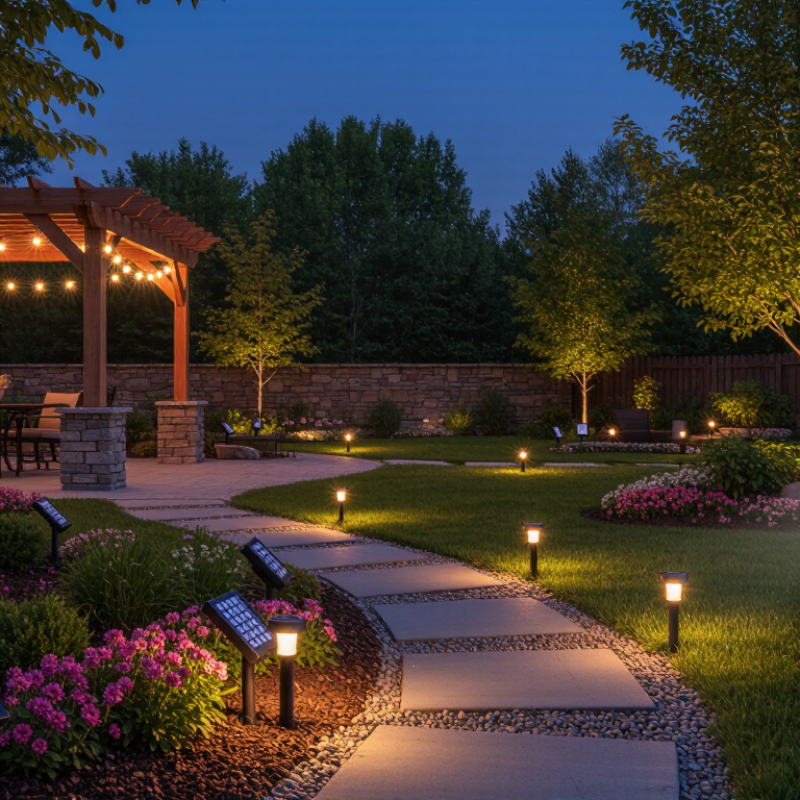
Table of Contents [Hide]
Solar Garden Light Types: Pathway, Spot, String, Lantern, and Security Models
The best solar garden light depends on the area, not the highest advertised brightness.
The IEA PVPS Trends 2024 report recorded about 456 GW of new solar capacity worldwide in 2023. That growth supports better photovoltaic components, but small garden lights still depend on sunlight, battery size, and placement.
Pathway lights suit steps and borders. Their softer output, often 10–50 lumens, marks walking routes without harsh glare.
Spotlights usually provide 100–300 lumens and aim at trees, walls, or architectural details.
String lights create atmosphere across balconies and pergolas.
Lantern models offer wider, warmer illumination and work well near seating areas.
Security models use motion sensors and stronger beams, but frequent activation can drain the battery quickly.
Choose carefully.
The U.S. Department of Energy’s solid-state lighting research shows how LED efficiency has improved, yet efficiency alone does not guarantee useful nighttime performance. A shaded panel may collect little energy, even with an efficient LED.
Look for replaceable batteries, weather protection rated around IP65, and a color temperature near 2700–3000K for comfortable outdoor light.
In my view, pathway models are the safest general choice for everyday gardens. However, that judgment changes beside a dark gate, where a motion-activated security light may be more practical.
No model performs perfectly in winter, heavy shade, or several cloudy days. Expecting constant brightness is still a common mistake.

© Copyright - Pro Tool & Supply - Site by SVM E-Marketing Solutions - Sitemap
- Privacy policy