- Products
- Air Compressors & Air Tools
- Climate Control
- Compaction Equipment
- Concrete Cutting Tools & Equipment
- Concrete and Masonry
- Demolition & Excavation
- Electrical & Mechanical
- Fasteners and Anchoring Adhesives
- Floor Protection
- Generators and Welders
- Hand Tools
- Heaters
- Janitorial and Office Supplies
- Jobsite Protection
- Ladders & Storage
- Lighting & Lighting Accessories
- Man Lifts
- Material Handling Equipment
- Power Tools
- Pressure Washers & Pumps
- Safety Gear
- Safety Products
- Saws
- Surface Preparation
- SEASONAL PRODUCTS
- Rentals
- Air Compressor and Air Tool Rentals
- Climate Control Rental
- Compaction Rentals
- Concrete Equipment Rentals
- Demolition & Excavation Equipment Rentals
- Concrete Floor Grinder Rentals
- General Construction Equipment Rentals
- Generator Rentals and Welder Rentals
- Heater Rentals
- Light Tower Rentals
- Man Lift Rentals in Massachusetts and Rhode Island
- Material Handling Equipment Rentals
- Pressure Washer & Pump Rentals
- Saw Rentals in New England
- SEASONAL PRODUCTS
- Products
- Air Compressors & Air Tools
- Climate Control
- Compaction Equipment
- Concrete Cutting Tools & Equipment
- Demolition & Excavation
- Electrical & Mechanical
- Floor Protection
- Generators and Welders
- Construction Heaters
- Construction Ladders, Staging, & Storage
- Construction Lighting
- Man Lifts
- Material Handling Equipment
- Industrial Janitorial and Office Supplies
- Pressure Washers & Pumps
- Construction Safety Products
- Construction Safety Gear
- Surface Preparation
- Building Protection
- Diesel Accessories
- Zero Emissions
- Rentals
- Air Compressor and Air Tool Rentals
- Climate Control Rental
- Compaction Rentals
- Concrete Equipment Rental
- Demolition & Excavation Equipment Rental
- General Construction Equipment Rental
- Generator Rentals and Welder Rentals
- Construction Heaters Rental
- Light Tower Rentals
- Man Lift Rentals
- Material Handling Equipment Rental
- Pressure Washer & Pump Rentals
- Saw Rentals in New England
- Concrete Floor Grinder Rentals
- Zero Emissions Rentals
- Repairs & Used
- Parts
- Blog
- Services
- Resources
- About Us
- Contact Us
Sales & Rental of Construction | Industrial Equipment & Supplies

What Is the Best TrueNAS Server in 2026?
Choosing the best TrueNAS server in 2026 depends less on a single “best” model and more on what you need it to do. A home photo archive has different demands from a small office running virtual machines or shared editing projects. The right True Nas Server should balance storage capacity, memory, processor performance, network speed, noise, and long-term operating costs.
A quiet four-bay system may suit a home with several terabytes of photos and backups. A business handling large media files may benefit more from faster networking and room to expand. Drive bays matter, but so do memory capacity and upgrade options. ECC memory can help detect certain data errors, though it does not replace good backups. That distinction matters. Fast disks cannot recover a file that was never backed up.
This guide compares server types and key hardware choices, including compact systems, tower builds, and rack-mounted options. It also considers power use, cooling, storage growth, and the practical work of maintaining a server. Specifications can look convincing on a product page, yet real workloads may expose limits in airflow, expansion, or noise. There is no perfect checklist, and some trade-offs are easy to underestimate. The recommendations aim to explain who each option serves, what to verify before buying, and where a less expensive system may be enough.
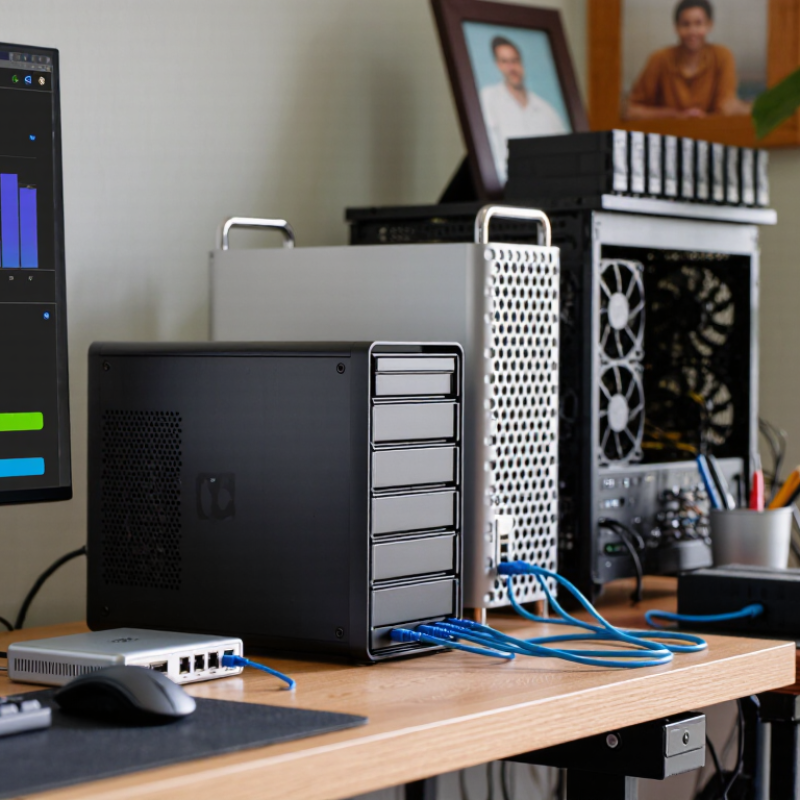
Table of Contents [Hide]
What “Best TrueNAS Server” Means for Different Workloads in 2026
The best storage server in 2026 depends on what it must do. IDC’s 2022 Global DataSphere forecast estimated that 221 zettabytes of data would be created, captured, or replicated worldwide in 2026. That does not mean every home or studio needs vast capacity. A family archive of photos needs quiet, economical disks and a separate backup. A video team needs fast network links and enough throughput to scrub large files without delays. Small offices differ.
Virtual machines and databases need responsive storage, ample memory, and reliable low-latency connections. For those workloads, solid-state drives may matter more than raw disk capacity. Bulk archives benefit from hard drives, while separate backups help protect against accidental deletion or hardware failure.
IDC’s 2020 Rethink Data study found that organizations used only about 32% of available data. More storage alone will not fix poor access or unclear retention habits. Sometimes, less is better.
A useful specification starts with peak concurrent users, usable capacity after redundancy, and the network speed available at the desks. These are estimates, not guarantees; real performance changes with file sizes, workload mix, and configuration.
One detail is easy to miss: redundancy is not a backup. Keep an independent copy, and test restoring a few files before trusting the setup.
© Copyright - Pro Tool & Supply - Site by SVM E-Marketing Solutions - Sitemap
- Privacy policy