- Products
- Air Compressors & Air Tools
- Climate Control
- Compaction Equipment
- Concrete Cutting Tools & Equipment
- Concrete and Masonry
- Demolition & Excavation
- Electrical & Mechanical
- Fasteners and Anchoring Adhesives
- Floor Protection
- Generators and Welders
- Hand Tools
- Heaters
- Janitorial and Office Supplies
- Jobsite Protection
- Ladders & Storage
- Lighting & Lighting Accessories
- Man Lifts
- Material Handling Equipment
- Power Tools
- Pressure Washers & Pumps
- Safety Gear
- Safety Products
- Saws
- Surface Preparation
- SEASONAL PRODUCTS
- Rentals
- Air Compressor and Air Tool Rentals
- Climate Control Rental
- Compaction Rentals
- Concrete Equipment Rentals
- Demolition & Excavation Equipment Rentals
- Concrete Floor Grinder Rentals
- General Construction Equipment Rentals
- Generator Rentals and Welder Rentals
- Heater Rentals
- Light Tower Rentals
- Man Lift Rentals in Massachusetts and Rhode Island
- Material Handling Equipment Rentals
- Pressure Washer & Pump Rentals
- Saw Rentals in New England
- SEASONAL PRODUCTS
- Products
- Air Compressors & Air Tools
- Climate Control
- Compaction Equipment
- Concrete Cutting Tools & Equipment
- Demolition & Excavation
- Electrical & Mechanical
- Floor Protection
- Generators and Welders
- Construction Heaters
- Construction Ladders, Staging, & Storage
- Construction Lighting
- Man Lifts
- Material Handling Equipment
- Industrial Janitorial and Office Supplies
- Pressure Washers & Pumps
- Construction Safety Products
- Construction Safety Gear
- Surface Preparation
- Building Protection
- Diesel Accessories
- Zero Emissions
- Rentals
- Air Compressor and Air Tool Rentals
- Climate Control Rental
- Compaction Rentals
- Concrete Equipment Rental
- Demolition & Excavation Equipment Rental
- General Construction Equipment Rental
- Generator Rentals and Welder Rentals
- Construction Heaters Rental
- Light Tower Rentals
- Man Lift Rentals
- Material Handling Equipment Rental
- Pressure Washer & Pump Rentals
- Saw Rentals in New England
- Concrete Floor Grinder Rentals
- Zero Emissions Rentals
- Repairs & Used
- Parts
- Blog
- Services
- Resources
- About Us
- Contact Us
Sales & Rental of Construction | Industrial Equipment & Supplies


10 Best Truck Ratchet Straps for Secure Cargo Loads
A loose load can turn a routine haul into a dangerous one. A hard brake may send a toolbox sliding, while a gust can tug at a tall, exposed load. Truck Ratchet Straps help hold cargo in place, but their strength depends on more than the label. Webbing condition, hardware quality, anchor points, and correct tension all matter.
Federal Motor Carrier Safety Administration cargo-securement rules provide a useful baseline for evaluating tie-downs. Under 49 CFR § 393.106, the aggregate working load limit of the tie-down system must generally equal at least half the cargo’s weight. FMCSA guidance also stresses preventing cargo from shifting or falling during transport. These requirements do not make every strap suitable for every load. A strap’s rated working load limit, not its breaking strength, is the number to compare with the job.
Small details matter. Look for clear labels, sturdy ratchets, smooth webbing, and hooks that fit the vehicle’s anchor points. Check for cuts, fraying, corrosion, or bent parts before each trip. Replace doubtful gear. It is tempting to trust a strap because it worked yesterday, but wear can hide beneath a coil of webbing.
This guide compares ten options for common truck-hauling needs, from securing equipment to bundling lumber. No single strap is best for every load. The right choice depends on cargo weight, shape, anchor placement, and exposure to weather. Use the manufacturer’s instructions, inspect the complete tie-down system, and reassess the load after driving a short distance.
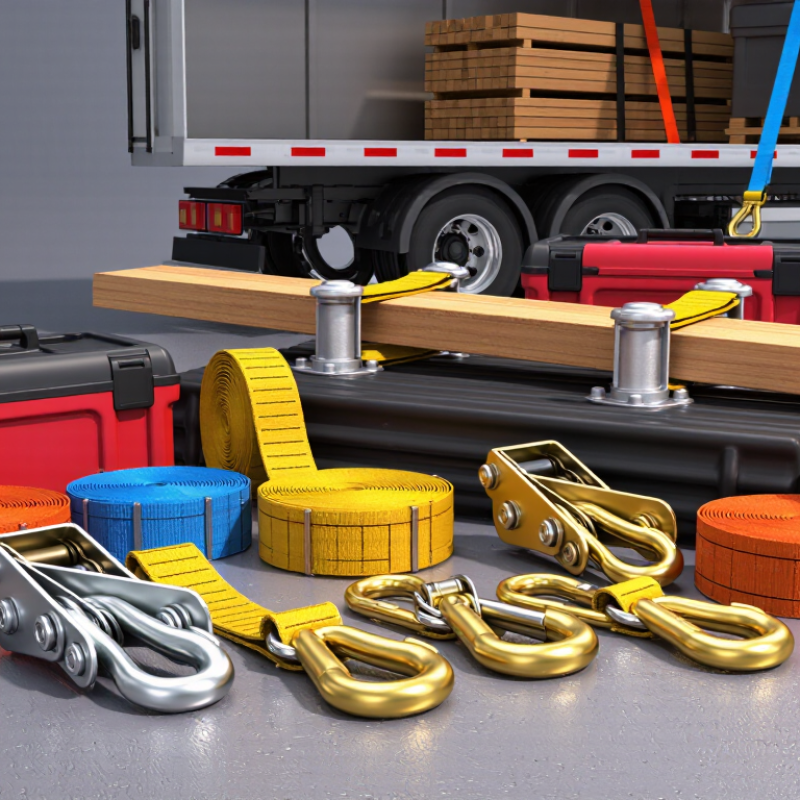
Table of Contents [Hide]
What Truck Ratchet Straps Are and How They Secure Cargo
Truck ratchet straps are webbing tiedowns with a ratcheting handle that tightens the strap around cargo. The handle winds the webbing onto a spindle, creating tension that helps limit shifting, bouncing, and sliding. They do not make a load secure by themselves. Strap placement, anchor points, cargo shape, and tension all matter. A strap over a smooth box, for example, may need careful positioning to prevent it from slipping toward an edge.
The Federal Motor Carrier Safety Administration’s cargo securement guidance states that the combined working load limit of tiedowns securing an article must generally be at least half the article’s weight. That is a useful baseline, not a shortcut around checking each strap’s label or condition. Frayed stitching, bent hooks, and cuts near the edge can weaken webbing. I check the strap where it touches sharp corners, too. Easy to miss. Tighten the ratchet until the cargo is held firmly, but avoid crushing delicate packaging or bending a load. Recheck tension after driving, since vibration and settling can loosen a setup. I still find that judgment call imperfect: a strap can feel tight while the load itself remains free to move.

© Copyright - Pro Tool & Supply - Site by SVM E-Marketing Solutions - Sitemap
- Privacy policy