- Products
- Air Compressors & Air Tools
- Climate Control
- Compaction Equipment
- Concrete Cutting Tools & Equipment
- Concrete and Masonry
- Demolition & Excavation
- Electrical & Mechanical
- Fasteners and Anchoring Adhesives
- Floor Protection
- Generators and Welders
- Hand Tools
- Heaters
- Janitorial and Office Supplies
- Jobsite Protection
- Ladders & Storage
- Lighting & Lighting Accessories
- Man Lifts
- Material Handling Equipment
- Power Tools
- Pressure Washers & Pumps
- Safety Gear
- Safety Products
- Saws
- Surface Preparation
- SEASONAL PRODUCTS
- Rentals
- Air Compressor and Air Tool Rentals
- Climate Control Rental
- Compaction Rentals
- Concrete Equipment Rentals
- Demolition & Excavation Equipment Rentals
- Concrete Floor Grinder Rentals
- General Construction Equipment Rentals
- Generator Rentals and Welder Rentals
- Heater Rentals
- Light Tower Rentals
- Man Lift Rentals in Massachusetts and Rhode Island
- Material Handling Equipment Rentals
- Pressure Washer & Pump Rentals
- Saw Rentals in New England
- SEASONAL PRODUCTS
- Products
- Air Compressors & Air Tools
- Climate Control
- Compaction Equipment
- Concrete Cutting Tools & Equipment
- Demolition & Excavation
- Electrical & Mechanical
- Floor Protection
- Generators and Welders
- Construction Heaters
- Construction Ladders, Staging, & Storage
- Construction Lighting
- Man Lifts
- Material Handling Equipment
- Industrial Janitorial and Office Supplies
- Pressure Washers & Pumps
- Construction Safety Products
- Construction Safety Gear
- Surface Preparation
- Building Protection
- Diesel Accessories
- Zero Emissions
- Rentals
- Air Compressor and Air Tool Rentals
- Climate Control Rental
- Compaction Rentals
- Concrete Equipment Rental
- Demolition & Excavation Equipment Rental
- General Construction Equipment Rental
- Generator Rentals and Welder Rentals
- Construction Heaters Rental
- Light Tower Rentals
- Man Lift Rentals
- Material Handling Equipment Rental
- Pressure Washer & Pump Rentals
- Saw Rentals in New England
- Concrete Floor Grinder Rentals
- Zero Emissions Rentals
- Repairs & Used
- Parts
- Blog
- Services
- Resources
- About Us
- Contact Us
Sales & Rental of Construction | Industrial Equipment & Supplies


7 Best Stainless Steel Filter Elements for Industrial Use?
Industrial filtration decisions often begin with a practical problem: a clogged line, unstable pressure, or particles reaching sensitive equipment. A Stainless Steel Filter Element can offer strength, cleanability, and resistance to demanding process conditions. But the material alone does not guarantee reliable filtration. Pore size, alloy grade, seal compatibility, and cleaning method all matter.
The U.S. Department of Energy’s *Improving Compressed Air System Performance* sourcebook reports that compressed-air systems can consume about 10% of electricity used in industrial facilities, and more in some plants. That makes pressure loss across a filter worth examining, not merely its purchase price. In hydraulic applications, ISO 16889 defines a multipass test method for evaluating filter performance. Its results can help compare elements under controlled conditions, though actual service conditions still matter. Laboratory figures are not the whole story.
This guide compares seven common stainless steel filter element designs, including mesh, pleated, and sintered options. It considers filtration rating, flow capacity, pressure drop, corrosion resistance, and maintenance needs. A 316L element may suit some corrosive services, while another process may call for a different alloy or construction. Details matter. No element is universally best. Even a well-specified filter can disappoint when the fluid, operating temperature, or cleaning cycle was misunderstood. The comparisons below are intended to support informed selection, not replace a review of process data and supplier documentation.
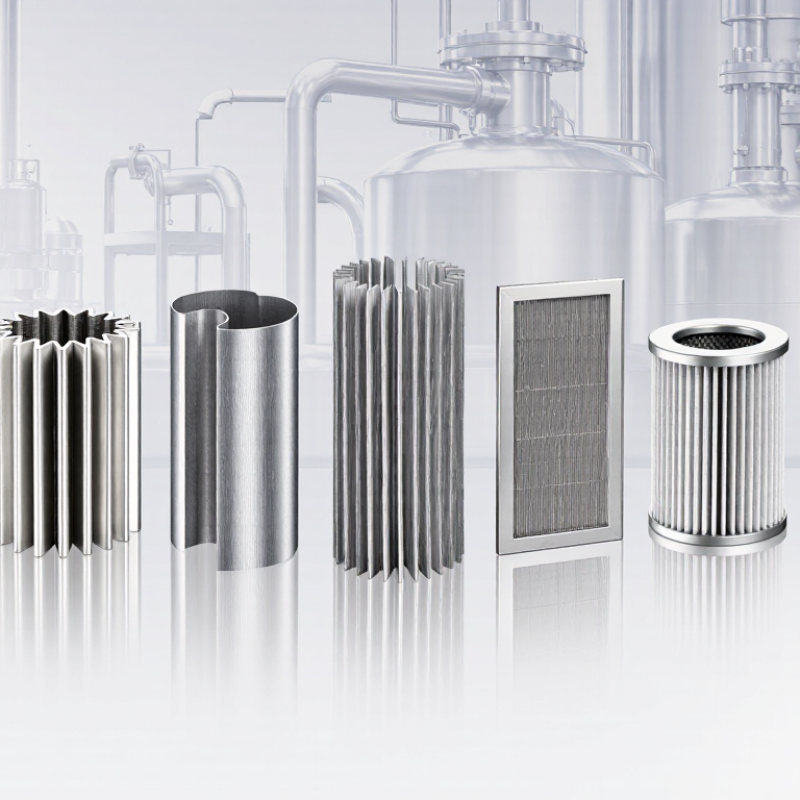
Table of Contents [Hide]
How Stainless Steel Filter Elements Work
7 Best Stainless Steel Filter Elements for Industrial Use?
How Stainless Steel Filter Elements Work
A stainless steel filter element separates unwanted particles from a flowing liquid or gas. Fluid passes through openings in a woven mesh or pores in a sintered structure. Particles larger than those openings are retained, while cleaner fluid continues downstream. Some elements capture debris mainly at the surface; others trap particles within their depth. The design affects flow, filtration rating, and cleaning needs. In operation, pressure difference pushes fluid through the element. As particles collect, pressure drop can rise and flow may fall. It is a useful signal, but not a complete diagnosis.
Tips: Check the specified filtration rating, operating temperature, and chemical compatibility before selecting an element. Track pressure drop during service. Follow the element maker’s cleaning guidance, since aggressive brushing can damage fine mesh.
A stainless steel element can often be cleaned and reused, but reuse is not automatic proof of good performance. Inspect for dents, cracked joints, corrosion, or uneven deposits. A small defect can let particles pass. Also, a filter cannot compensate for poor system design or sudden changes in process conditions. The simple diagram looks tidy; real systems are less so. Confirm performance under actual flow and operating conditions.

© Copyright - Pro Tool & Supply - Site by SVM E-Marketing Solutions - Sitemap
- Privacy policy