- Products
- Air Compressors & Air Tools
- Climate Control
- Compaction Equipment
- Concrete Cutting Tools & Equipment
- Concrete and Masonry
- Demolition & Excavation
- Electrical & Mechanical
- Fasteners and Anchoring Adhesives
- Floor Protection
- Generators and Welders
- Hand Tools
- Heaters
- Janitorial and Office Supplies
- Jobsite Protection
- Ladders & Storage
- Lighting & Lighting Accessories
- Man Lifts
- Material Handling Equipment
- Power Tools
- Pressure Washers & Pumps
- Safety Gear
- Safety Products
- Saws
- Surface Preparation
- SEASONAL PRODUCTS
- Rentals
- Air Compressor and Air Tool Rentals
- Climate Control Rental
- Compaction Rentals
- Concrete Equipment Rentals
- Demolition & Excavation Equipment Rentals
- Concrete Floor Grinder Rentals
- General Construction Equipment Rentals
- Generator Rentals and Welder Rentals
- Heater Rentals
- Light Tower Rentals
- Man Lift Rentals in Massachusetts and Rhode Island
- Material Handling Equipment Rentals
- Pressure Washer & Pump Rentals
- Saw Rentals in New England
- SEASONAL PRODUCTS
- Products
- Air Compressors & Air Tools
- Climate Control
- Compaction Equipment
- Concrete Cutting Tools & Equipment
- Demolition & Excavation
- Electrical & Mechanical
- Floor Protection
- Generators and Welders
- Construction Heaters
- Construction Ladders, Staging, & Storage
- Construction Lighting
- Man Lifts
- Material Handling Equipment
- Industrial Janitorial and Office Supplies
- Pressure Washers & Pumps
- Construction Safety Products
- Construction Safety Gear
- Surface Preparation
- Building Protection
- Diesel Accessories
- Zero Emissions
- Rentals
- Air Compressor and Air Tool Rentals
- Climate Control Rental
- Compaction Rentals
- Concrete Equipment Rental
- Demolition & Excavation Equipment Rental
- General Construction Equipment Rental
- Generator Rentals and Welder Rentals
- Construction Heaters Rental
- Light Tower Rentals
- Man Lift Rentals
- Material Handling Equipment Rental
- Pressure Washer & Pump Rentals
- Saw Rentals in New England
- Concrete Floor Grinder Rentals
- Zero Emissions Rentals
- Repairs & Used
- Parts
- Blog
- Services
- Resources
- About Us
- Contact Us
Sales & Rental of Construction | Industrial Equipment & Supplies


What Is the Best Smart Door Lock Solution in 2026?
Choosing the best Smart door lock solution in 2026 requires more than comparing fingerprints, PIN codes, and app features. The strongest choice must protect the entrance during weak Wi-Fi, low battery, and rushed mornings. A lock should also support secure updates, reliable guest access, emergency entry, and clear privacy controls.
Market evidence shows why this decision matters. Grand View Research reports continued double-digit growth in the global smart lock market through the decade. Parks Associates has also documented strong smart-home adoption among United States broadband households. However, adoption does not guarantee good protection. A poorly configured lock can create frustration beside the front door. That risk deserves more attention.
Bruce Schneier, a respected security technologist, states, “Security is a process, not a product.” His principle fits connected locks perfectly. Security depends on installation, software maintenance, credential management, and household habits. It is not only about the lock body.
This guide compares leading technologies, including fingerprint readers, encrypted mobile keys, Matter-enabled systems, and temporary access codes. It also considers battery warnings, offline operation, mechanical overrides, and data handling. Real experience matters here. A lock may perform beautifully in a showroom but fail when a child enters with wet fingers.
There is no perfect solution. Some models sacrifice convenience for stronger local control. Others offer excellent integration but depend heavily on cloud services. Readers should question impressive specifications and examine daily reliability instead. The best Smart door lock solution is the one that matches the building, users, network, and security expectations.
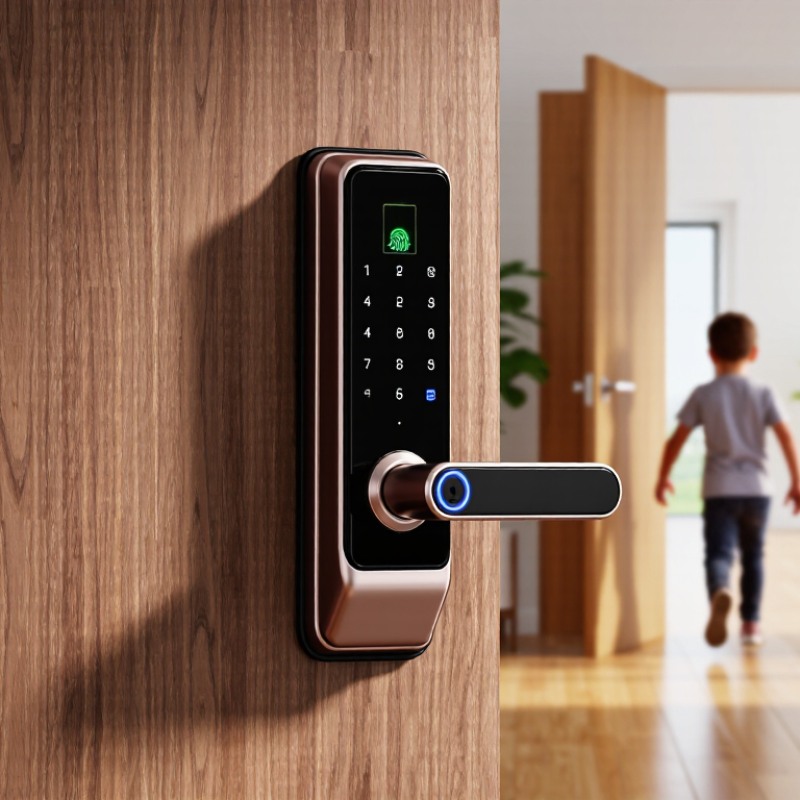
Table of Contents [Hide]
What Defines the Best Smart Door Lock Solution in 2026?
The best smart door lock solution in 2026 is defined by dependable daily performance, not flashy features. Grand View Research valued the global smart lock market at about USD 2.57 billion in 2023 and expects strong growth through 2030. That expansion raises a practical question: can a lock remain useful after the novelty fades?
A strong solution should offer several access methods, including a physical key, keypad, mobile credential, and temporary codes. It should keep working during internet outages. Battery warnings must arrive early, not when someone stands outside in the rain. In my experience, simple controls prevent more frustration than crowded applications. Small details matter. The best systems also support secure updates, encrypted communication, local access options, and clear data deletion policies. NIST’s Cybersecurity Framework supports this risk-based approach, especially identification, protection, detection, and recovery.
Interoperability will define the next standard. The Connectivity Standards Alliance’s Matter specification aims to improve compatibility across connected home products, but real-world setup can still be uneven. That weakness deserves attention. Parks Associates’ consumer research repeatedly links smart-home adoption with security, convenience, and confidence in reliability. Therefore, manufacturers should publish battery-life testing, outage behavior, privacy practices, and independent security assessments. A useful lock should feel almost invisible: quick at the door, understandable for older users, and resilient when the phone is lost. Fancy features are optional. Trust is not.

© Copyright - Pro Tool & Supply - Site by SVM E-Marketing Solutions - Sitemap
- Privacy policy