- Products
- Air Compressors & Air Tools
- Climate Control
- Compaction Equipment
- Concrete Cutting Tools & Equipment
- Concrete and Masonry
- Demolition & Excavation
- Electrical & Mechanical
- Fasteners and Anchoring Adhesives
- Floor Protection
- Generators and Welders
- Hand Tools
- Heaters
- Janitorial and Office Supplies
- Jobsite Protection
- Ladders & Storage
- Lighting & Lighting Accessories
- Man Lifts
- Material Handling Equipment
- Power Tools
- Pressure Washers & Pumps
- Safety Gear
- Safety Products
- Saws
- Surface Preparation
- SEASONAL PRODUCTS
- Rentals
- Air Compressor and Air Tool Rentals
- Climate Control Rental
- Compaction Rentals
- Concrete Equipment Rentals
- Demolition & Excavation Equipment Rentals
- Concrete Floor Grinder Rentals
- General Construction Equipment Rentals
- Generator Rentals and Welder Rentals
- Heater Rentals
- Light Tower Rentals
- Man Lift Rentals in Massachusetts and Rhode Island
- Material Handling Equipment Rentals
- Pressure Washer & Pump Rentals
- Saw Rentals in New England
- SEASONAL PRODUCTS
- Products
- Air Compressors & Air Tools
- Climate Control
- Compaction Equipment
- Concrete Cutting Tools & Equipment
- Demolition & Excavation
- Electrical & Mechanical
- Floor Protection
- Generators and Welders
- Construction Heaters
- Construction Ladders, Staging, & Storage
- Construction Lighting
- Man Lifts
- Material Handling Equipment
- Industrial Janitorial and Office Supplies
- Pressure Washers & Pumps
- Construction Safety Products
- Construction Safety Gear
- Surface Preparation
- Building Protection
- Diesel Accessories
- Zero Emissions
- Rentals
- Air Compressor and Air Tool Rentals
- Climate Control Rental
- Compaction Rentals
- Concrete Equipment Rental
- Demolition & Excavation Equipment Rental
- General Construction Equipment Rental
- Generator Rentals and Welder Rentals
- Construction Heaters Rental
- Light Tower Rentals
- Man Lift Rentals
- Material Handling Equipment Rental
- Pressure Washer & Pump Rentals
- Saw Rentals in New England
- Concrete Floor Grinder Rentals
- Zero Emissions Rentals
- Repairs & Used
- Parts
- Blog
- Services
- Resources
- About Us
- Contact Us
Sales & Rental of Construction | Industrial Equipment & Supplies


Who Are the Best Rubber Wheels Manufacturers in China?
Choosing among China’s Rubber Wheels manufacturers requires more than comparing prices. A sample may look smooth on a showroom table, yet behave differently under a loaded cart on rough concrete. Buyers should examine compound consistency, wheel dimensions, bearing fit, load ratings, and test records. Small details matter. A loose hub or uneven tread can create noise, vibration, and early wear.
Rubber scientist James E. Mark is known for his work on elastomers and rubber technology. A practical principle for this buying decision is: “A wheel’s performance depends on the rubber compound, the design, and the conditions of use.” This is an editorial summary, not a verified direct quotation. It reflects why material data and real-use testing deserve attention alongside factory claims.
This guide compares manufacturers through verifiable signals: product range, production capabilities, quality controls, customization options, and export experience. Ask suppliers for current specifications, test methods, and samples that match your intended floor and load. Then inspect the details yourself. A polished catalogue is not proof of consistent production. Nor is a low quote automatically a bargain. The comparison that follows aims to help buyers identify capable partners while noting where public information may be incomplete. That limitation matters; supplier claims should be checked before purchase.
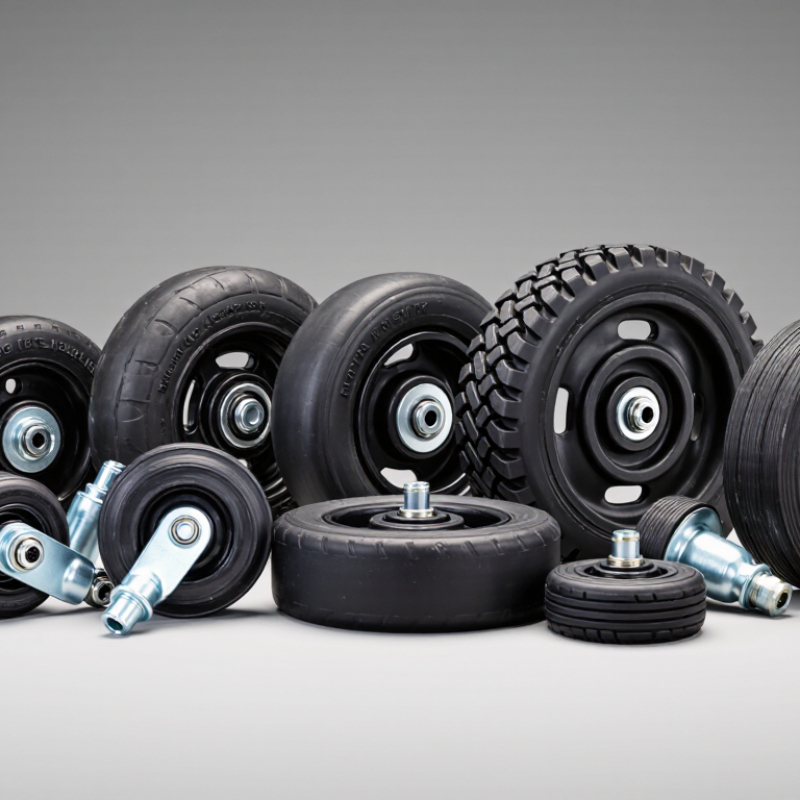
Table of Contents [Hide]
What Rubber Wheels Are and Where They Are Used
Rubber wheels combine an elastic tread with a metal or polymer hub. The tread absorbs small impacts and helps reduce vibration on concrete floors. Grip depends on rubber hardness, tread pattern, load, and surface condition. A soft tread often rolls quietly, but it may wear faster under heavy loads. Details matter.
Tips: Match wheel diameter and load rating to the equipment, not just the cart’s empty weight. Check floor joints, ramps, and turning space. A wheel that works well on smooth tile may feel sluggish on rough paving. Test one loaded unit when possible.
Rubber wheels are common on warehouse carts, workshop trolleys, medical equipment, and bins used in commercial kitchens. They can also suit outdoor hand carts, though exposure to sunlight, moisture, and grit may affect tread life. For quieter movement, consider the floor and wheel hardness together; choosing the softest option is not always best. Check regularly. Look for flat spots, cracks, loose hubs, and uneven wear, especially when a trolley starts pulling to one side. A simple inspection can prevent awkward handling, though it cannot replace the manufacturer’s load guidance.
| Wheel Type | Construction and Characteristics | Common Applications | Selection Considerations |
|---|---|---|---|
| Solid rubber wheel | A solid rubber tread is fitted around a wheel center. It does not require inflation and cannot develop a pneumatic puncture. | Hand trucks, carts, material-handling equipment, and some industrial casters. | Consider the wheel diameter, tread width, load rating, floor type, and whether the equipment needs to cross debris or uneven surfaces. |
| Pneumatic rubber wheel | An air-filled tire mounted on a rim. The air chamber helps absorb shocks and vibration. | Garden carts, utility trailers, and equipment used on rough or uneven ground. | Check tire pressure requirements, puncture exposure, terrain, and the load rating at the specified inflation pressure. |
| Semi-pneumatic wheel | A resilient, typically airless rubber or rubber-like tire with a hollow or cellular structure that provides some cushioning. | Some lawn equipment, carts, and light-duty outdoor equipment. | Confirm the manufacturer’s load and speed limits; cushioning and performance vary with the wheel’s design. |
| Rubber-tired caster wheel | A rubber tread mounted on a hub and used in a caster assembly, which may swivel or remain fixed. | Furniture, service carts, shop equipment, and mobile storage units. | Match the caster’s load capacity and mounting type to the equipment; verify floor compatibility and required maneuverability. |
| Molded-on rubber wheel | Rubber is molded or bonded onto a metal or other rigid core. The core supports the wheel while the tread provides rolling contact. | Industrial carts, conveyors, and equipment that uses driven or guide wheels. | Ask about tread hardness, bonding quality, operating temperature, chemical exposure, and the intended duty cycle. |
| Rubber-treaded drive wheel | A powered wheel with a rubber contact surface designed to transmit motion and traction to a floor or track. | Selected material-handling machines, powered carts, and automated equipment. | Check the required traction, wheel speed, drive torque, tread wear characteristics, and compatibility with the floor surface. |
| Manufacturer evaluation criteria | Relevant factors include material specifications, dimensional tolerances, load testing, tread-to-core bonding, and production quality controls. | Useful when comparing suppliers for replacement wheels, casters, or custom wheel assemblies. | Request drawings, material and test documentation, sample inspection, applicable certifications, and clear warranty and delivery terms. |

© Copyright - Pro Tool & Supply - Site by SVM E-Marketing Solutions - Sitemap
- Privacy policy